Historic EU deal reached on how to manage sudden rise in asylum seekers
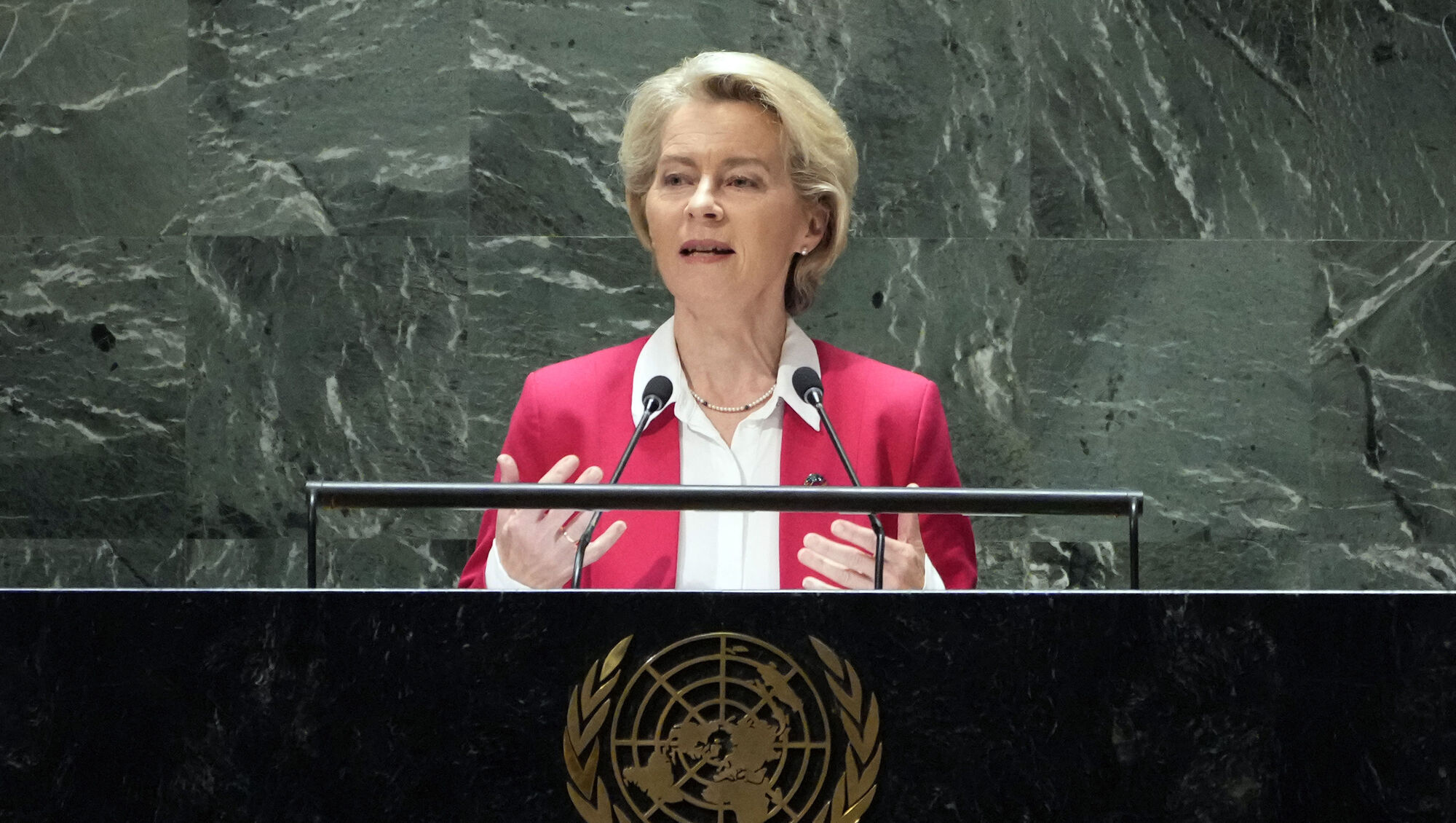
President of the European Union Ursula von der Leyen. Picture: AP
The EU has reached a historic agreement on how member states will deal with a sudden increase in the number of people seeking asylum in the event of war, natural disaster or climate emergency.
The new rules will allow frontline states to fast-track asylum applications and move people swiftly to other countries in Europe, avoiding a repeat of 2015 when 1 million refugees came to the EU from Syria and beyond, and some countries accepted far more than others.
The pact was sealed early on Wednesday morning, ending three years of arguments between member states on the eve of 27 EU leaders gathering in the Spanish city of Granada on Friday.
The Spanish government, which now holds the rotating EU presidency, had confidently predicted it had majority backing for the deal at an interior ministers’ meeting in Brussels last Thursday.

But at the last minute, Italy said it would not support the deal after two clauses were drafted to satisfy German concerns about human rights.
While it is thought the EU had the numbers to push through the deal on a majority basis, ministers decided it would not be worth the paper it was written on unless Giorgia Meloni, Italy’s rightwing prime minister, was on board.
Italy has received about half the 250,000 people who have arrived in the EU this year. EU leaders, including the Dutch prime minister, Mark Rutte, and the European Commissioner, Ursula von der Leyen, have gone out of their way to ensure the rest of the bloc shows solidarity.
“EU ambassadors have reached an agreement on the regulation addressing situations of crisis and force majeure in the field of migration and asylum,” the Spanish presidency announced on X, the company formerly known as Twitter.
The clash between Italy and Germany encapsulated the differing approaches of European governments. Italy wanted a clause allowing for minimum standards in detention centres to be breached in the event of a crisis spike in arrivals, which Germany had objected to. Italy also attacked Germany over its support for NGOs in search and rescue operations in the Mediterranean.

The EU has already agreed new rules on dealing with irregular arrivals at current levels with “solidarity” relocation of migrants away from frontline countries. Under the new agreement, that will be replicated in the event of a rise in numbers.
Poland, with an eye on the general election, to be held on 15 October, where migration has been made a key issue, is still objecting to the agreement.
“Today, we have achieved a huge step forward on a critical issue for the future of the EU. With today’s agreement we are now in a better position to reach an agreement on the entire asylum and migration pact with the European parliament by the end of this semester,” said Fernando Grande-Marlaska Gómez, the acting Spanish minister for home affairs.
The new law must still be passed by the European parliament.
The main aim of the deal is to share the burden of migration across the entire EU with frontline states “able to request solidarity and support measures from the EU and its member states”, said the minister.
There will also be an accelerated registration process for asylum seekers in a crisis situation, giving member states just four weeks to do the initial paperwork before asking other countries to accommodate people.
The supporting member state would then take over the responsibility to examine asylum claims which can often take years.
Last week the European Commissioner for home affairs, Ylva Johannson, revealed that 250,000 people had arrived in the EU this year through irregular migration, but this was dwarfed by the backlog of 600,000 people waiting for their asylum applications to be processed.








