Dutch PM hands in resignation to king to set stage for general election
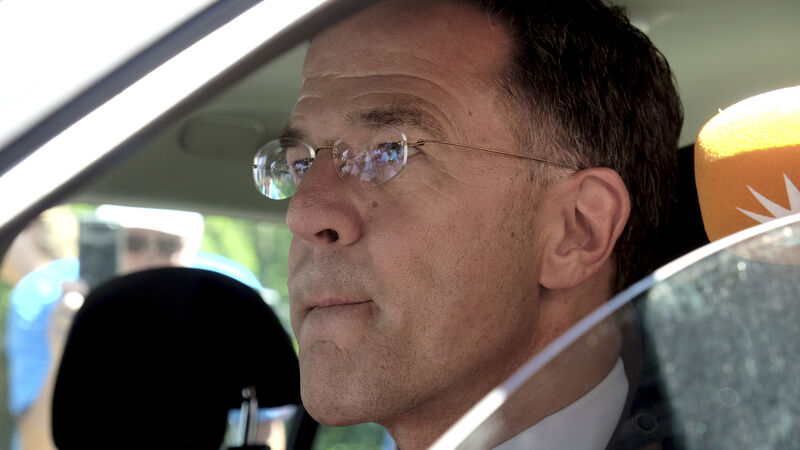
Dutch prime minister Mark Rutte has visited the king to turn in the resignation of his four-party coalition and set the deeply divided Netherlands on track for a general election later this year.
King Willem-Alexander flew back from a family holiday in Greece to meet Mr Rutte, who drove to the palace in his Saab for the meeting to explain the political crisis that toppled his administration.
Mr Rutte declined to answer reporters’ questions as he drove away from the meeting that lasted over an hour, saying the talks with the monarch were private.
The vexed issue of reining in migration that has troubled countries across Europe for years was the final stumbling block that brought down Mr Rutte’s government on Friday night, exposing the deep ideological differences between the four parties that made up the uneasy coalition.

Now it is likely to dominate campaigning for an election that is still months away.
“We are the party that can ensure a majority to significantly restrict the flow of asylum seekers,” said Geert Wilders, leader of the anti-immigration Party for Freedom, who supported Mr Rutte’s first minority coalition 13 years ago, but also ultimately brought it down.
Opposition parties on the left also want to make the election about tackling problems they accuse Mr Rutte of failing to adequately address — from climate change to a chronic housing shortage and the future of the nation’s multibillion-euro agricultural sector.
Socialist Party leader Lilian Marijnissen told Dutch broadcaster NOS the collapse of Mr Rutte’s government was “good news for the Netherlands”.
She said: “I think that everybody felt that this Cabinet was done. They have created more problems than they solved.”
Despite the divisions between the four parties in Mr Rutte’s government, it will remain in power as a caretaker administration until a new coalition is formed but will not pass major new laws.
“Given the challenges of the times, a war on this continent, nobody profits from a political crisis,” tweeted Sigrid Kaag, leader of the centrist, pro-Europe D66 party.
Mr Rutte, the Netherlands’ longest serving premier and a veteran consensus builder, appeared to be the one who was prepared to torpedo his fourth coalition government with tough demands in negotiations over how to reduce the number of migrants seeking asylum in his country.
Mr Rutte negotiated for months over a package of measures to reduce the flow of new migrants arriving in the country of nearly 18 million people.
Proposals reportedly included creating two classes of asylum — a temporary one for people fleeing conflicts and a permanent one for people trying to escape persecution — and reducing the number of family members who are allowed to join asylum seekers in the Netherlands.
The idea of blocking family members was strongly opposed by minority coalition party ChristenUnie.
“I think unnecessary tension was introduced” to the talks, said Ms Kaag.
Pieter Heerma, the leader of coalition partner the Christian Democrats, called Mr Rutte’s approach in the talks “almost reckless”.
The fall of the government comes just months after a new, populist pro-farmer party, the Farmers Citizens Movement, known by its Dutch acronym BBB, shocked the political establishment by winning provincial elections.
The party is already the largest bloc in the Dutch Senate and will be a serious threat to Mr Rutte’s People’s Party for Freedom and Democracy.
The BBB’s leader, Caroline van der Plas, said her party would dust off their campaign posters from the provincial vote and go again.
“The campaign has begun!” Ms Van der Plas said in a tweet that showed her party’s supporters hanging flags and banners from lamp posts.
CONNECT WITH US TODAY



Be the first to know the latest news and updates