Floods hit Ukraine after Kakhovka dam blown up on Dnipro river
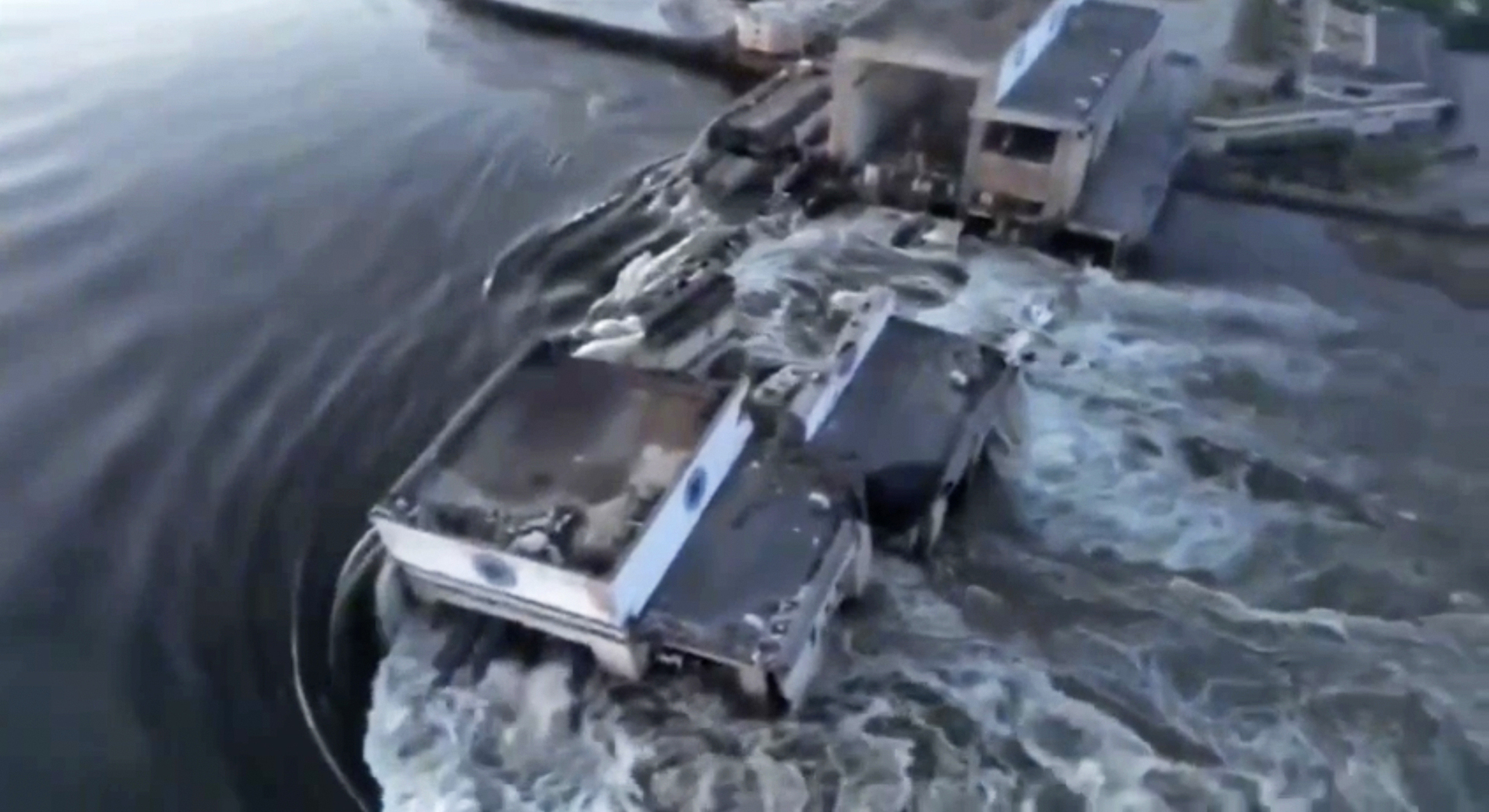
Water runs through a breakthrough in the Kakhovka dam (Ukrainian Presidential Office/AP)
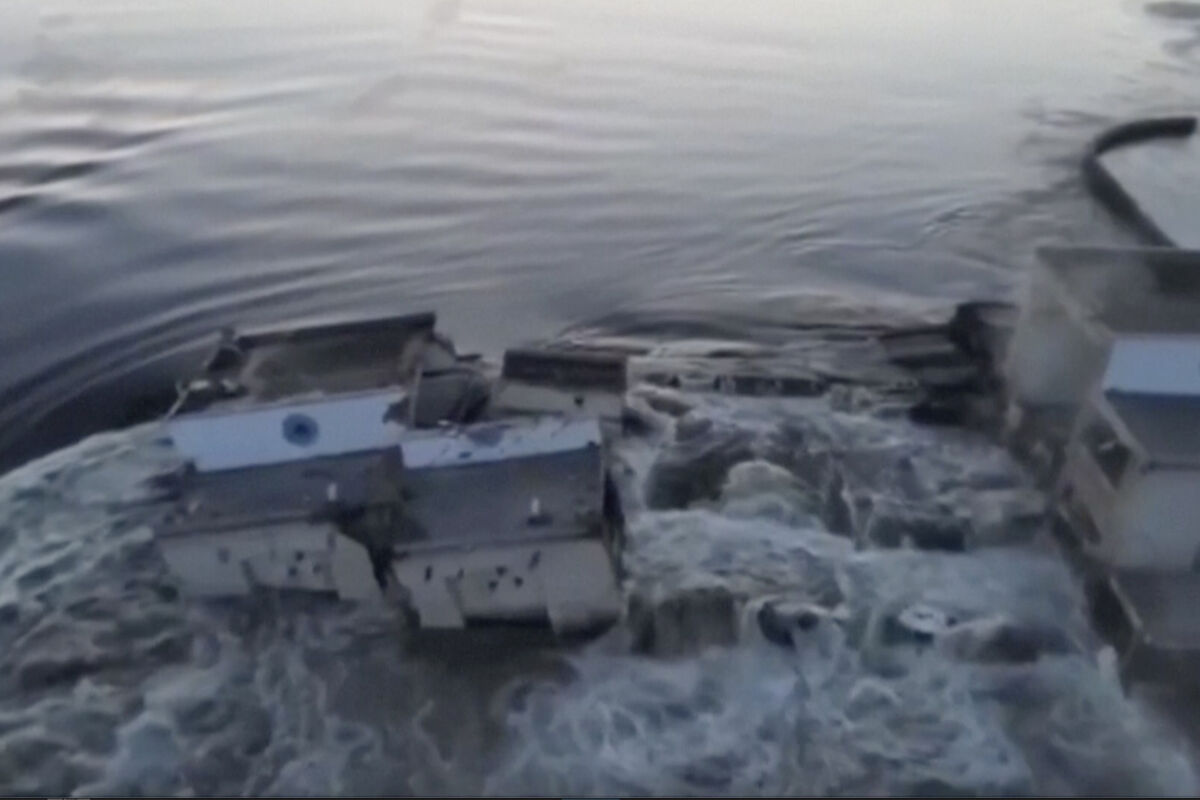
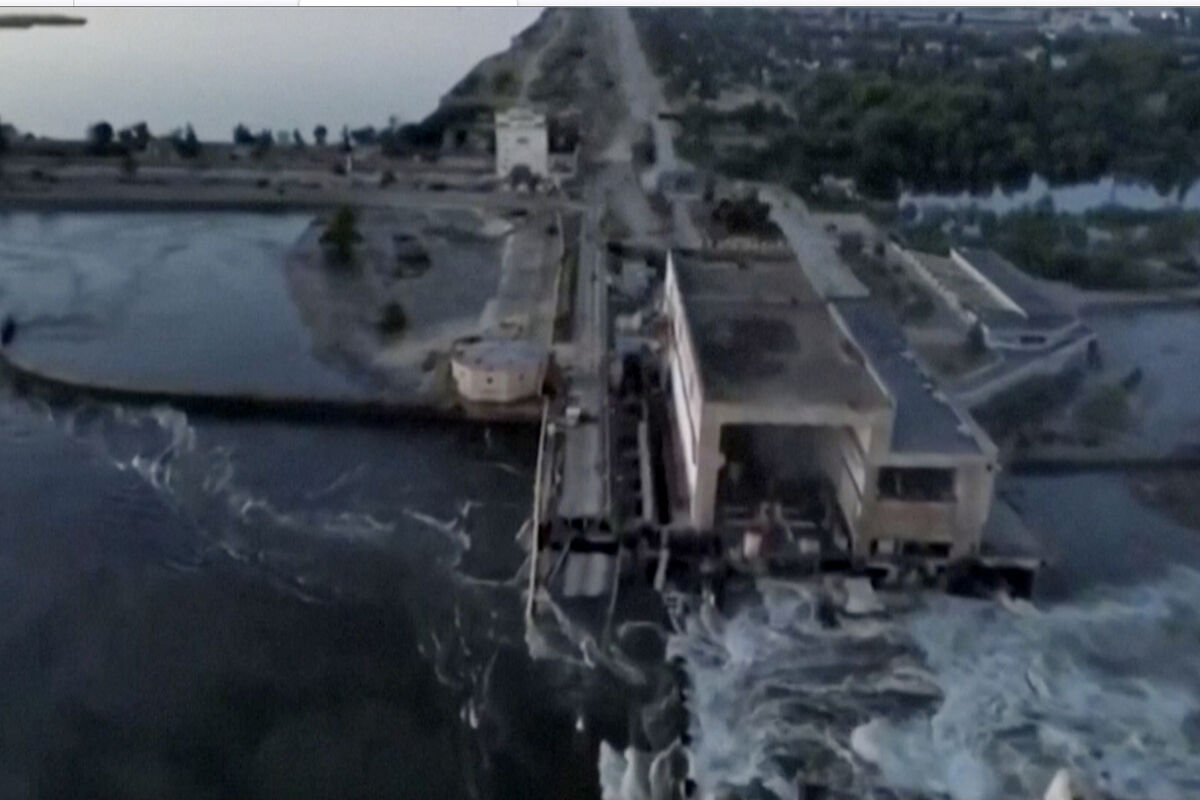
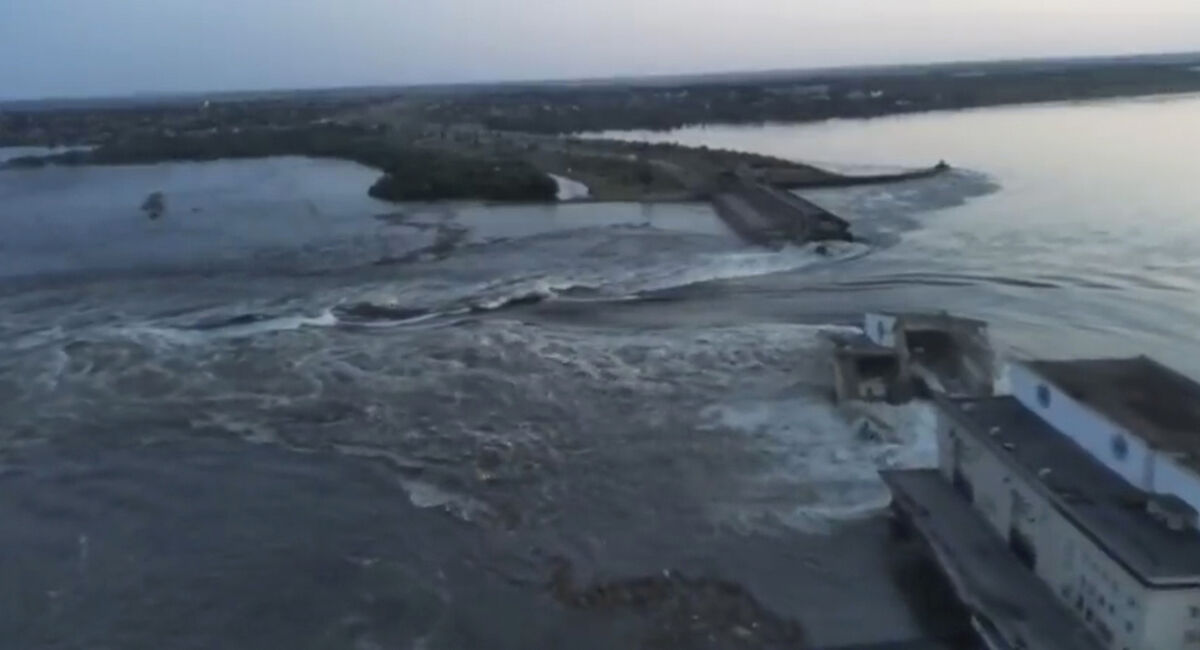
Ukraine has accused Russian forces of blowing up a major dam and hydroelectric power station in a part of southern Ukraine that Russia controls, sending water gushing from the facility and risking massive flooding.
Officials have described the breach as an “ecological disaster”.
Ukrainian authorities have ordered hundreds of thousands of residents downriver to evacuate.
Russian officials claim the dam, on the Dnipro river, was damaged by Ukrainian military strikes in the contested area.
Russian terrorists. The destruction of the Kakhovka hydroelectric power plant dam only confirms for the whole world that they must be expelled from every corner of Ukrainian land. Not a single meter should be left to them, because they use every meter for terror. It’s only… pic.twitter.com/ErBog1gRhH
— Volodymyr Zelenskyy / Володимир Зеленський (@ZelenskyyUa) June 6, 2023
The fallout could have broad consequences: flooded homes, streets and businesses downstream; depleted water levels upstream that help cool Europe’s largest nuclear power station; and drained supplies of drinking water to the south in Crimea, which Russia illegally annexed.
The dam break adds a new complex to Russia’s ongoing war in Ukraine, now in its 16th month, as Ukrainian forces were widely seen to be moving forward with a long-anticipated counteroffensive in patches along more than 620 miles of frontline in the east and south of Ukraine.
Amid outrage, Ukrainian President Volodymyr Zelenskyy said he convened an urgent meeting of the National Security Council. He alleged that Russian forces set off a blast inside the dam structure and said some 80 settlements were in danger.
Ukraine’s nuclear operator Energoatom said in a Telegram statement that the blowing up of the dam “could have negative consequences for the Zaporizhzhia nuclear power plant” but at the moment the situation is “controllable”.
The UN’s International Atomic Energy Agency (IAEA) said on Twitter its experts are closely monitoring the situation at the power station upstream and there is “no immediate nuclear safety risk” at the facility.
The World Data Centre for Geoinformatics and Sustainable Development, a Ukrainian nongovernmental organisation, estimated that nearly 100 villages and towns would be flooded. It also reckoned that the water level would only start dropping after five to seven days.
Ukrainian authorities have previously warned that the dam’s failure could unleash 4.8 billion gallons of water and flood Kherson and dozens of other areas where hundreds of thousands of people live.
According to the Ukraine War Environmental Consequences Working Group, an organisation of environmental activists and experts documenting the war’s environment impact, a total collapse of the dam would wash away much of the left bank and a severe drop in the reservoir has the potential to deprive the nuclear power station of crucial cooling, as well as dry up the water supply in northern Crimea.
Mykhailo Podolyak, a senior adviser to Ukrainian President Volodymyr Zelenskyy, said a “global ecological disaster is playing out now, online, and thousands of animals and ecosystems will be destroyed in the next few hours”.
Videos posted online began testifying to the spillover – one showed floodwaters inundating a long road, while another showed a beaver scurrying for high ground from rising waters.
The Ukrainian Interior Ministry urged residents of 10 villages on the river’s right bank and parts of the city of Kherson downriver to gather essential documents and pets, turn off appliances and leave – while cautioning against possible disinformation.
The Russian-installed mayor of Nova Kakhovka, Vladimir Leontyev, said on Tuesday that numerous strikes on the Kakhovka hydroelectric plant destroyed its valves and “water from the Kakhovka reservoir began to uncontrollably flow downstream”.
Mr Leontyev said the strikes were “a very serious terrorist act” and Moscow-appointed authorities are “preparing for the worst consequences” — though he stopped short of urging an evacuation of city residents.
Damage to the station is beyond repair and it will need to be rebuilt, he added.
Ukraine controls five of the six dams along the Dnipro, which runs from its northern border with Belarus down to the Black Sea and is crucial for the entire country’s drinking water and power supply.
Footage on social media from what appeared to be a monitoring camera overlooking the dam purported to show a flash, explosion and breakage of the dam.
Oleksandr Prokudin, the head of the Kherson Regional Military Administration, said in a video posted to Telegram shortly before 7am “the Russian army has committed yet another act of terror” and said water will reach “critical levels” within five hours.
The dam was destroyed, Ukraine’s state hydro power generating company wrote in a statement. “The station cannot be restored,” Ukrhydroenergo said.
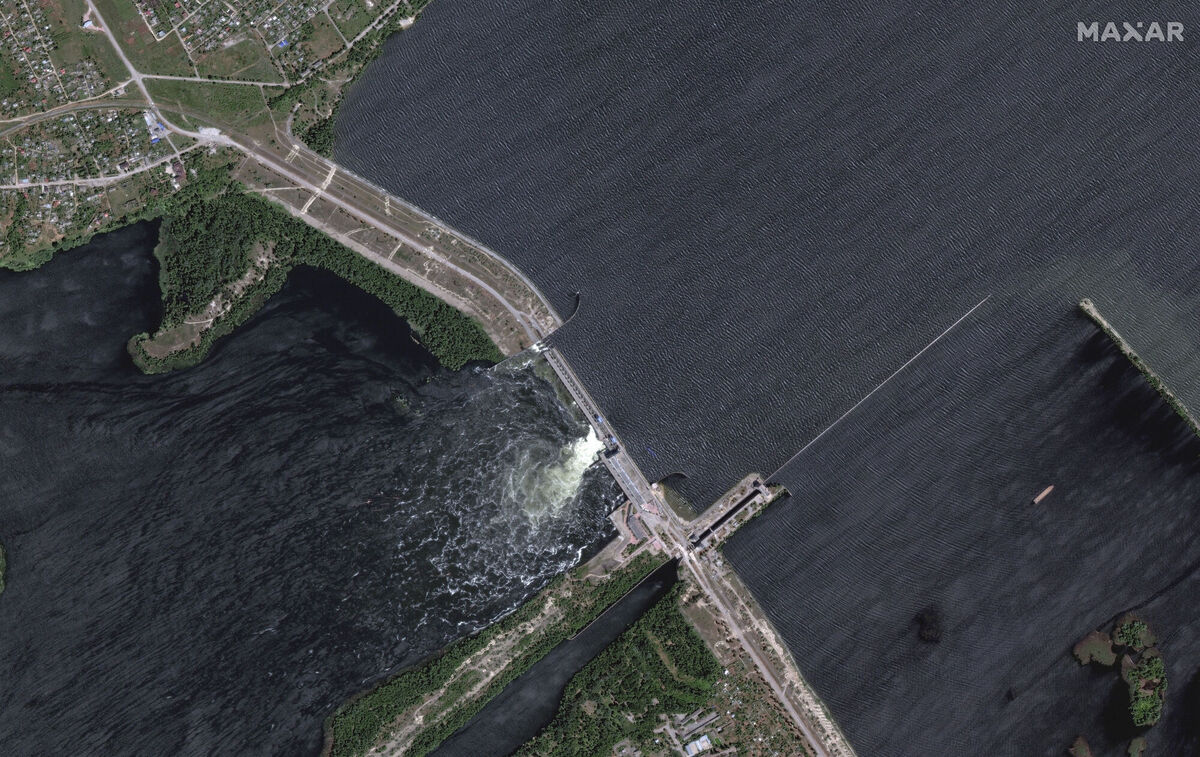
Russia blew up the station from inside the engine room, it claimed.
Energoatom said the Kakhovka reservoir, where water levels are “rapidly decreasing”, is necessary “for the plant to feed the turbine condensers and ZNPP safety systems”, the statement said.
“Currently the station cooling pond is full: as of 8am, the water level is at 16.6 meters, and this is enough for the needs of the station,” it said.
Energoatom will continue to monitor the situation together with the IAEA, the statement said.
Ukraine and Russia have previously accused each other of targeting the dam with attacks, and last October Mr Zelenskyy predicted that Russia would destroy the dam in order to cause a flood.
Authorities, experts and residents have for months expressed concerns about water flows through — and over — the Kakhovka dam.
In February, water levels were so low that many feared a meltdown at the Zaporizhzhia nuclear plant, whose cooling systems are supplied with water from the Kakhovka reservoir held up by the dam.
By mid-May, after heavy rains and snow melt, water levels rose beyond normal levels, flooding nearby villages. Satellite images showed water washing over damaged sluice gates.
CONNECT WITH US TODAY



Be the first to know the latest news and updates