Lula sworn in as president to lead polarised Brazil
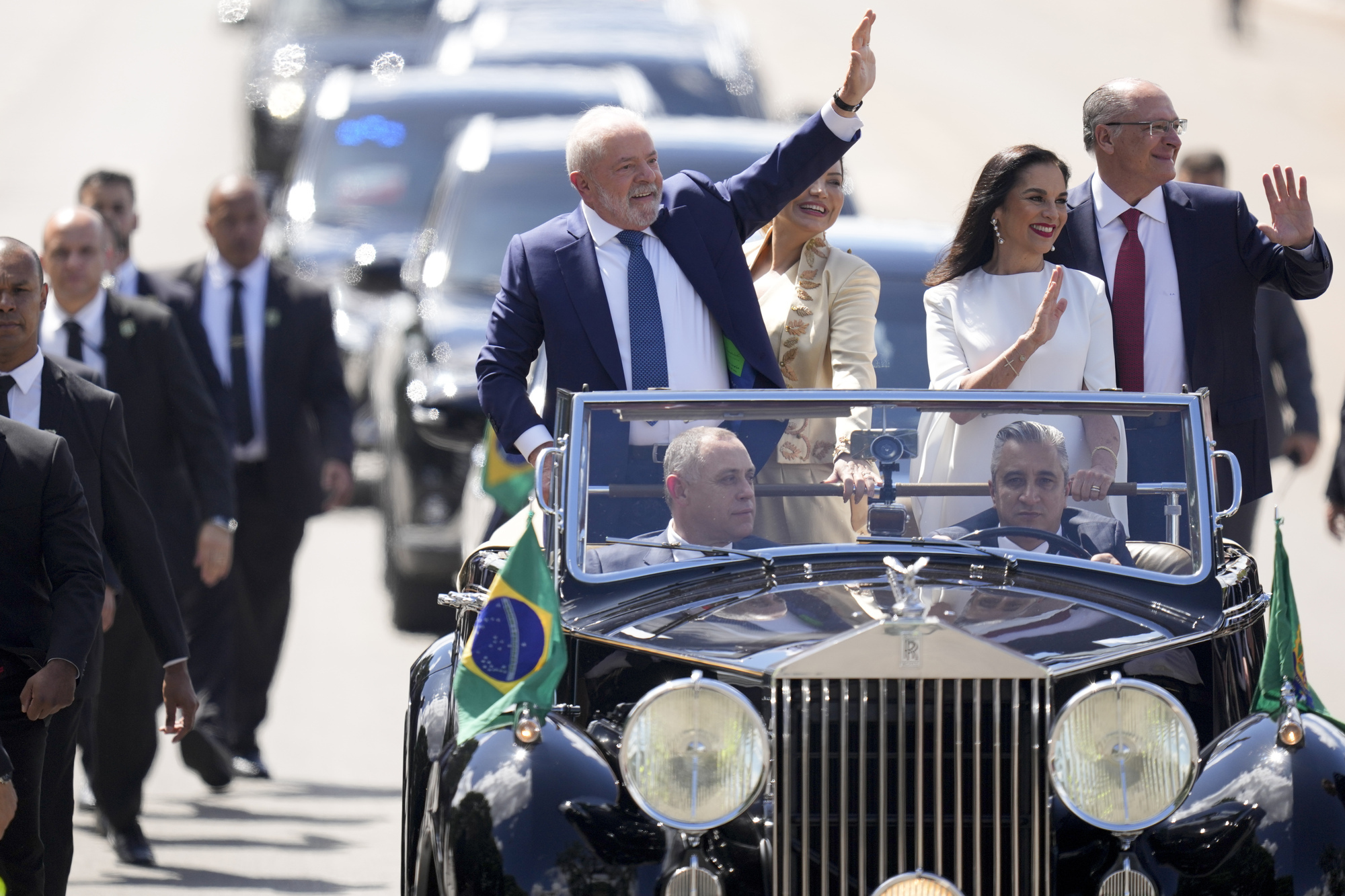
Brazil’s Luiz Inacio Lula da Silva has been sworn in as president in the capital Brasilia, assuming office for the third time after thwarting outgoing incumbent Jair Bolsonaro’s re-election bid.
Mr Lula was president from 2003-2010, and his return to power marks the culmination of a political comeback that is both thrilling supporters and enraging opponents in a fiercely polarised nation.
His presidency is unlikely to be similar to his previous two mandates, coming after the tightest presidential race in more than three decades in Brazil and resistance to his taking office by some of his opponents.
The leftist defeated far-right Mr Bolsonaro in the October 30 vote by less than two percentage points.

For months, Mr Bolsonaro had sown doubts about the reliability of Brazil’s electronic vote and his loyal supporters were reluctant to accept the loss.
Many have gathered outside military barracks since, questioning results and pleading with the armed forces to prevent Mr Lula from taking office.
His most die-hard backers resorted to what some authorities and incoming members of Mr Lula’s administration labelled acts of “terrorism” – something the country had not seen since the early 1980s and which has prompted security concerns about inauguration day events.
“In 2003, the ceremony was very beautiful. There wasn’t this bad, heavy climate,” said Carlos Melo, a political science professor at Insper University in Sao Paulo, referring to the year Mr Lula first took office.
“Today, it’s a climate of terror.”
Mr Lula has made it his mission to heal the divided nation.
But he will have to do so while navigating more challenging economic conditions than he enjoyed in his first two terms, when the global commodities boom proved a windfall for Brazil.
At the time, his administration’s flagship welfare programme helped lift tens of millions of impoverished people into the middle class.
Many Brazilians travelled abroad for the first time.
He left office with a personal approval rating of 83%.
In the intervening years, Brazil’s economy plunged into two deep recessions — first, during the tenure of his handpicked successor, and then during the pandemic — and ordinary Brazilians suffered greatly.
Mr Lula has said his priorities are fighting poverty and investing in education and health.
He has also said he will bring illegal deforestation of the Amazon to a halt.
He sought support from political moderates to form a broad front and defeat Mr Bolsonaro, then tapped some of them to serve in his Cabinet.
Claudio Arantes, a 68-year-old pensioner, carried an old Lula campaign flag on his way to the esplanade. The lifelong Mr Lula supporter attended his 2003 inauguration and agreed this time feels different.
“Back then, he could talk about Brazil being united. Now it is divided and won’t heal soon,” Mr Arantes said. “I trust his intelligence to make this national unity administration work so we never have a Bolsonaro again.”
Given the nation’s political fault lines, it is highly unlikely Mr Lula ever reattains the popularity he once enjoyed or even sees his approval rating rise above 50%, said Mauricio Santoro, a political science professor at Rio de Janeiro’s State University.
Furthermore, Mr Santoro said, the credibility of Mr Lula and his Workers’ Party were assailed by a sprawling corruption investigation. Party officials were jailed, including Mr Lula – until his convictions were annulled on procedural grounds.
The Supreme Court then ruled the judge presiding over the case colluded with prosecutors to secure a conviction.
Mr Lula and his supporters have maintained he was railroaded. Others were willing to look past possible malfeasance as a means to unseat Mr Bolsonaro and bring the nation back together.
But Mr Bolsonaro’s backers refuse to accept someone they view as a criminal returning to the highest office. And with tensions running hot, a series of events prompted fear violence could erupt on inauguration day.
On December 12, dozens of people tried to invade a federal police building in Brasilia and burned cars and buses in other areas of the city. Then on Christmas Eve, police arrested a 54-year-old man who admitted to making a bomb found on a fuel truck headed to Brasilia’s airport.
He had been camped outside Brasilia’s army headquarters with hundreds of other Bolsonaro supporters since November 12. He told police he was ready for war against communism and planned the attack with people he had met at the protests, according to excerpts of his deposition released by local media.
The next day, police found explosive devices and several bulletproof vests in a forested area on the federal district’s outskirts.
Mr Lula’s incoming justice minister, Flavio Dino, this week called for federal authorities to put an end to the “antidemocratic” protests, calling them “incubators of terrorists”.
In response to a request from Mr Lula’s team, the current justice minister authorised deployment of the national guard until January 2 and Supreme Court justice Alexandre de Moraes banned people from carrying firearms in Brasilia during these days.
“This is the fruit of political polarisation, of political extremism,” said Nara Pavao, who teaches political science at the Federal University of Pernambuco. Ms Pavao stressed that Mr Bolsonaro, who mostly vanished from the political scene since he lost his reelection bid, was slow to disavow recent incidents.
“His silence is strategic: Bolsonaro needs to keep Bolsonarismo alive,” she said.
Mr Bolsonaro finally condemned the bomb plot in a December 30 farewell address on social media, hours before flying to the US. His absence on inauguration day marks a break with tradition.
CONNECT WITH US TODAY



Be the first to know the latest news and updates