Indonesia signs $20bn deal to accelerate clean energy transition
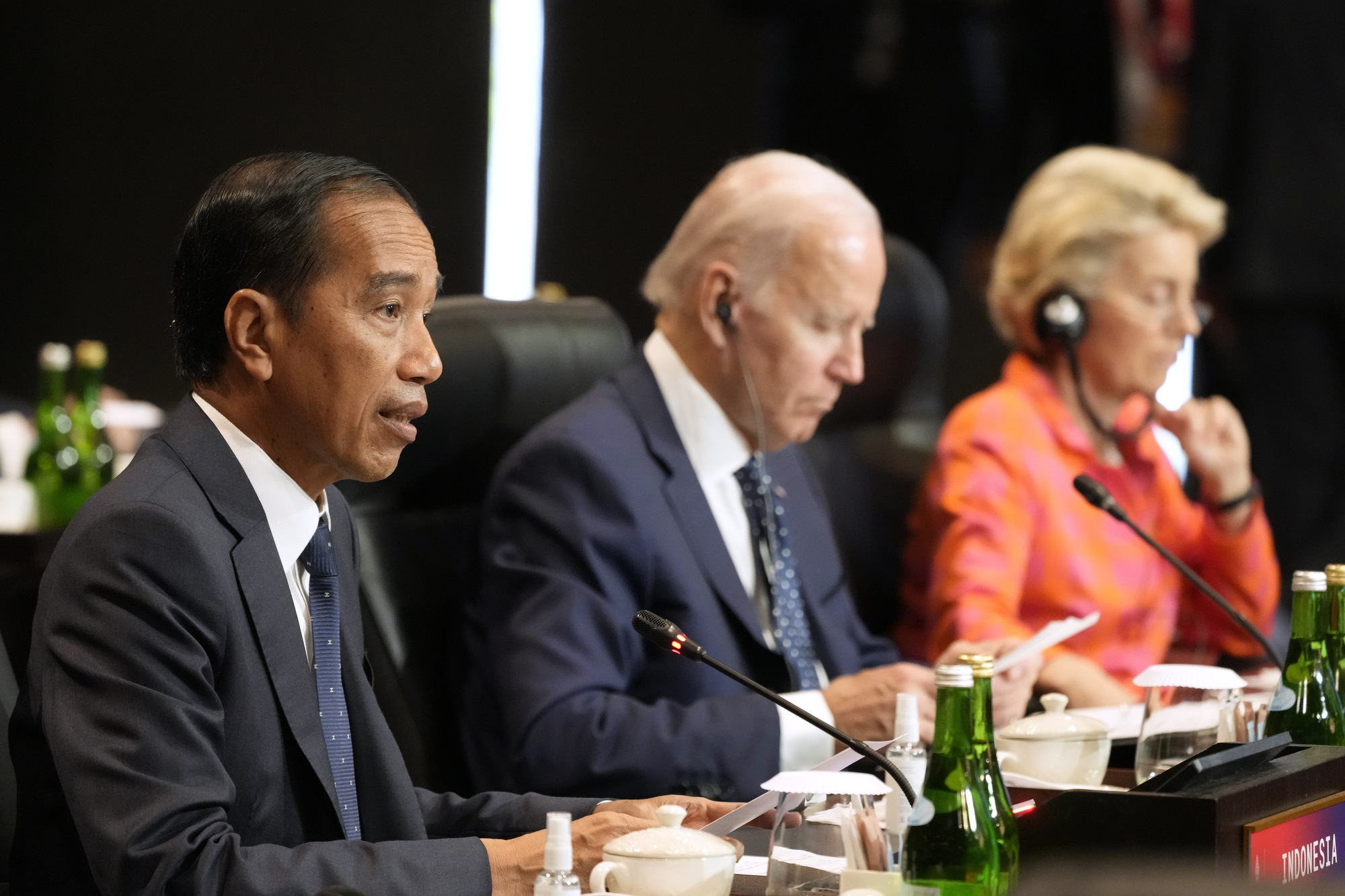
Indonesia signed deals with international lenders and major nations on Tuesday under which it is to receive billions of dollars in funding to help the country increase its use of renewable energy.
The $20bn (€19bn) agreement was announced on the sidelines of the G20 summit in Bali, Indonesia.
Called a Just Energy Transition Partnership, it is meant to help developing countries reduce their reliance on fossil fuels such as coal and gas that cause carbon emissions that contribute to climate change.
It is an important step for Indonesia, a major exporter of coal that has abundant potential for developing cleaner energy.
Participating governments – the United States, Japan, Canada, Denmark, the European Union, France, Germany, Italy, Norway and the UK – are to provide a total of about $10bn (€9.6bn) in concessionary lending, grants and equity.
Major private global financial institutions that earlier pledged to support climate investment will arrange the rest, US officials said.
As part of the agreement, Indonesia has pledged to ensure emissions from the country’s power sector start falling by 2030. The country has stepped up its goal of making the entire power generation sector emissions-free by 2050.
“Indonesia’s energy transition plans will send a very strong signal not just in the Asia-Pacific but also the world that Indonesia is a global leader in the just and affordable transition from fossil fuels to clean energy,” said Indonesian finance minister Sri Mulyani Indrawati.
US climate envoy John Kerry said the US and Indonesia have been laying the groundwork for the deal from the first days of Joe Biden’s administration.
“We’ve wrestled with countless issues to arrive at today’s groundbreaking announcement,” Mr Kerry said. The agreement “can truly transform Indonesia’s power sector from coal to renewables and support significant economic growth,” he said.
South Africa was the first country to sign a JETP deal, during last year’s climate conference, COP26, in Glasgow. It calls for major countries in the Group of Seven to provide $8.5 in concessional loans and grants to help the coal-rich country scale back its use of fossil fuels.

Citing lessons learned from the South Africa accord, US officials said the package with Indonesia has firm, short timelines, will start soon and keep stakeholders looped in.
The Indonesian deal is the biggest so far, reflecting the nation’s heavy reliance on coal. Indonesia is the world’s third-largest producer of coal and the average age of its coal power plants is only 12 or 13 years old. Such plants can remain operational for up to 45 years.
The effort to form JETPs reflects a recognition that developing countries are disproportionately suffering the consequences of climate change, said Swati D’Souza, a New Delhi-based energy analyst with the Institute for Energy, Economics and Financial Analysis.
“Therefore, we need finance and money from the global North to help with global South’s transition to clean energy,” D’Souza said. “JETPs are a method to provide the money required.”
Other coal-rich developing economies are watching how the deals with South Africa and Indonesia progress. India, the world’s third-biggest emitter of planet-warming gases, Vietnam, Senegal and the Philippines all are considering signing similar deals.
Putra Adhiguna, an IEEFA energy analyst in Indonesia’s capital, Jakarta, noted that a transition to alternative energy sources could be “low-hanging fruit” for many places in the archipelago of more than 17,000 islands. However, since Indonesia already has excess power generating capacity, there is less incentive to switch to cleaner sources.
The bigger worry is that such arrangements may be too little, too late.
“Relative to what needs to be done now, when the world is in the midst of a poly crisis, these deals are a pin prick,” said Sony Kapoor, professor of climate, geo-economics and finance at the Florence-based European University Institute.
“It is commendable that these deals are recognising the issues at hand but at the same time, the financing is inadequate and is by design restricted to a few countries.”

CONNECT WITH US TODAY



Be the first to know the latest news and updates