Tiny island seeks to change world's climate response
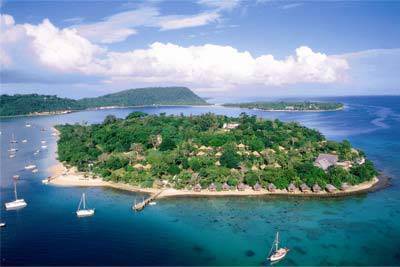
Vanuatu is one of several low-lying countries around the world disproportionately affected by climate change
A case taken by a tiny island nation to the UN could have profound legal implications for smaller nations under threat from climate change.
Vanuatu in the South Pacific, backed by a number of countries such as Germany, Portugal, and New Zealand as well as figures such as former Irish President Mary Robinson, has asked the UN Assembly to consider whether the International Court of Justice (ICJ) can adjudicate a climate change case.
The nation is one of several islands and low-lying countries around the world disproportionately affected by the ravages of human-induced global warming.
Vanuatu said it was "requesting the ICJ to provide an advisory opinion on the obligations of states under international law to protect the rights of present and future generations against the adverse effects of climate change".
If passed by a simple UN Assembly majority vote, due between December and February, it would mean the ICJ would then be able to clarify legal questions related to climate change, including states’ obligations to other countries.
Vanuatu’s special envoy on climate change, Bakoa Kaltongga, said:
"To put words and treaties into action. To fully implement the Paris Agreement. To protect our children and grandchildren. We can no longer afford to wait."
The case was taken to the UN just days before the Cop27 climate change summit in Egypt next month, where governments of the world will look to build on pledges made on climate action.
The world is heading for "climate catastrophe", the UN warned earlier this week, with "no credible pathway" in place to limit global warming to 1.5C at present. The 1.5C target, as outlined in the Paris Agreement of 2015, is the limit that scientists say is needed to stave off the very worst climate change fallout.
The top seven emitters — China, the EU, India, Indonesia, Brazil, Russia, and the US — plus international transport, accounted for 55% of global emissions in 2020. Collectively, G20 members — 19 of the world's biggest economies plus the EU bloc — are responsible for 75%, the UN said.
Of the potential for the ICJ to adjudicate upon climate matters, Mr Kaltongga said: “Whilst Vanuatu has introduced the resolution, we are representing every citizen of every country. No one is immune to the effects of climate change, but neighbours in the Pacific, Africa, and the Caribbean are suffering the most from it.
“We have committed to fully implementing the Paris Agreement, and we have contributed the least to carbon emissions but continue to see fundamental human rights violated as oceans rise, our land disappears and cyclones become more powerful and more deadly. The world must come together as one to respect existing international legal obligations and slow global warming.”
CLIMATE & SUSTAINABILITY HUB
CONNECT WITH US TODAY



Be the first to know the latest news and updates