Russia-Ukraine war: Around 100 civilians evacuated from Mariupol steelworks

Civil evacuees sit in a bus in an area controlled by Russian-backed separatist forces in Bezimenne, about 20 kilometres (12 miles) east of Mariupol, eastern Ukraine, Saturday, April 30, 2022. Picture: AP Photo
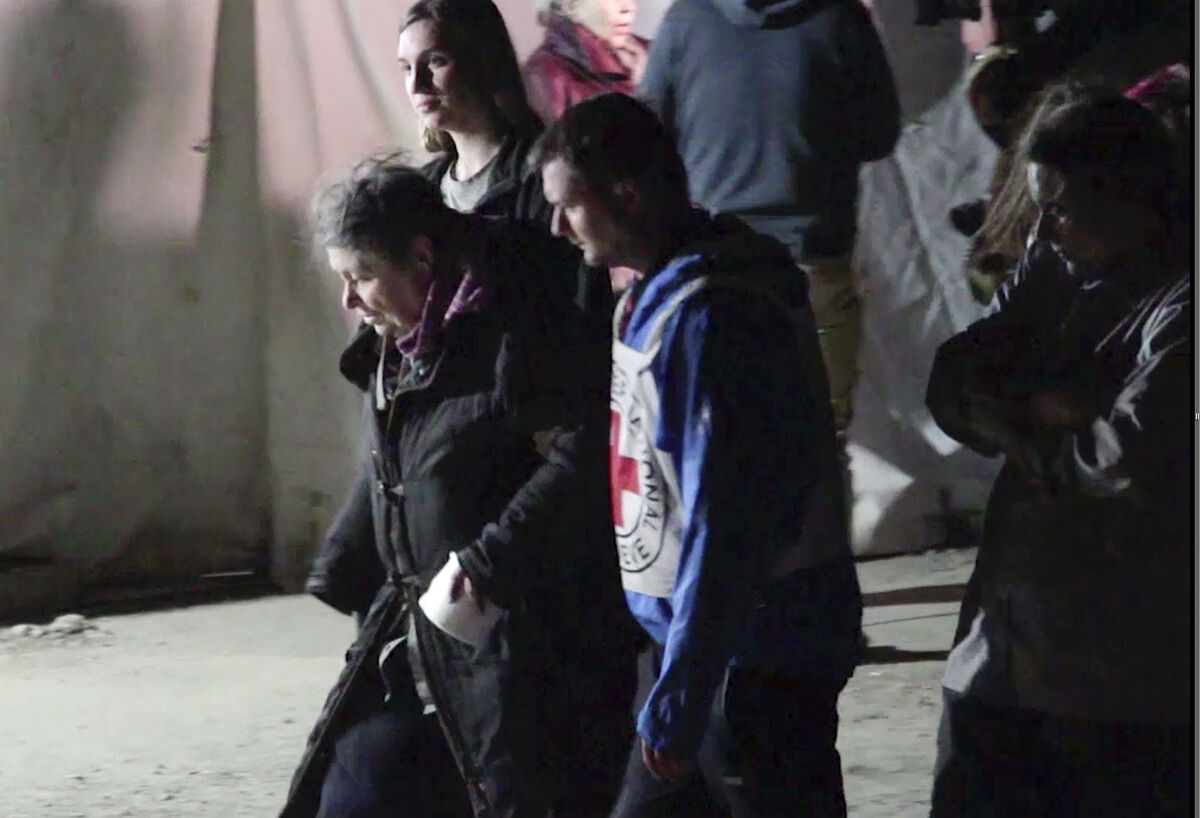
A long-awaited effort to evacuate people from a steel plant in the Ukrainian city of Mariupol was underway on Sunday, the United Nations said.
Ukrainian president Volodymyr Zelensky said in a tweet on Sunday afternoon that the first group of about 100 people was headed to Ukrainian-controlled territory.
“Tomorrow we’ll meet them in Zaporizhzhia. Grateful to our team! Now they, together with #UN, are working on the evacuation of other civilians from the plant,” he tweeted.
On Sunday, a team with Doctors Without Borders was at a reception centre for displaced people in Zaporizhzhia in preparation for the UN convoy’s arrival, if successful.
Stress, exhaustion and low supplies of food have likely weakened the health of civilians who have been trapped underground at the steel plant.
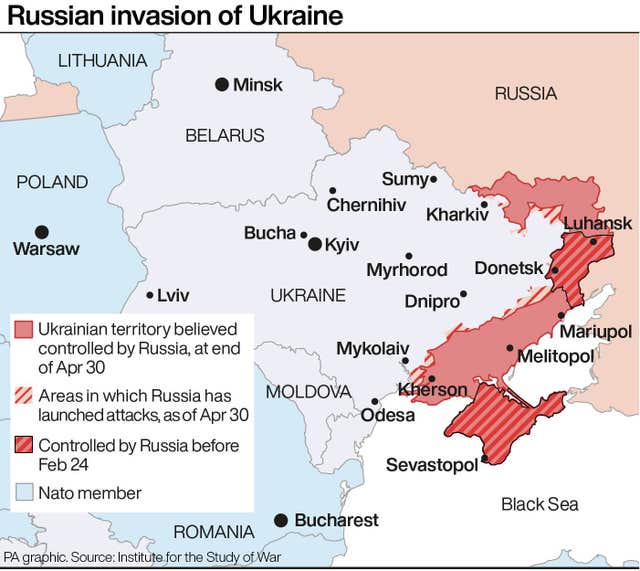
Russia’s high-stakes offensive in coastal southern Ukraine and the country’s eastern industrial heartland has Ukrainian forces fighting village by village and more civilians fleeing airstrikes and artillery shelling as the war draws near their doorsteps.
UN humanitarian spokesman Saviano Abreu told The Associated Press that the operation to bring people out of the sprawling Azovstal steel plant was being done with the International Committee for the Red Cross and in coordination with Ukrainian and Russian officials.
As many as 100,000 people are believed to still be in blockaded Mariupol, including up to 1,000 civilians who were hunkered down with an estimated 2,000 Ukrainian fighters beneath a sprawling Soviet-era steel plant that is the only part of the city not occupied by the Russians.
Mr Abreu called the situation “very complex” and would not give further details.
Zaporizhzhia, a city about 141 miles (227km) northwest of Mariupol, is the expected destination of the evacuation effort.
Zaporizhzhia was the destination of Mariupol residents who managed to flee the city on their own when previous Red Cross and Ukrainian-organised evacuations had to be called off due to ongoing shelling or concerns about route safety.
The UN said the convoy to evacuate civilians started on Friday, travelling some 140 miles (230km) before reaching the plant in Mariupol on Saturday morning.
Like other evacuations, success of the mission in Mariupol depended on Russia and its forces in a long series of checkpoints before reaching Ukrainian ones.
People who have fled Russian-occupied areas have at times described their vehicles being fired on. Ukrainian officials have repeatedly accused Russian forces of shelling evacuation routes on which the two sides had agreed.
Russian forces have embarked on a major military operation to seize significant parts of southern and eastern Ukraine following their failure to capture Kyiv.
Mariupol, a port city on the Sea of Azov, is a key target because of its strategic location near the Crimea Peninsula, which Russia seized from Ukraine in 2014.
“All the leaders of the free world know what Russia has done to Mariupol. And Russia will not go unpunished for this,” Ukrainian president Volodymyr Zelensky said in his nightly video address.
He warned that Russia was “gathering additional forces for new attacks against our military in the east of the country”.
Limited evacuations from the city took place on Saturday, but the details had been unclear given the number of parties involved in the negotiations and the volatile situation on the ground.
The Russian defence ministry said a total of 46 people, a group of 25 and another numbering 21, were evacuated from areas near the Azovstal plant.

A top official with the Azov Regiment, the Ukrainian unit defending the Azovstal steel works, said on Saturday that 20 civilians were evacuated from the steelworks.
In a video posted on the regiment’s Telegram channel, regiment Deputy Commander Sviatoslav Palamar called for the evacuation of wounded Ukrainian fighters as well as civilians.
“We don’t know why they are not taken away and their evacuation to the territory controlled by Ukraine is not being discussed,” he said.
The UN has not confirmed that people were able to leave Mariupol on Saturday.
In his nightly video address late on Saturday, Ukrainian president Volodymyr Zelensky warned that Russia was “gathering additional forces for new attacks against our military in the east of the country”.

A top official with the Azov Regiment, the Ukrainian unit defending the steelworks, said on Saturday that 20 women and children were evacuated from the plant itself.
Civilians have sheltered in a maze of underground tunnels while the plant has been under siege.
In a video posted on the regiment’s Telegram channel, Deputy Commander Sviatoslav Palamar called for the evacuation of wounded Ukrainian fighters as well as civilians.
“We don’t know why they are not taken away and their evacuation to the territory controlled by Ukraine is not being discussed,” he said.
Getting a full picture of the unfolding battle in eastern Ukraine has been difficult because airstrikes and artillery barrages have made it extremely dangerous for reporters to move around.
Also, both Ukraine and Moscow-backed rebels have introduced tight restrictions on reporting from the combat zone.
But western military analysts have suggested that the offensive in the Donbas region, which includes Mariupol, was going much slower than planned.
So far, Russian troops and the separatists appeared to have made only minor gains in the month since Moscow said it would focus its military strength in the east.
Mariupol city council later said Monday was the scheduled start date for a broad, UN-backed evacuation of its civilians, other than those sheltering at the steel plant.
The city council also confirmed in a social media post on Telegram that some civilians were being evacuated on Sunday from the Azovstal steelworks, noting the support of the Red Cross, and said the wider evacuation of the strategic port city was delayed by security concerns.
CONNECT WITH US TODAY



Be the first to know the latest news and updates