'Uninhibited violence': Europe and US condemn 'war crimes' in Bucha
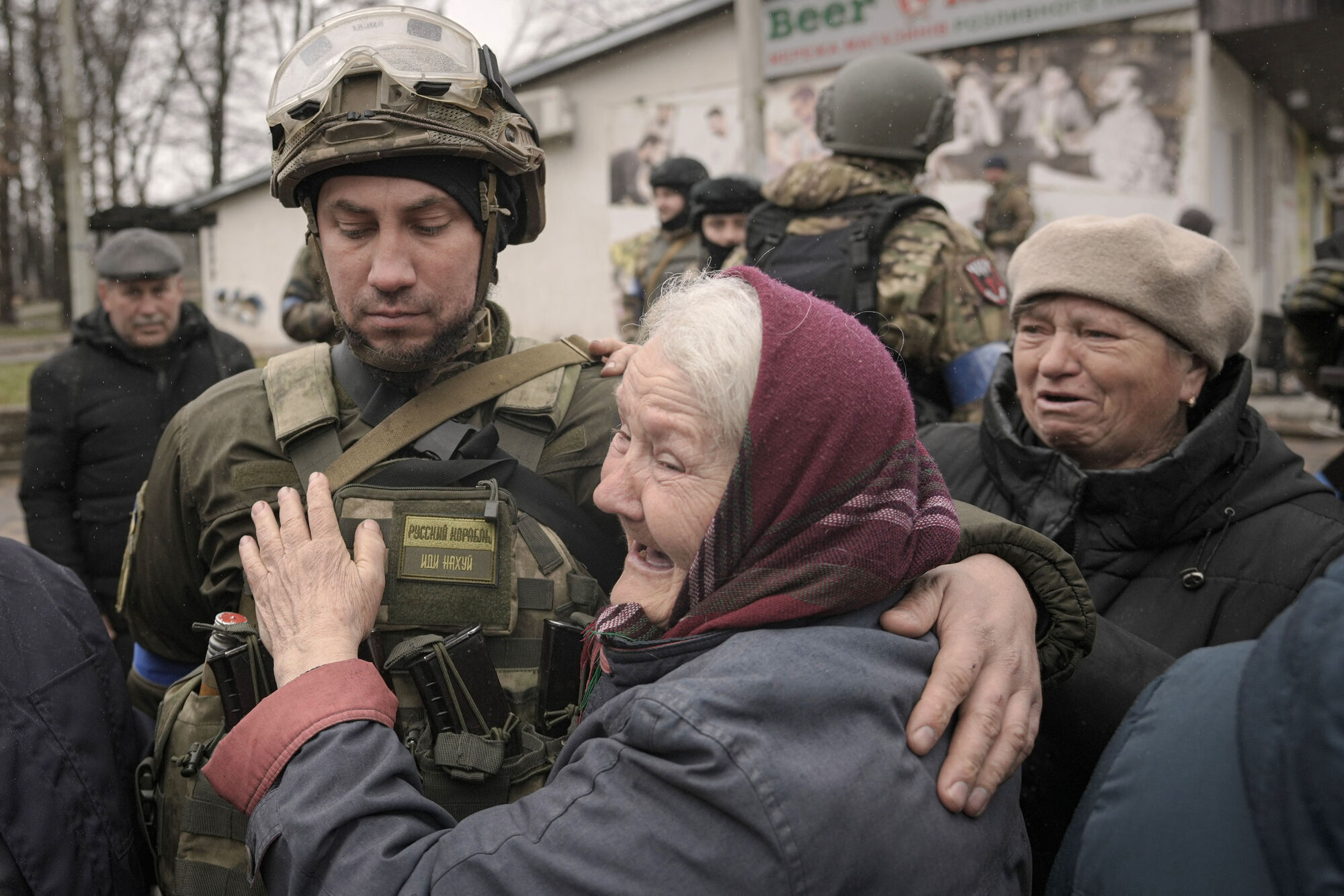
A woman hugs a Ukrainian serviceman after a convoy of military and aid vehicles arrived in the formerly Russian-occupied Kyiv suburb of Bucha, Ukraine. Picture: AP Photo/Vadim Ghirda
European leaders and the US have responded to the horrifying evidence of atrocities against civilians by Russian soldiers that are littered across Kyiv's suburbs and towns.
The Ukrainian Foreign Minister briefed Foreign Affairs Minister Simon Coveney on the events that have unfolded in Bucha in a phone call tonight.
During the call, Dmytro Kuleba thanked Ireland for insisting upon stronger EU sanctions on Russia.
Mr Coveney took to Twitter to demand accountability for Russia's actions in Ukraine.
"Shocking scenes of atrocities in Ukraine by Russian forces must be fully documented and pursued by an International Court," he wrote.
"There can be no impunity for crimes like these. International Community has a duty to demand accountability."
Germany's Foreign Minister said on Sunday Russia must pay for its "war crimes" in the Ukrainian town of Bucha just outside the capital in the form of more severe sanctions, denouncing Russian President Vladimir Putin's "uninhibited violence".
The mayor of Bucha said on Saturday that 300 residents had been killed during a month-long occupation by the Russian army. Victims were seen by Reuters in a mass grave and still lying on the streets.
"The images from Bucha are unbearable, Putin's uninhibited violence is extinguishing innocent families and knows no boundaries," Annalena Baerbock wrote on Twitter.
The Russian defence ministry in Moscow did not immediately reply to a request for comment when asked on Sunday about bodies found in Bucha.
Russia has previously denied targeting civilians and rejected allegations of war crimes in what it calls a "special military operation" in Ukraine.
In a statement on Sunday German Chancellor Olaf Scholz called for international organisations such as the International Committee of the Red Cross (ICRC) to be allowed access to the affected areas to independently document what he described as atrocities.
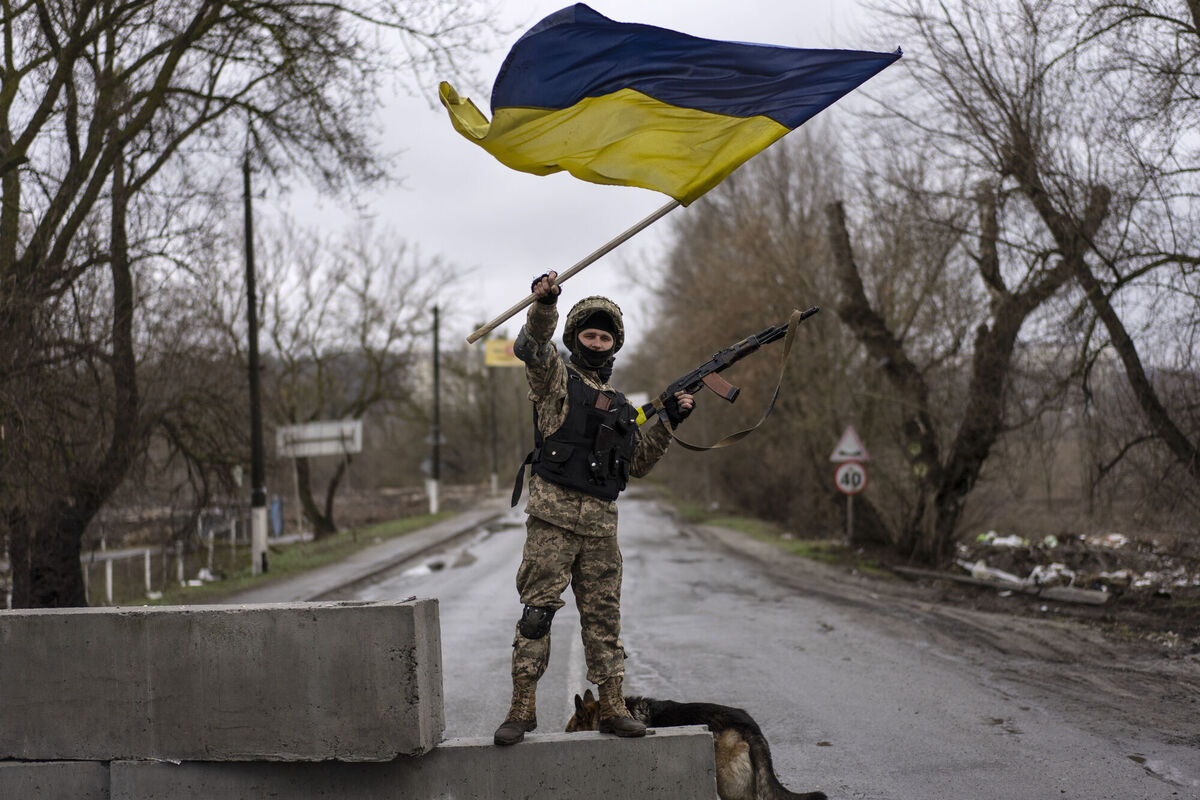
Scholz also called on Russia to finally agree to a ceasefire and put a stop to this "terrible, meaningless and unjustifiable war".
Germany was preparing the sanctions in conjunction with partners in the European Union, Economy Minister Robert Habeck was quoted as saying by German newspaper Bild.
Berlin has so far resisted growing calls to impose an embargo on Russian energy saying its economy and that of other European countries are too dependent still on Russian imports.
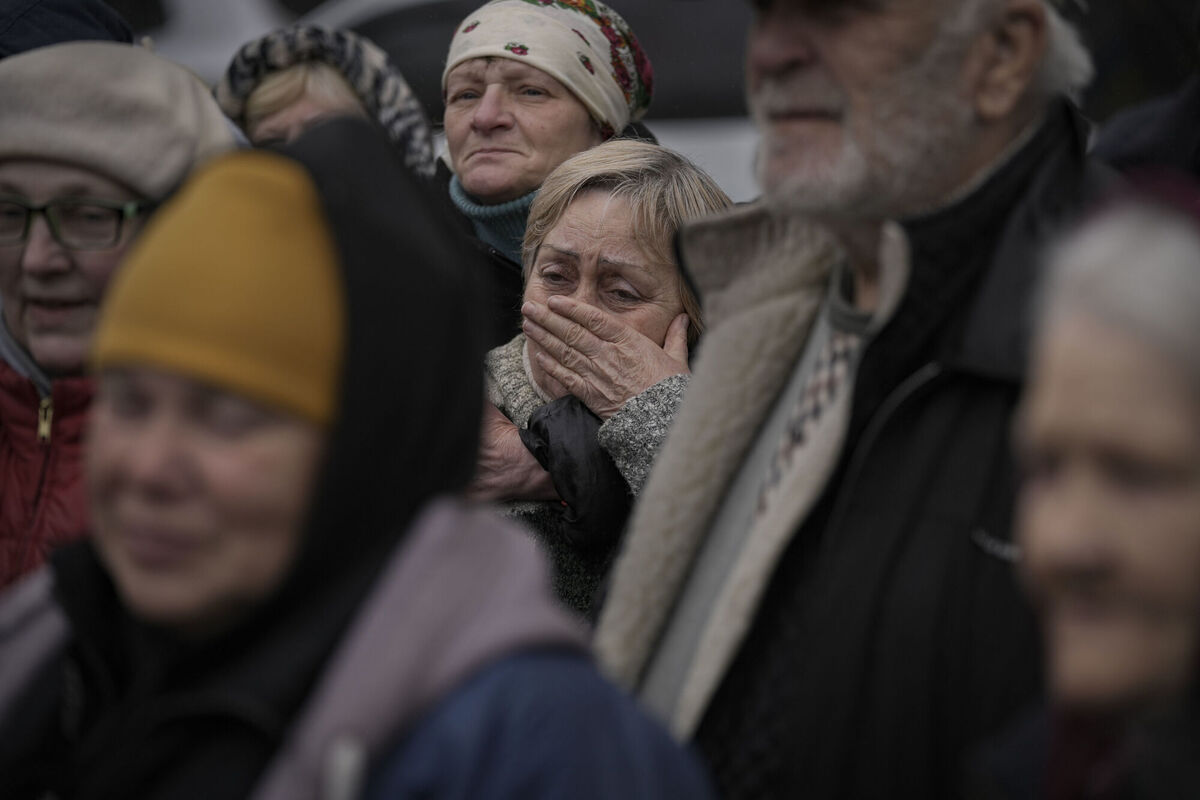
French Foreign Affairs Minister Jean-Yves Le Drian on Sunday condemned what he called the "massive abuses" committed by Russian forces" in Ukraine in recent weeks.
Le Drian highlighted the town of Bucha outside Kyiv and said that such abuses would constitute war crimes and that France will work with Ukrainian authorities and the International Criminal Court (ICC) to put on trial those responsible.
French President Emmanuel Macron said on Twitter that the images coming from Bucha were "unbearable".
"The Russian authorities will have to answer for these crimes," Macron added, expressing his compassion for the victims and his solidarity with Ukrainians.
The EU is working on further sanctions on Russia but any additional measures will not affect the energy sector, the bloc's Economic Commissioner Paolo Gentiloni said on Saturday.
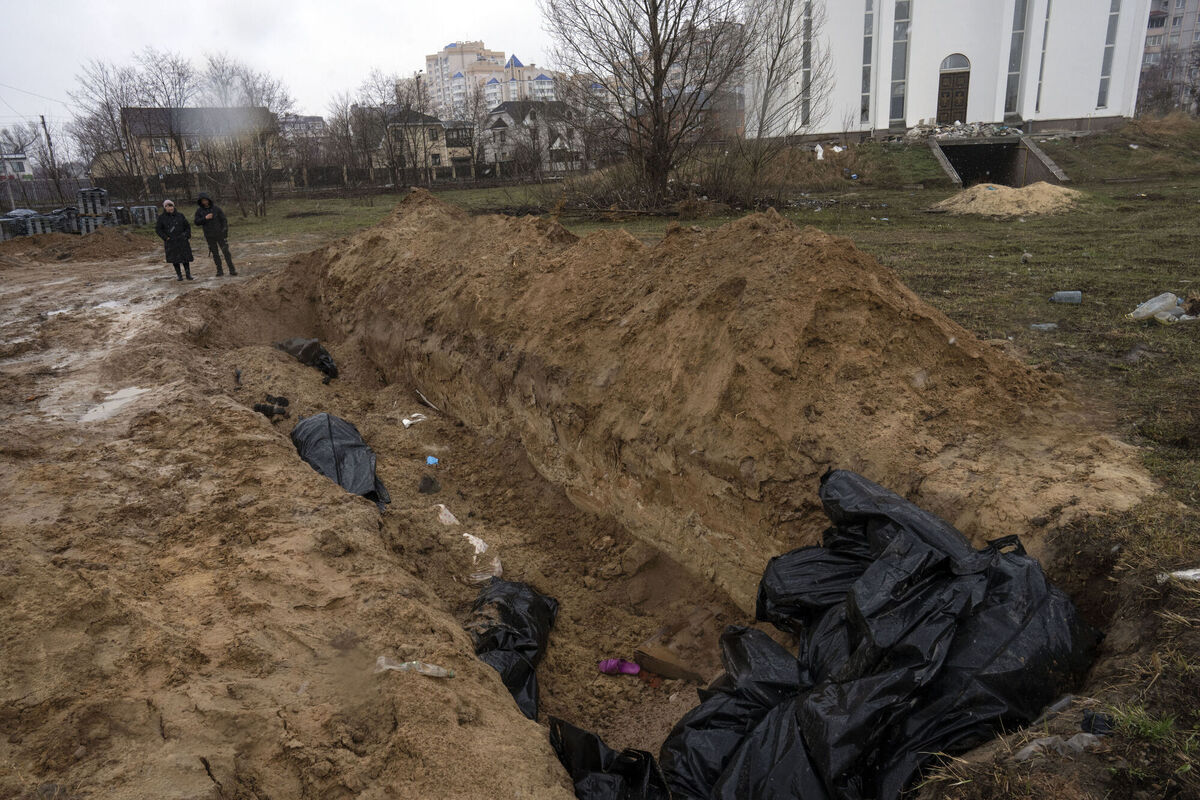
US Secretary of State Antony Blinken said images of dead Ukrainian civilians found in the town of Bucha after Russian troops left were a "punch in the gut" and those responsible for any war crimes must be held accountable.
In a CNN interview on Sunday, Blinken said: "We can't help but see these images as a punch in the gut," Blinken said, before noting that President Joe Biden's administration has said it believes Russian forces have committed war crimes and that it is helping collect evidence.
"There needs to be accountability," he said. "But I think the most important thing is we can't become numb to this. We can't normalize this. This is the reality of what's going on every single day as long as Russia's brutality against Ukraine continues."
Blinken side-stepped a question of whether the United States believes Russian troops have committed genocide.
"We will look hard and document everything we see, put it together to make sure that the relevant institutions and organizations are looking at this, including the State Department," he said.
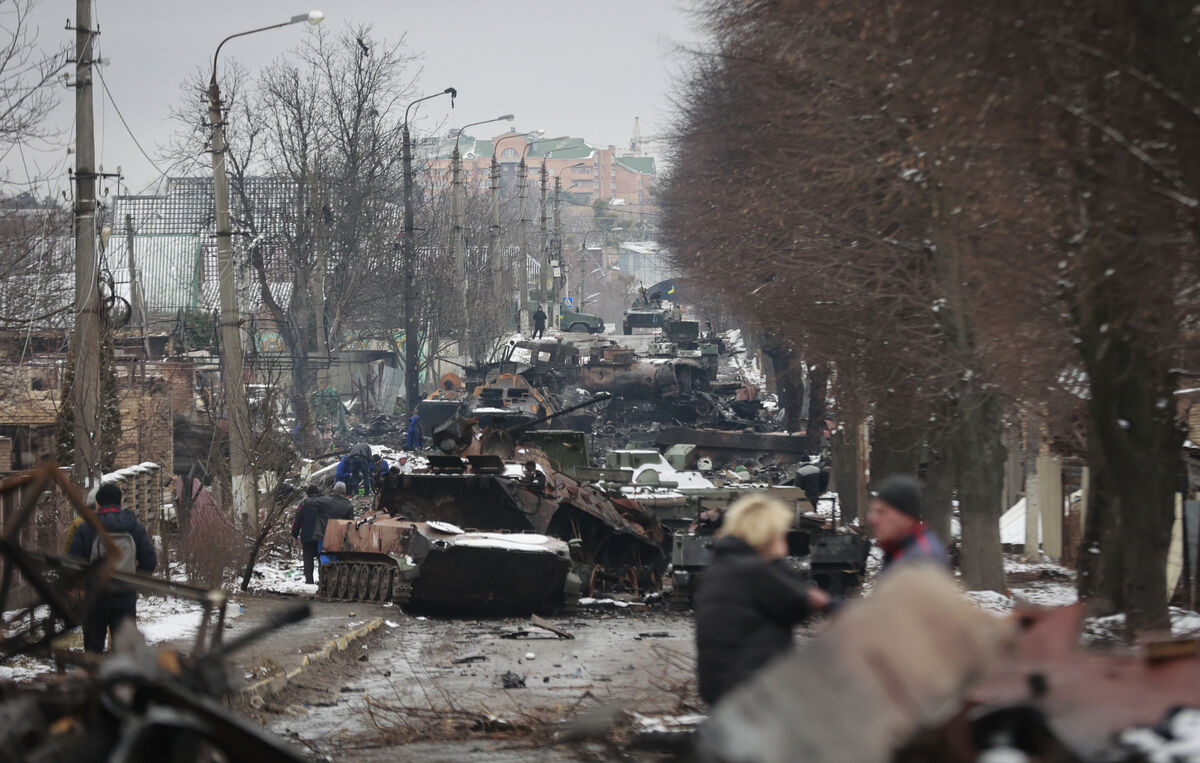
Those institutions include Ukrainian legal authorities and the International Criminal Court, which is investigating alleged war crimes and crimes against humanity in Ukraine.
Blinken said it was "too early to say" whether Russian troops that have withdrawn from around Kyiv are "regrouping and restocking and replenishing and then coming back" or redeploying toward the east and south, as Russian officials have suggested.
He declined to confirm reports that the United States is facilitating the transfers of Soviet-era tanks to Ukrainian forces from Eastern European allies. But he said members of the NATO alliance continue to provide arms "across the board."
"There are or will soon be in Ukraine more than 10 anti-tank systems for every Russian tank," he said.
Blinken will attend an April 5-7 NATO foreign ministers meeting in Brussels at which alliance support for Ukraine will be discussed, said State Department spokesperson Ned Price.
The allies also will consider "joint efforts to hold President (Vladimir) Putin accountable and promote a swift end to his senseless and destructive war of choice against Ukraine," Price said.
Blinken will attend a G7 foreign ministers meeting for additional discussions, he said.
CONNECT WITH US TODAY



Be the first to know the latest news and updates