Western leaders to bolster aid to Ukraine and tighten sanctions on Russia
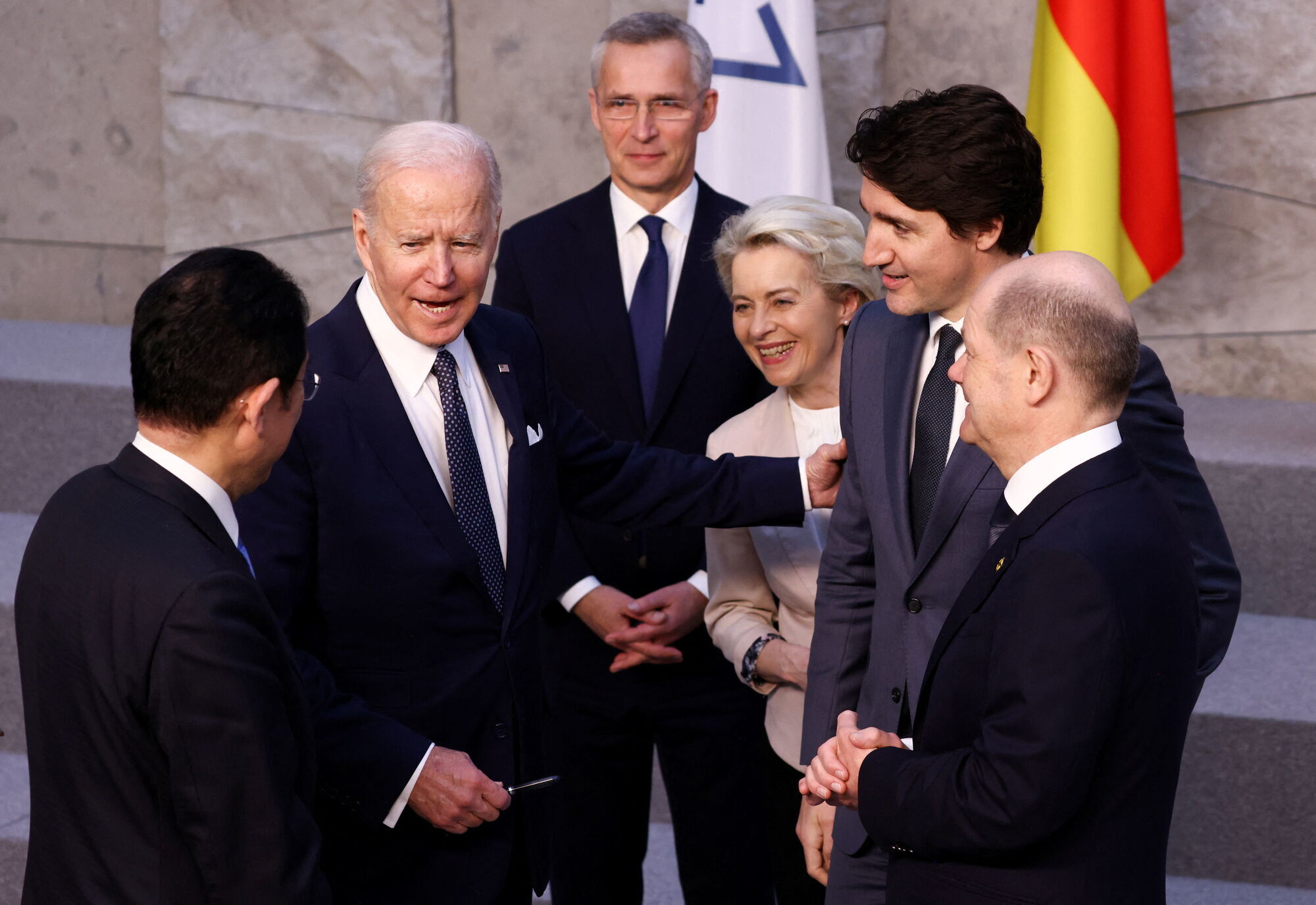
(Left-right) Japan's Prime Minister Fumio Kishida, U.S. President Joe Biden, NATO Secretary General Jens Stoltenberg, European Commission President Ursula von der Leyen, Canada's Prime Minister Justin Trudeau and Germany's Chancellor Olaf Scholz before a before a G7 leaders' family photo during a Nato summit in Brussels, Belgium to discuss Russia's invasion of Ukraine. Picture: Henry Nicholls/PA Wire
Western leaders meeting in Brussels on Thursday agreed to strengthen their forces in Eastern Europe, increase military aid to Ukraine and tighten sanctions on Russia whose invasion and bombardment of its neighbour entered a second month.
At an unprecedented summit of transatlantic alliance NATO, G7 rich nations and European leaders to address the continent's biggest military crisis since the 1990s Balkans wars, new battle groups were announced for four Eastern European nations.
The United States and Britain expanded sanctions blacklists. Various nations announced new military and humanitarian aid plus promises to take in refugees. And the EU was set to unveil steps to wean itself off Russian energy.
"We must ensure that the decision to invade a sovereign independent country is understood to be a strategic failure that carries with it ruinous costs for Putin and Russia," Canadian Prime Minister Justin Trudeau told the EU parliament.
Still, the pledges stopped short of President Volodymyr Zelenskyy's calls for a full boycott of Russian energy and a no-fly zone over Ukraine where Moscow's bombs are wreaking havoc.
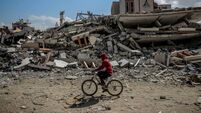
Thousands of people have been killed, millions made refugees, and cities pulverised since Russian leader Vladimir Putin unleashed his invasion on Feb. 24.
"We ask for protection from (Russia) bombing us from the sky," said refugee Svetlana, 55, on her way back to Ukraine from Poland to rejoin family after initially seeking refuge.
"And help us not only with equipment but with peace forces and professional soldiers."
More than 3.6 million people have fled Ukraine since the invasion began, according to the United Nations. More than half of Ukraine's children have been driven from their homes.
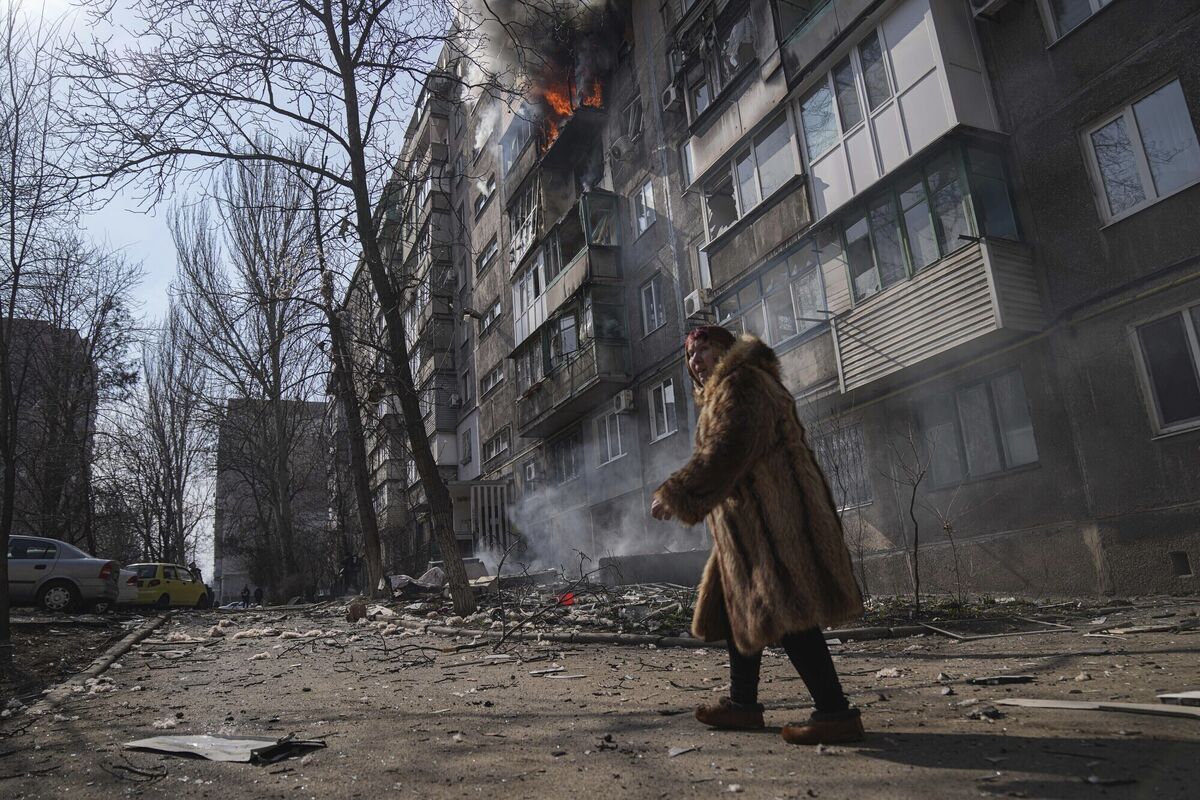
In the besieged southern port of Mariupol, which lies between Russian-annexed Crimea and eastern regions held by Russian-backed separatists, tens of thousands are hiding in basements with scant water, food, medicine or power.
In one part of the city captured by Russian troops, a patch of grass between charred hulks of blasted apartment buildings has become a makeshift graveyard.
Freshly-dug mounds are marked with plastic flowers and crosses made from broken window frames.
Explosions sound in the background.
"It could have been me," sobbed Viktoria as she buried her 73-year-old stepfather Leonid, killed when the car ferrying him to a hospital was blown up 12 days ago.
Ukrainian officials accused Russia on Thursday of having forcibly deported 15,000 people from the city to Russia.
Moscow denies this.

CONNECT WITH US TODAY



Be the first to know the latest news and updates