Nations pledge to cut Russian access to SWIFT as attacks on Kyiv continue
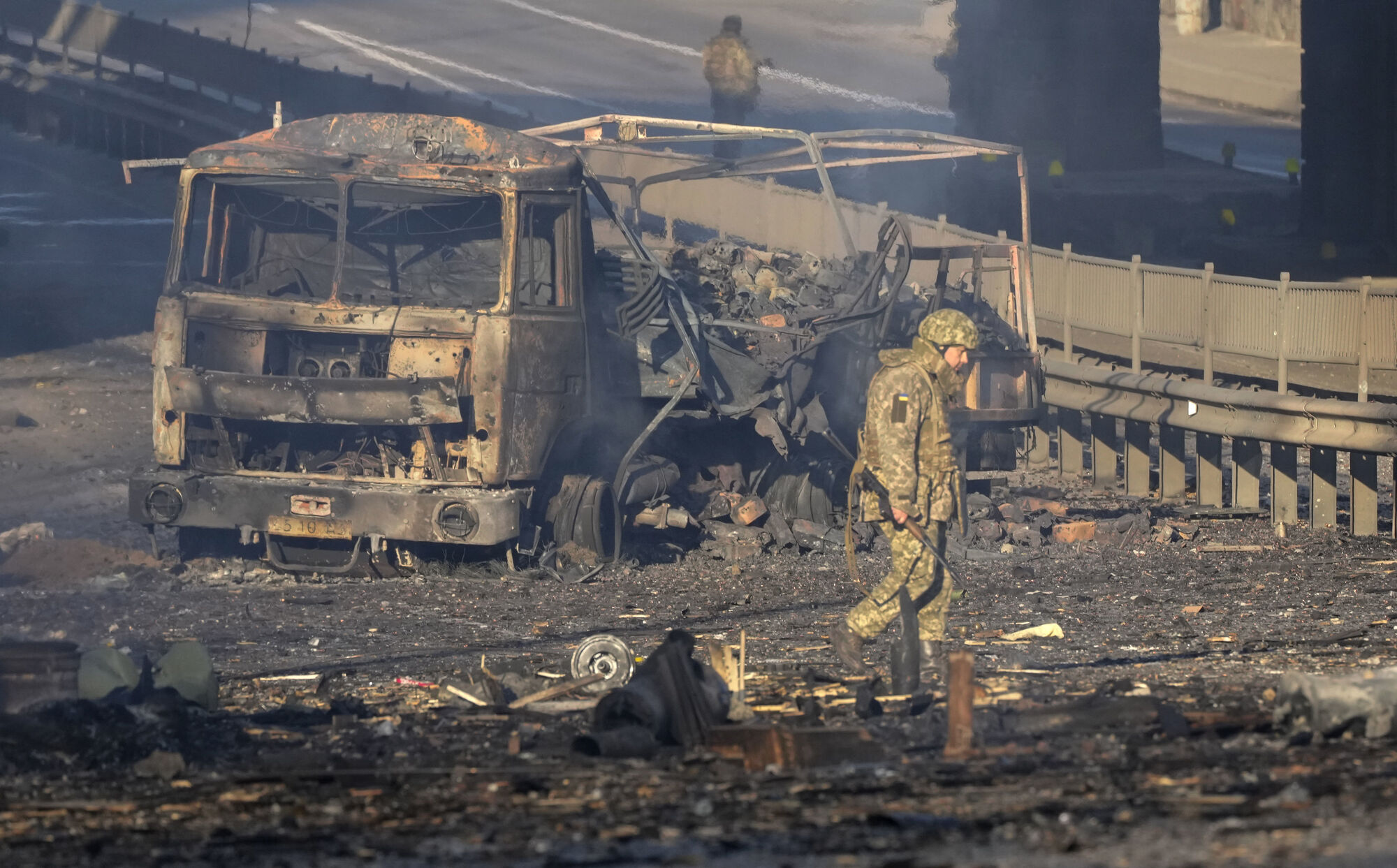
A Ukrainian soldier walks past debris of a burning military truck, on a street in Kyiv, Ukraine, Saturday, Feb. 26, 2022. (AP Photo/Efrem Lukatsky)
- Europe, US, Canada and UK pledge to remove ‘selected’ Russian banks from Swift system - READ MORE
- UN Security Council plans vote to call for rare General Assembly meeting on Ukraine - READ MORE
- Residents take cover in Ukrainian capital as Russian troops approach - READ MORE
- YouTube takes action against RT after Twitter access restricted in Russia - READ MORE
- A curfew has come into force in Kyiv until Monday morning - READ MORE
- Nearly 120,000 Ukrainians have fled Russian invasion, says UN - READ MORE
- Russian official Medvedev issues stark threats to the West - READ MORE
- France seizes ship suspected of violating sanctions against Russia - READ MORE
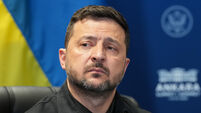
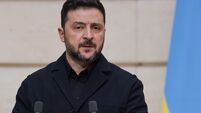
A defiant President Volodymyr Zelenskiy said Ukrainian forces were repelling Russian troops advancing on Kyiv, as Western nations said they were cutting off a number of Russian banks from the world's main financial payments system.
It came as the Department of Foreign Affairs advised Irish citizens to avoid non-essential travel to Russia at this time.
European Commission President Ursula von der Leyen said that the EU, along with the United States and other Western partners, plans to impose further sanctions on Russia for its invasion of Ukraine, including cutting off a number of Russian banks from the SWIFT interbank payments system.
The measures, which will also include restrictions on the Russian central bank's international reserves, will be implemented in the coming days, the nations said in a joint statement.
On Saturday, Ms von der Leyen said: "First, we commit to ensuring that a certain number of Russian banks are removed from SWIFT.
"It will stop them from operating worldwide and effectively block Russian exports and imports."
Secondly, she said, "we will paralyse the assets of Russia’s central bank".
"And finally, we will work to prohibit Russian oligarchs from using their financial assets on our markets," she added.
EU foreign ministers will discuss the sanctions package at a virtual meeting on Sunday evening, the fourth time they come together in a week.
And finally, we will work to prohibit Russian oligarchs from using their financial assets on our markets.
— Ursula von der Leyen (@vonderleyen) February 26, 2022
Putin embarked on a path aiming to destroy Ukraine.
But what he is also doing, in fact, is destroying the future of his own country. pic.twitter.com/bcygxFjeyG
The United Nations Security Council is also due to vote on Sunday to call for a rare emergency special session of the 193-member UN General Assembly on Russia's invasion of Ukraine, which would be held on Monday.
Only 10 such emergency special sessions have been convened since 1950.
In a significant shift, the German government has said it will send weapons and other supplies directly to Ukraine and supports some restrictions of the SWIFT global banking system for Russia.
Germany will supply Ukraine with defensive anti-tank weapons, surface-to-air missiles and ammunition, the government said on Saturday as Russia's forces continued to pound Kyiv and other cities on day three of its campaign.
As the capital faces a curfew until Monday, Reuters witnesses in Kyiv reported occasional blasts and gunfire in the city on Saturday evening, but it was not clear exactly where it was coming from.
The capital and other cities have been pounded by Russian artillery and cruise missiles.
A US defence official said Ukraine's forces were putting up "very determined resistance" to the three-pronged Russian advance that has sent hundreds of thousands of Ukrainians fleeing westwards, clogging major highways and railway lines.
"We have withstood and are successfully repelling enemy attacks. The fighting goes on," Zelenskiy said in a video message from the streets of Kyiv posted on his social media.
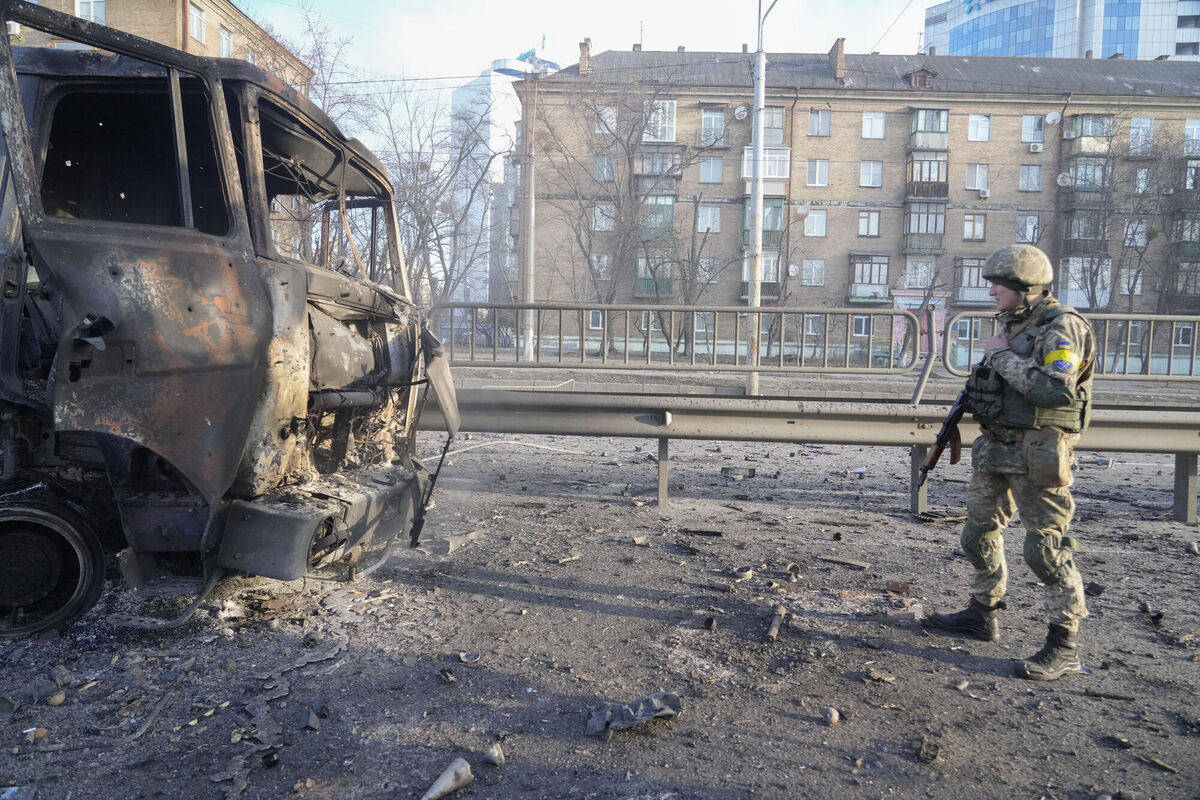
After facing criticism for refusing to send weapons to Kyiv, unlike other Western allies, Chancellor Olaf Scholz said Berlin will supply Ukraine with 1,000 anti-tank weapons and 500 Stinger surface-to-air missiles from Bundeswehr stocks.
"The Russian invasion of Ukraine marks a turning point. It is our duty to do our best to support Ukraine in defending itself against Putin's invading army," Scholz said on Twitter.
Berlin also approved the delivery of 400 RPGs from the Netherlands and a request by Estonia to pass on old GDR howitzers to Ukraine. Finland had bought the howitzers in the 90s after the fall of the Berlin wall, and later re-sold them to Estonia.
Germany has a long-standing policy of not exporting weapons to war zones, rooted partly in its bloody 20th-century history and resulting pacifism.
Scholz had repeatedly referred to this policy in recent weeks when refusing to deliver lethal weapons to Ukraine.
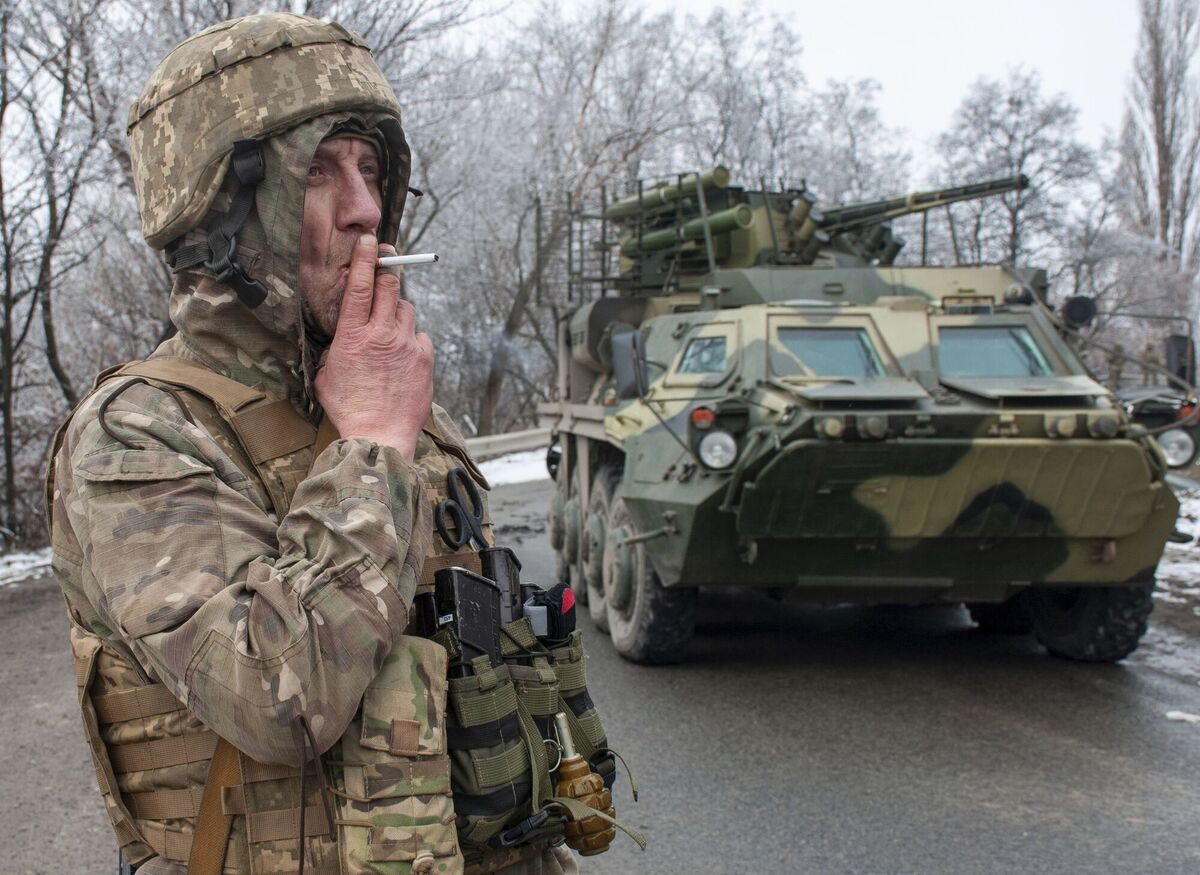
Kyiv's ambassador to Germany on Saturday urged Berlin to join the Netherlands and supply Ukraine with Stinger air defence rockets.
"Damn it, it's finally time to help us," Andriy Melnyk told Reuters in an interview at the Ukrainian embassy.
Germany's offer in late January to supply 5,000 military helmets to Ukraine to help defend against a potential Russian invasion was dismissed by Kyiv mayor Vitali Klitschko as "a joke".
Meanwhile, the Baltic nations of Estonia, Latvia and Lithuania have decided to close their airspace to Russian airlines, transport officials in the three countries say.
The legal formulation for the measure is underway and it wasn’t immediately clear when precisely the ban would take effect.

CONNECT WITH US TODAY



Be the first to know the latest news and updates