Ukraine and Russia discussing location and time for talks - Zelenskiy spokesman
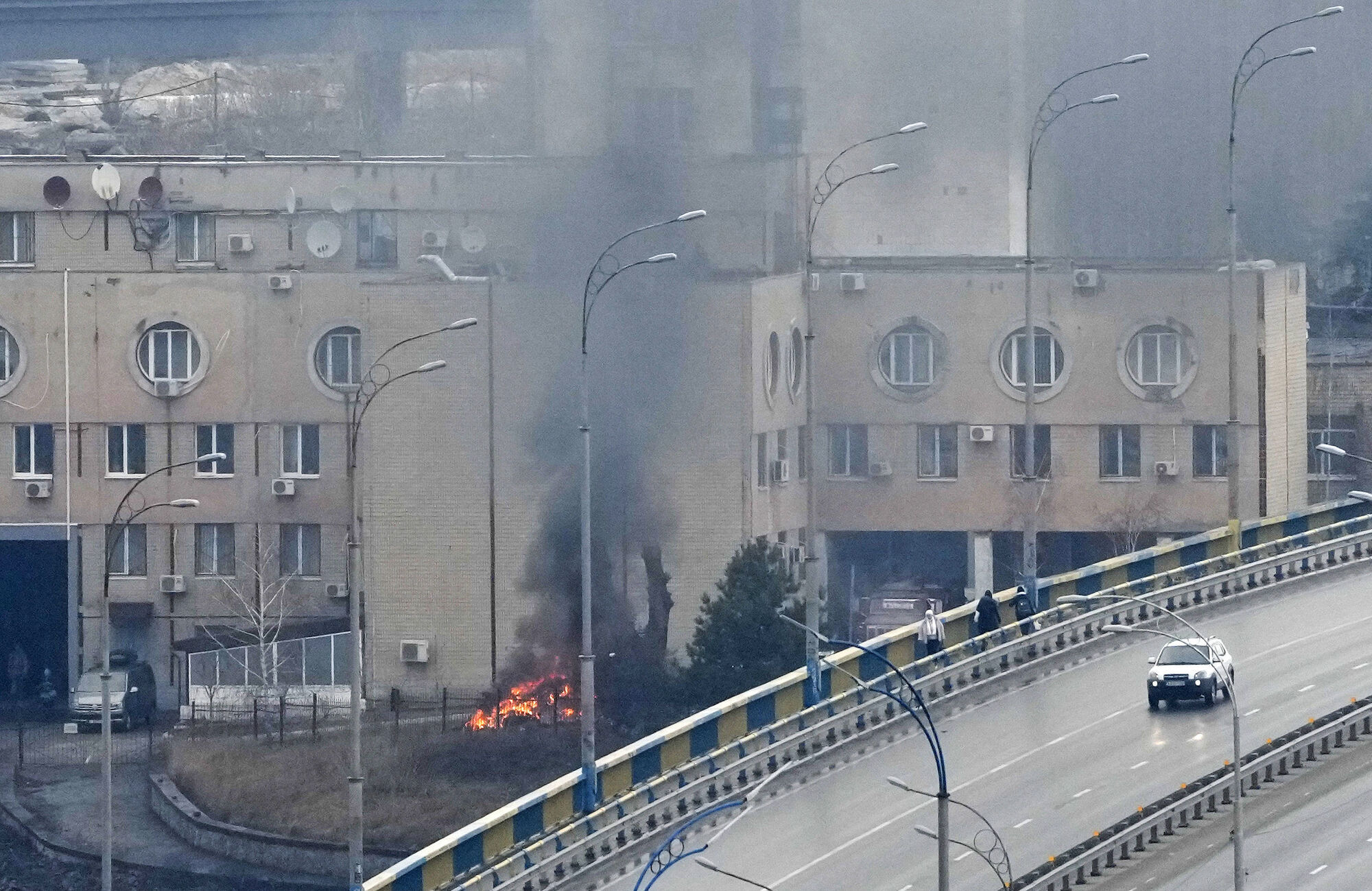
Smoke and flame rise near a military building after an apparent Russian strike in Kyiv. Picture: AP Photo/Efrem Lukatsky
Representatives of the Ukrainian and Russian governments are discussing a location and time for talks, a spokesperson for Ukrainian President Volodymyr Zelenskiy has said on social media.
"Ukraine was and remains ready to talk about a ceasefire and peace," said spokesman Sergii Nykyforov.
Earlier, President Zelenskiy appealed to Vladimir Putin directly, urging him to "sit down and talk to stop people dying."
In response a Kremlin spokesman said Russia was ready to send a delegation to the Belarusian capital of Minsk for peace talks.
However, both sides have said they would only agree to the meeting if the other agrees to demilitarise.
At a briefing tonight, the US State department cast doubts about whether Russia had legitimate plans for diplomacy.
“Now we see Moscow suggesting that diplomacy take place at the barrel of a gun, or as Moscow’s rockets, mortars, artillery target the Ukrainian people,” said Ned Price, a spokesperson for the US State Department
“This is not real diplomacy. Those are not the conditions for real diplomacy.”
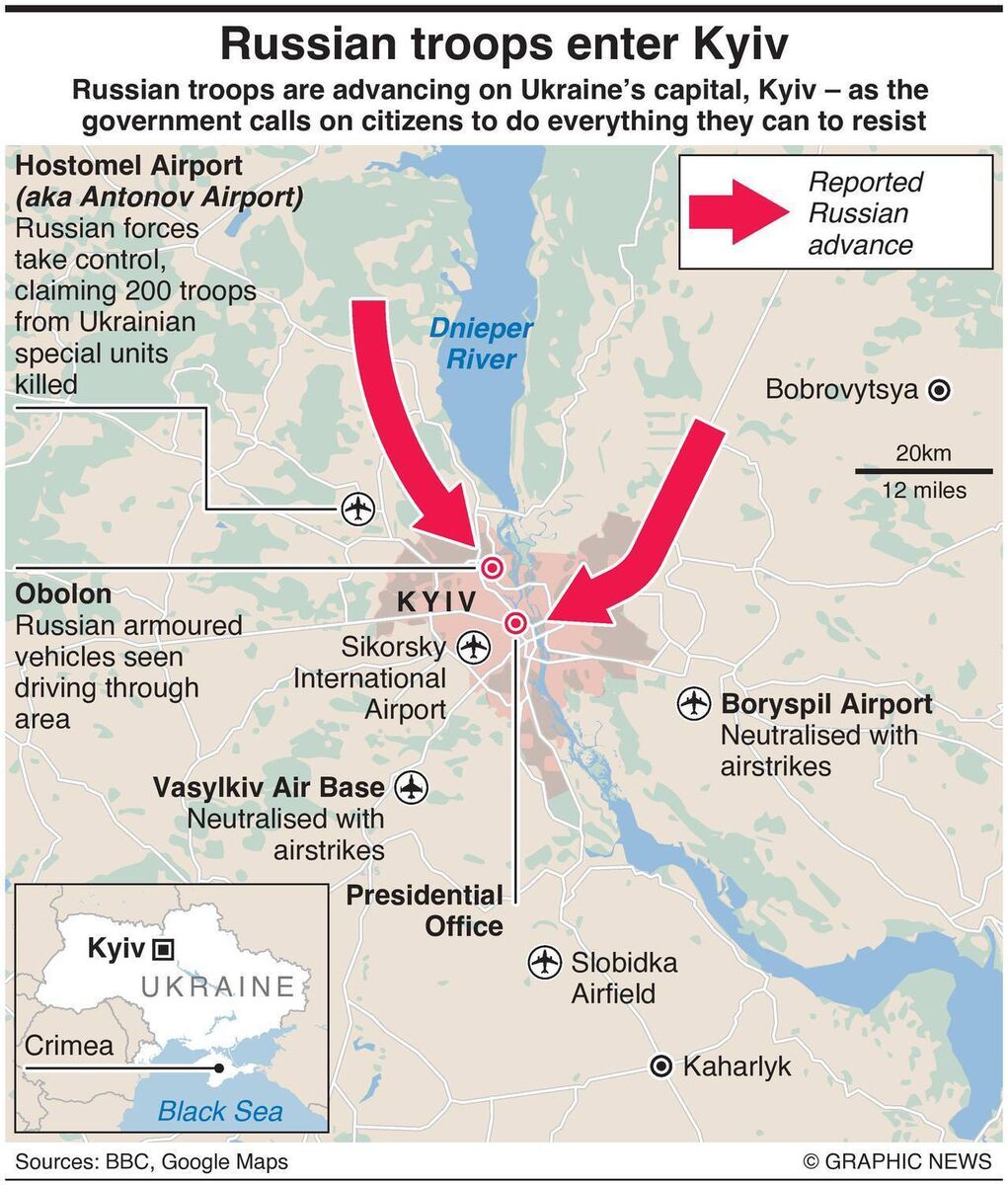
Meanwhile, Russian troops have continued their push into to the outskirts of Kyiv after unleashing airstrikes on cities and military bases and sending in troops and tanks from three sides in an attack that could rewrite the global post-Cold War security order.
Explosions and sirens sounded throughout the day on Friday, with gunfire later heard near the government quarter.
Elsewhere in the capital, soldiers established defensive positions at bridges, and armoured vehicles rolled down the streets, while many residents stood uneasily in doorways of their apartment buildings.
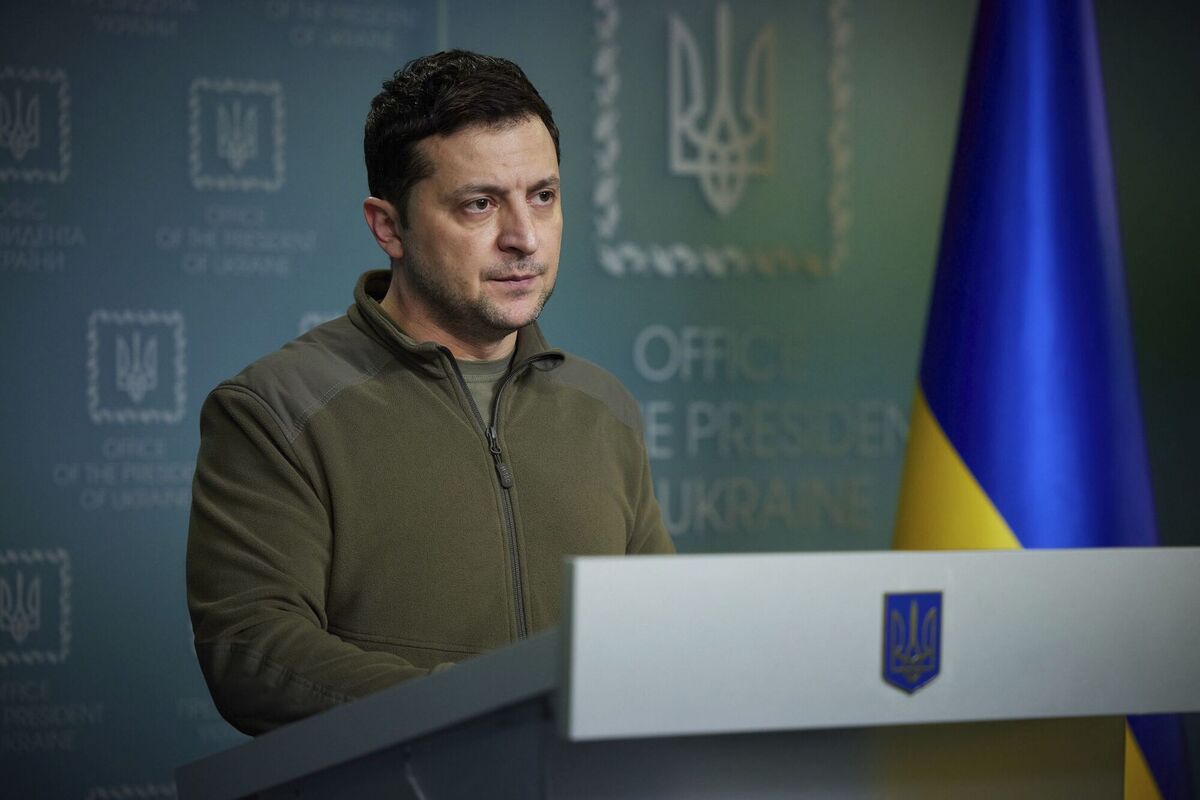
In an address to Ukrainians just moments ago, President Zeleneskiy said tonight would be "the hardest."
“The enemy will go all in. We must withstand. The night will be very hard, but sunset will come,” he said.
“This night will be harder than the day. Many cities of our state are under attack: Chernihiv, Sumy, Kharkiv, our boys and girls in the Donbas, the cities of the south, special attention to Kyiv,” he said. We can’t lose the capital.”
Meanwhile, the Biden administration has announced that it will move to freeze the assets of President Vladimir Putin and Foreign Minister Sergey Lavrov, following the EU and the UK in directly sanctioning top Russian leadership.
The US Treasury Department announced the sanctions shortly after the EU said it had also approved an asset freeze against Mr Putin and Mr Lavrov as part of a broader package of sanctions against Russia for the invasion of Ukraine.
British prime minister Boris Johnson also told Nato leaders during a call on Friday that Britain would move to impose sanctions against Mr Putin and Mr Lavrov.
It was not immediately clear how impactful an asset freeze would be on the pair, but the direct action targeting the Russian president was meant to be seen as a warning to Mr Putin that he could emerge as an international pariah if he does not end the invasion of Ukraine.
White House press secretary Jen Psaki indicated the US sanctions will include a travel ban.
President Joe Biden, who had previously said sanctions targeting Mr Putin were under consideration, decided to make the move in the last 24 hours after talks with European leaders.
The US Treasury Department is expected to release more details later on Friday.
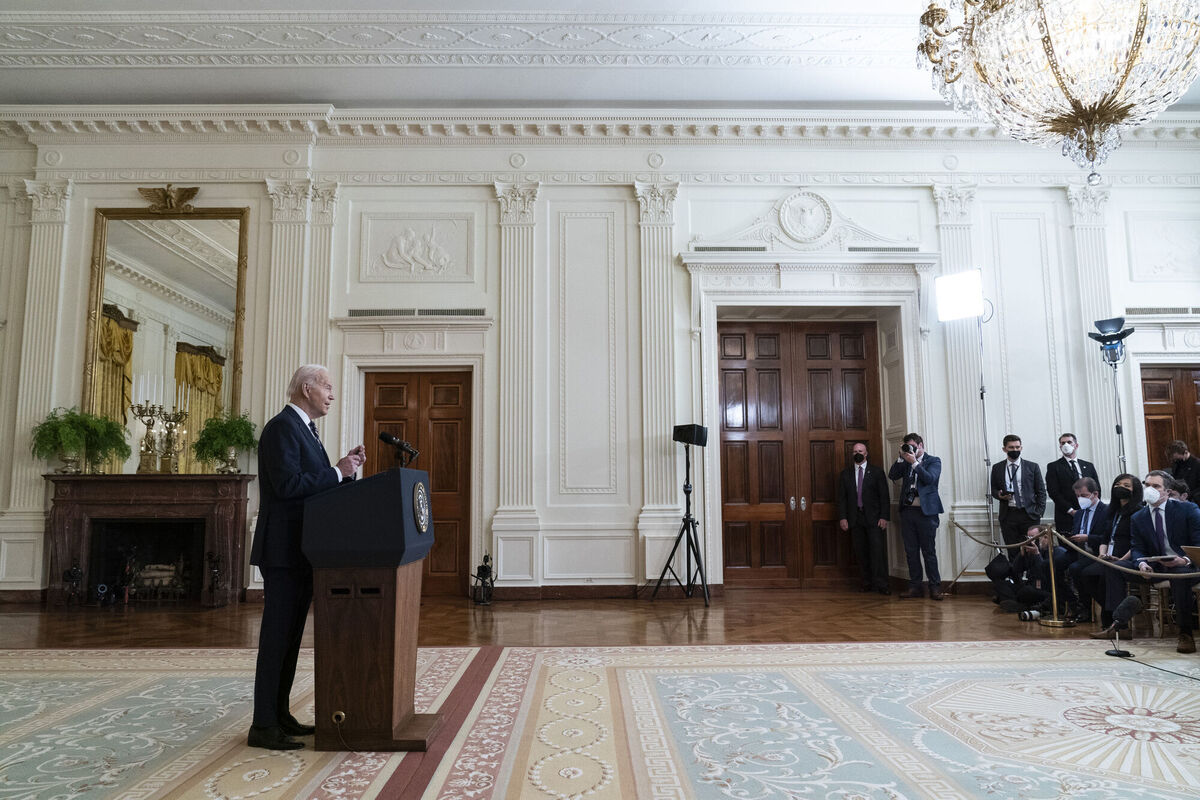
Ms Psaki said the move is intended send “a clear message about the the strength of the opposition to the actions” by the West against President Putin.
Austrian Foreign Minister Alexander Schallenberg said the move would be “a unique step in history toward a nuclear power, a country that has a permanent seat on the Security Council, but also shows … how united we are”.
It was unclear what the practical impact on the two men would be and how important their assets in the EU were.
“I can assure you that if you got major assets and all of a sudden you can’t get hold of them, it will cost you,” said EU foreign affairs chief Josep Borrell. He did not provide details.
EU ministers have said that even further sanctions were still possible, including booting Russia out of Swift, the dominant system for global financial transactions.
“The debate about Swift is not off the table, it will continue,” Luxembourg Foreign Minister Jean Asselborn said.
Admonishing Russia further, the Council of Europe suspended Russia from the continent’s foremost human rights organisation.
The 47-nation council said Russia remained a member and continued to be bound by the relevant human rights conventions.


CONNECT WITH US TODAY



Be the first to know the latest news and updates