Iran launches rocket into space amid Vienna nuclear talks
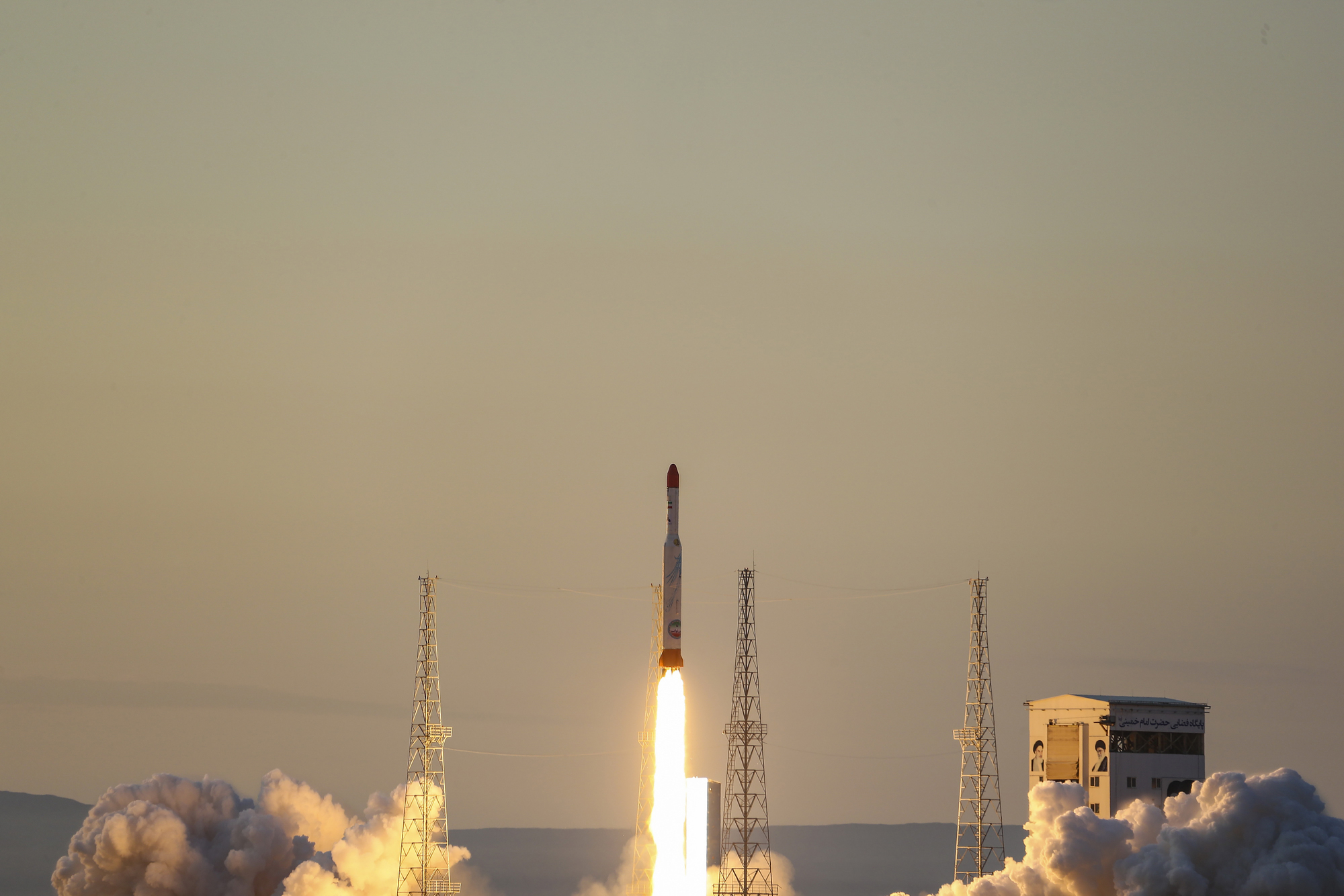
Iran has launched a rocket with a satellite carrier bearing three devices into space, authorities announced.
It was not clear when the launch happened or what devices the carrier brought with it, or whether they had entered Earthâs orbit.
Iran aired footage of the blast-off against the backdrop of negotiations in Vienna to restore Tehranâs tattered nuclear deal with world powers. An eighth round had been under way this week and is to resume in the new year.
Previous launches have drawn rebukes from the United States.
The US military did not respond to requests for comment on Thursdayâs announcement from Iran. The US state department, however, said it remains concerned by Iranâs space launches, which it asserts âpose a significant proliferation concernâ in regards to Tehranâs ballistic missile programme.
Ahmad Hosseini, a defence ministry spokesman, identified the rocket as a Simorgh, or âPhoenixâ, rocket that sent up the three devices 290 miles.
After initially saying the operation had been carried out properly, Mr Hosseini and other officials remained silent on the the status of the objects, suggesting the rocket had fallen short of placing its payload into the correct orbit.
Iranâs civilian space programme has suffered a series of setbacks in recent years, including fatal fires and a launchpad rocket explosion that drew the attention of former US president Donald Trump.
Iranian state media recently offered a list of upcoming planned satellite launches for the Islamic Republicâs civilian space programme.
Iranâs paramilitary Revolutionary Guard runs its own parallel programme, which successfully put a satellite into orbit last year. Mr Hosseini described the launch announced on Thursday as âinitialâ, indicating more are on the way.
TV footage showed the white rocket emblazoned with the words âSimorgh satellite carrierâ and the slogan âWe canâ shooting into the morning sky from Iranâs Imam Khomeini Spaceport.
A state TV reporter at a nearby desert site hailed the launch as âanother achievement by Iranian scientistsâ.
The blast-offs have raised concerns in Washington about whether the technology used to launch satellites could advance Iranâs ballistic missile development.
The United States says that such satellite launches defy a United Nations Security Council resolution calling on Iran to steer clear of any activity related to ballistic missiles capable of delivering nuclear weapons.
Iran, which long has said it does not seek nuclear weapons, maintains its satellite launches and rocket tests do not have a military component.
New Iranian demands in the nuclear talks have exasperated Western nations and heightened regional tensions as Tehran presses ahead with atomic advancements. Diplomats have repeatedly raised the alarm that time is running out to restore the accord, which collapsed three years ago when Mr Trump unilaterally withdrew the US from the deal.
From Vienna, Iranian nuclear negotiator Ali Bagheri Kani told Iranian state TV that he hopes diplomats pursue âmore serious work to lift sanctionsâ when nuclear talks resume next week. He described negotiations over the past week as âpositiveâ.
Washington, however, has thrown cold water on Tehranâs upbeat âassessments. State department spokesperson Ned Price told reporters earlier this week that âitâs really too soon to tell whether Iran has returned with a more constructive approach to this roundââ.