Killer whales have complex social structures that include close friendships
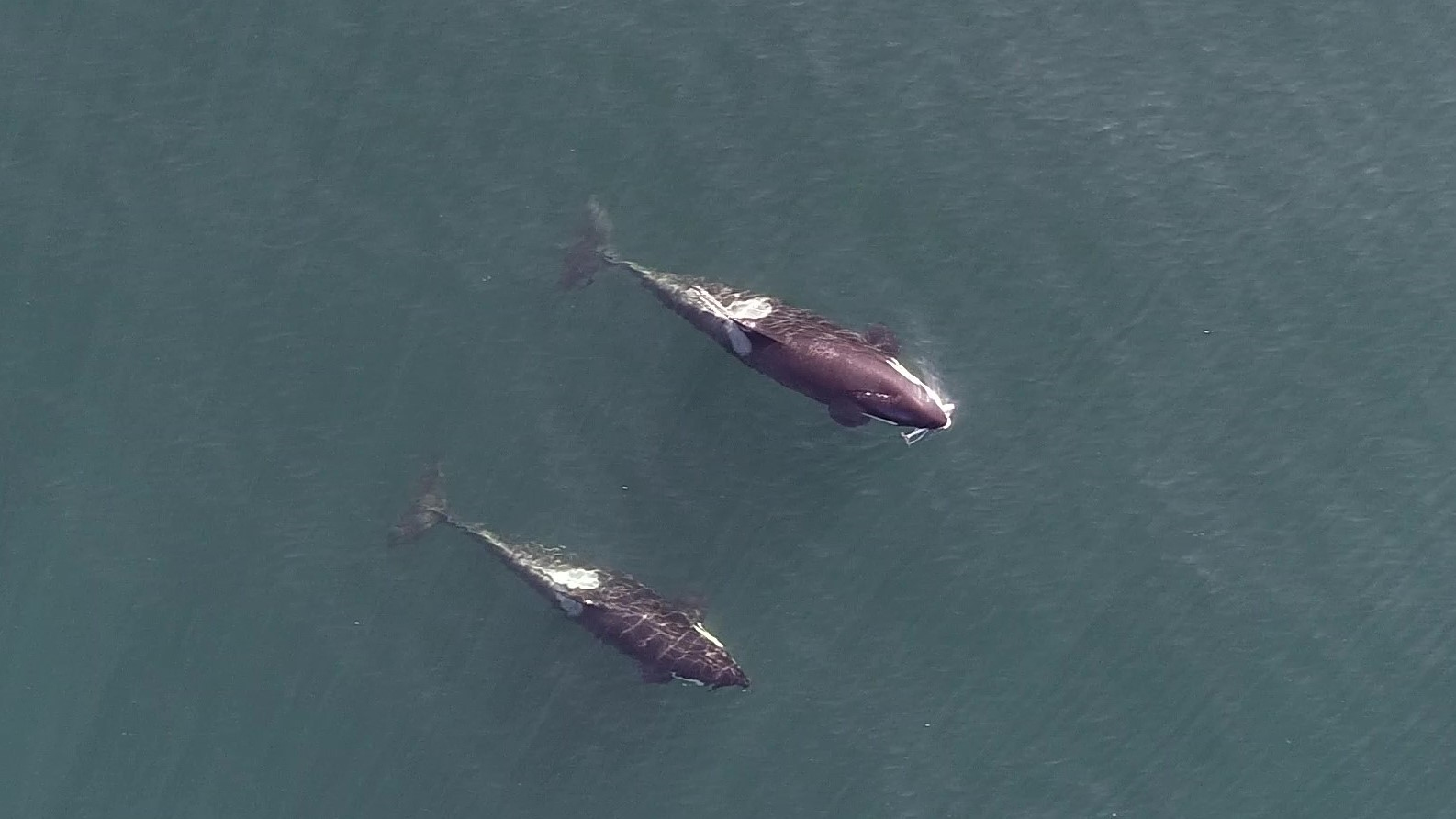
Screengrab taken from drone footage issued by the University of Exeter showing killer whales interracting with members of their pod. Picture: Michael Weiss/University of Exeter/PA Wire
Killer whales have complex social structures that include close friendships, a study that used drones to film the animals suggests.
The findings indicate that killer whales spend more time interacting with certain individuals in their pod, and tend to favour those of the same sex and similar age.
Led by the University of Exeter and the Centre for Whale Research (CWR), the study also found that the whales appear to grow apart as they get older.
Lead author Dr Michael Weiss, of the University of Exeter, said: âUntil now, research on killer whale social networks has relied on seeing the whales when they surface, and recording which whales are together.
âHowever, because resident killer whales stay in the social groups into which theyâre born, how closely related whales are seemed to be the only thing that explained their social structure.
âLooking down into the water from a drone allowed us to see details such as contact between individual whales.
âOur findings show that, even within these tight-knit groups, whales prefer to interact with specific individuals.
âItâs like when your mum takes you to a party as a kid â you didnât choose the party, but you can still choose who to hang out with once youâre there.â Patterns of physical contact â one of the social interactions the study measured â suggest that younger whales and females play a central social role in the group.
The older the whale, the less central they became, researchers found.

The new research was built on more than four decades of data collected by CWR on southern resident killer whales, a critically endangered population in the Pacific Ocean.
Professor Darren Croft, of Exeterâs Centre for Research in Animal Behaviour, said: âThis study would not have been possible without the amazing work done by CWR.
âBy adding drones to our toolkit, we have been able to dive into the social lives of these animals as never before.
âWe were amazed to see how much contact there is between whales â how tactile they are.
âIn many species, including humans, physical contact tends to be a soothing, stress-relieving activity that reinforces social connection.
âWe also examined occasions when whales surfaced together â as acting in unison is a sign of social ties in many species.
âWe found fascinating parallels between the behaviour of whales and other mammals, and we are excited about the next stages of this research.â The start of the drone project â including the purchase of one of the drones used in this study â was made possible by a crowd-funding campaign supported by members of the public, including University of Exeter alumni.
The results from the study, published in Proceedings of the Royal Society B, and partly funded by the Natural Environment Research Council, are based on 651 minutes of video filmed over 10 days.
The research team included the universities of York and Washington, and the Institute of Biophysics.