Toppled statue of slave trader Edward Colston goes on display in musuem
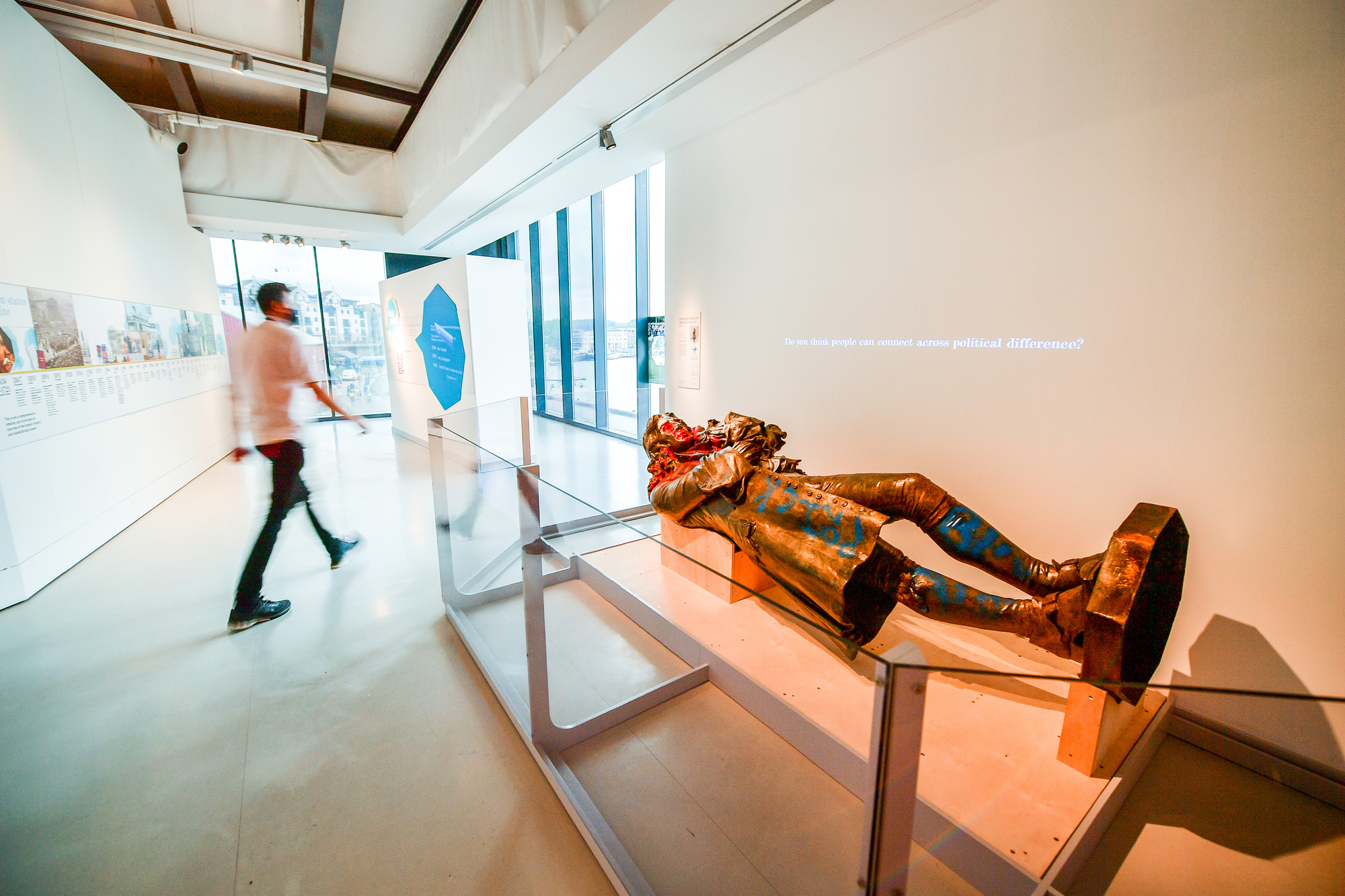
A statue of slave trader Edward Colston that was toppled during a Black Lives Matter protest will go on public display on Friday.
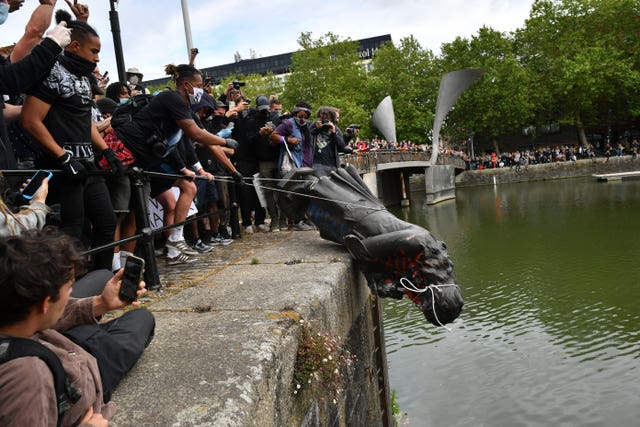
The bronze memorial to the 17th century merchant had stood in the city since 1895, but was pulled from its plinth during the demonstration on June 7 last year.
It was dragged through the city to the harbourside, where it was thrown in the water at Pero’s Bridge, which is named in honour of enslaved man Pero Jones who lived and died in the city.
Days later, the statue was recovered from the water by Bristol City Council and put into storage before months of work to clean and preserve the state it was in.
On Friday, almost exactly a year since it was toppled, the bronze will go on public display at the M Shed museum in the city alongside placards from the protest and a timeline of events.
The statue, featuring graffiti and damage from when it was pulled down, is unable to stand upright and so is displayed lying on a wooden stand.
Members of the public are being asked by the We Are Bristol History Commission, which was set up following the protest, what should happen to it next.
Options include removing the statue from public view entirely, creating a museum or exhibition about the transatlantic slave trade, or restoring the statue to its plinth.
Dr Shawn Sobers, associate professor at the University of the West of England and part of the commission, said the effects of the statue being pulled down “ricocheted” across the UK and the world.
“We know this isn’t an isolated incident, we know that there are statues across the world that celebrate slavers,” Dr Sobers said.
“At the same time, the anti-racist movement isn’t about statues. It’s trying to eradicate racism from society and bring equality where there’s racial disparity which cuts across economic divides.
“But statues are a symbol of how seriously our cities in Britain are actually taking these issues.”
Dr Sobers described putting the Colston statue on display as an opportunity to tell a “wider history” and encourage people to speak about it.
The display at M Shed forms the first part of the public consultation, with a survey also launched for people to provide their views on the future of the statue and of how Bristol’s history is told.
“It’s not an exhibition, it’s not trying to answer all the questions,” Dr Sobers said.
“We’re using this opportunity to find out what local people think because we have to live in this city together.
“We know it’s not going to be an overnight process but as a history commission we’re going to take the answers on board, consult other people in the city and put recommendations back to the city on how we feel it can move forward.”


CONNECT WITH US TODAY



Be the first to know the latest news and updates