Date set for AstraZeneca hearing in EU vaccine delivery case
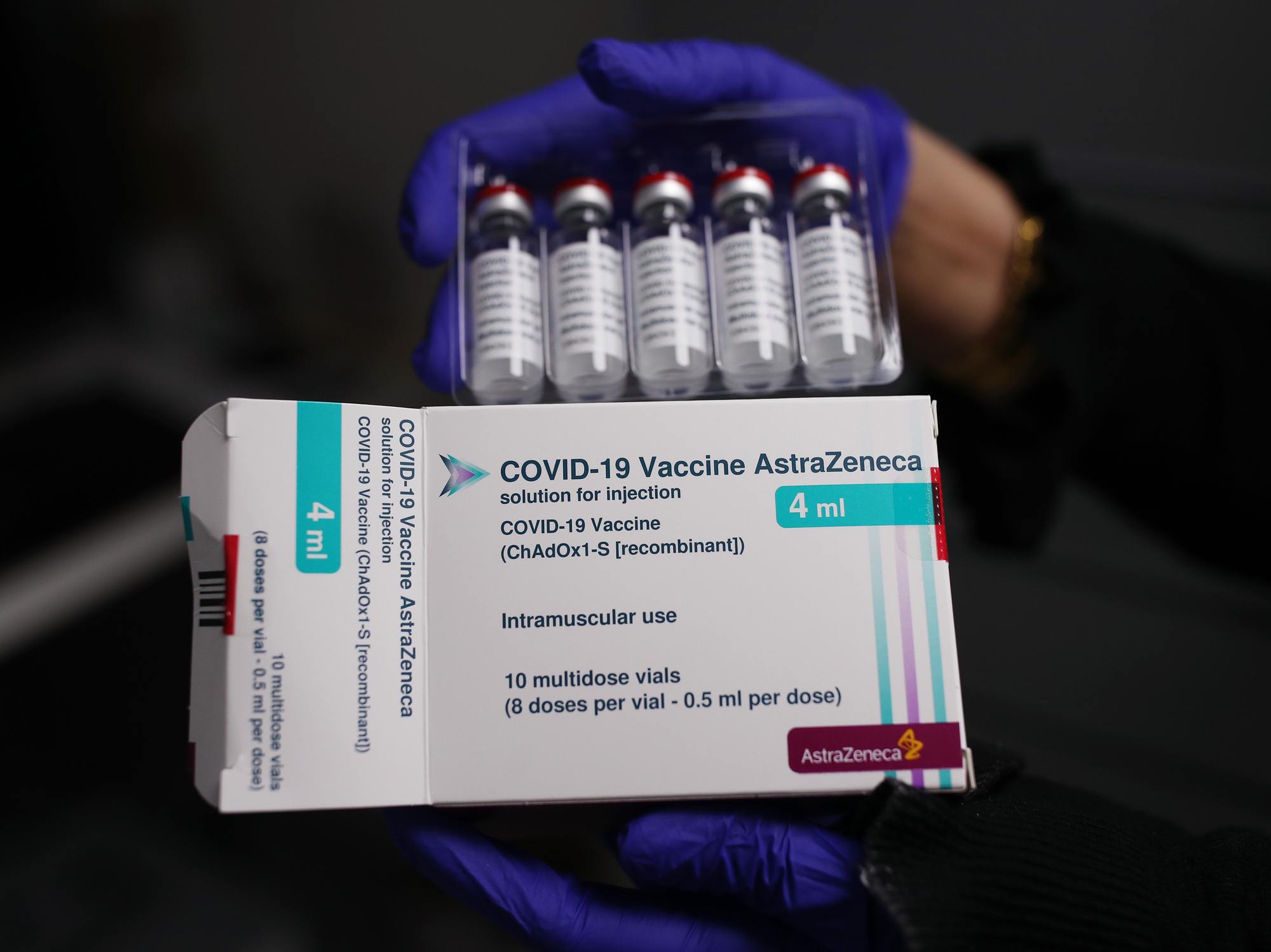
AstraZeneca has said it will “strongly defend itself” in court when European Union action against it begins today. File Picture: Yui Mok/PA Wire
The European Union’s executive branch has said the first hearing in its legal case against coronavirus vaccine-maker AstraZeneca will take place in a Brussels court on May 26.
The European Commission said it is taking the British-Swedish firm to court for failing to respect the vaccine delivery commitments in its contract with the 27-nation bloc.
AstraZeneca’s contract with the EU, which the Commission signed on behalf of the member countries last August, foresaw an initial 300 million doses for distribution among member countries.
The company had hoped to deliver 80 million doses in the first quarter of 2021, but only 30 million were sent.
According to the Commission, the drug maker is now set to provide 70 million doses in the second quarter, rather than the 180 million it had promised.
AstraZeneca said it will “strongly defend” itself in court.
The vaccine had initially been heralded as a key part of the bloc’s vaccination plan, given that it is easier to store and transport than other vaccines.
"The company has not been in the position to come up with a reliable strategy to ensure the timely delivery of doses," said European Commission spokesman Stefan De Keersmaecker.
"What matters to us, in this case, is that we want to make sure that there's a speedy delivery of a sufficient number of doses that European citizens are entitled to and which have been promised on the basis of the contract.
"So the Commission has indeed started legal action on its own behalf and on behalf of the 27 member states that are fully aligned in their support for this procedure."
Our priority is to ensure #COVID19 vaccine deliveries take place to protect the health of 🇪🇺.
— Stella Kyriakides (@SKyriakidesEU) April 26, 2021
This is why @EU_Commission has decided jointly with all Member States to bring legal proceedings against #AstraZeneca.
Every vaccine dose counts. Every vaccine dose saves lives.
AstraZeneca, which insists it has complied with the terms of its contract with the EU, said it “regrets” the bloc’s decision.
“Following an unprecedented year of scientific discovery, very complex negotiations, and manufacturing challenges, our company is about to deliver almost 50m doses to European countries by the end of April, in line with our forecast,” it said in a statement.
The firm said it appreciated the work done by political leaders and healthcare professionals across the EU, and we reiterated its commitment to helping facilitate vaccinations.
However, AstraZeneca said "vaccines are difficult to manufacture" and issues in production do occur.
"We are making progress addressing the technical challenges and our output is improving, but the production cycle of a vaccine is very long which means these improvements take time to result in increased finished vaccine doses," the firm said.
"Much work is ahead of us in the EU and elsewhere, as we continue to deal with the terrible pandemic and the roll-out of vaccination programmes. AstraZeneca has an important role to play, and our intent remains to do that fairly and equitably at no profit during the pandemic in the EU and around the world."
Noting the EU's support of the COVAX facility for equitable distribution of vaccines to low-and middle-income countries, AstraZeneca said it was "currently the leading supplier to more than 100 countries through COVAX providing 97% of its supply to date."

"Each dose has been made with vaccine serum originating from outside the EU.
"We look forward to working constructively with the EU Commission to vaccinate as many people as possible.
"Many thousands of our employees working around the clock have been driven by a passion to help the world at no profit; they remain firmly committed to delivering our vaccine to the people of Europe and around the world," the statement added.
Issues with the AstraZeneca vaccine have delayed vaccinations around Europe.
The rollout of the jab was paused in several countries following reports of rare blood clots in people who had received it.
However, the European Medicines Agency has insisted the jab is safe and that its benefits “far outweigh any risks.”
The court proceedings are public and will be made up of two hearings.
The European Commission hopes the process will be completed in a matter of weeks.