Hospitals in UK start receiving doses of Oxford/AstraZeneca vaccine
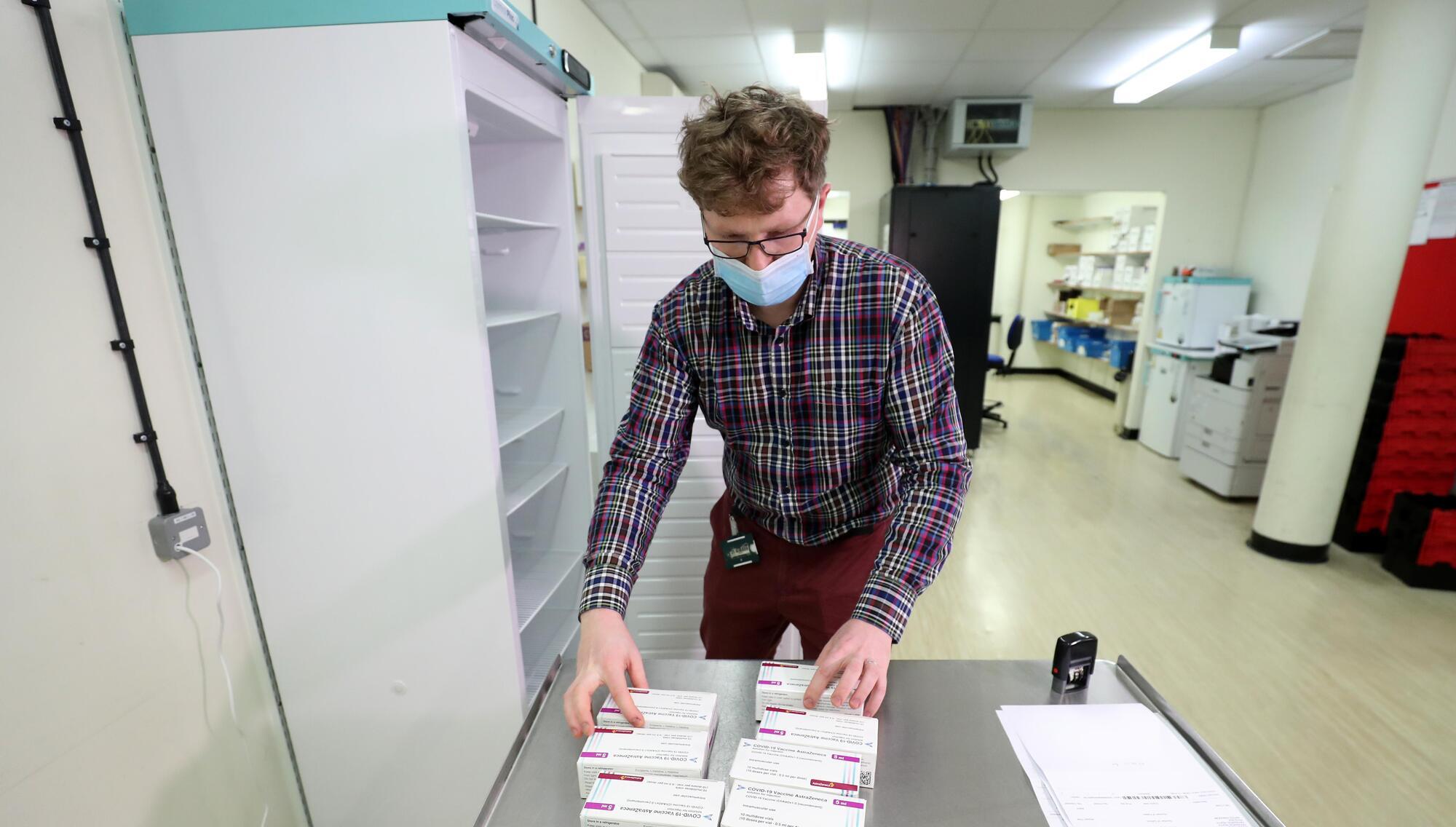
A hospital worker organises the arrival of the vaccines. Picture: PA
Batches of the newly approved coronavirus vaccine from Oxford University and AstraZeneca have started arriving at UK hospitals ahead of the jab’s rollout.
Some 530,000 doses of the vaccine will be available for rollout across the UK from Monday, with vulnerable groups already identified as the priority for immunisation.
One of the first hospitals to take delivery of a batch on Saturday morning was the Princess Royal Hospital in Haywards Heath, England, part of Brighton and Sussex University Hospitals NHS Trust.
Dr George Findlay, chief medical officer and deputy chief executive at the trust, said the vaccination programme gives NHS staff “more confidence” coming into work.
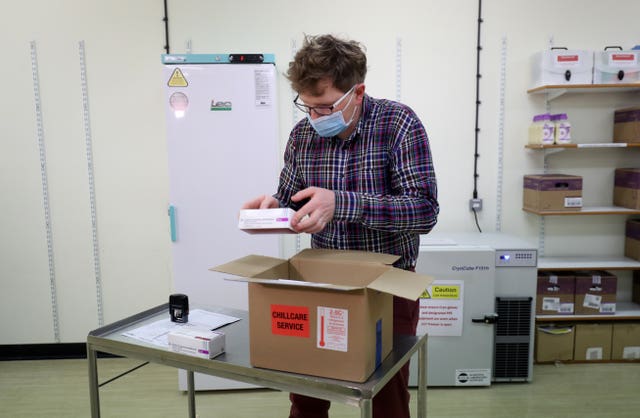
As it can be kept at normal fridge temperature, he said this vaccine is “much easier” to administer when compared with the jab from Pfizer and BioNTech, which needs cold storage of around minus 70C.
Rollout of the Pfizer/BioNTech jab began almost a month ago, with more than a million people having already received their first coronavirus jab.
Second doses of either vaccine will now take place within 12 weeks rather than the 21 days that was initially planned with the Pfizer/BioNTech jab, following a change in guidance which aims to accelerate immunisation.
Hundreds of people are expected to be vaccinated per day at the Princess Royal Hospital site, with efficiency expected to increase after the first few days of the programme, according to Dr Findlay.
“We’ve got a delivery hub set up in the grounds of this hospital, so we’ve got the infrastructure there to invite people in for booked appointments,” he said.
“And we will make sure those booked appointments are full every day from Monday going forward.”
Among those to be vaccinated with the Oxford/AstraZeneca jab from next week will be vulnerable NHS staff and social care workers who are at risk.
“We started vaccinating on our other hospital site a few weeks ago, it’s been seen as a really positive step, something that gives staff more confidence to come to work,” Dr Findlay said.
“You only have to look at the statistics over the last 10 months about how many staff have suffered illness, or sadly lost their lives.
“This gives staff the confidence to come to work to be able to look after patients.”
Dr Findlay said the hospital has been under “quite a lot of pressure” since the start of December due to a rise in cases amid a new variant of the virus.
“And that’s increased over the past few weeks as cases in the community increase, and then hospitalisations increase, and critical care requirements increase,” he said.
“Staff are coping amazingly well, they are working incredibly hard, and we are increasing capacity to deal with the most sick patients.
“So whilst it’s really difficult, and staff are under pressure, the hospitals are coping and we are still providing care to everybody who needs it.”
He said the hospital had decreased planned care, with some routine operations postponed to enable staff to focus on the Covid-19 response.
On potential staff burnout, Dr Findlay said he worries about the physical and mental wellbeing of workers, calling it an “incredibly difficult year”.
“We have gone through wave one, which was unknown and hugely pressured,” he said.
“We then tried to focus on recovery, so deliver care to the patients that were postponed, and people worked really hard at that.
“And then we’re straight into the next wave so nobody has had a break really for pretty much all year, so we are really worried about fatigue, stress, strain, and we’re doing everything that we can to try and support our staff. But it’s just always a worry.”


CONNECT WITH US TODAY



Be the first to know the latest news and updates