Johnson – UK-EU ‘deal still there to be done’ but Brussels’ demands unacceptable
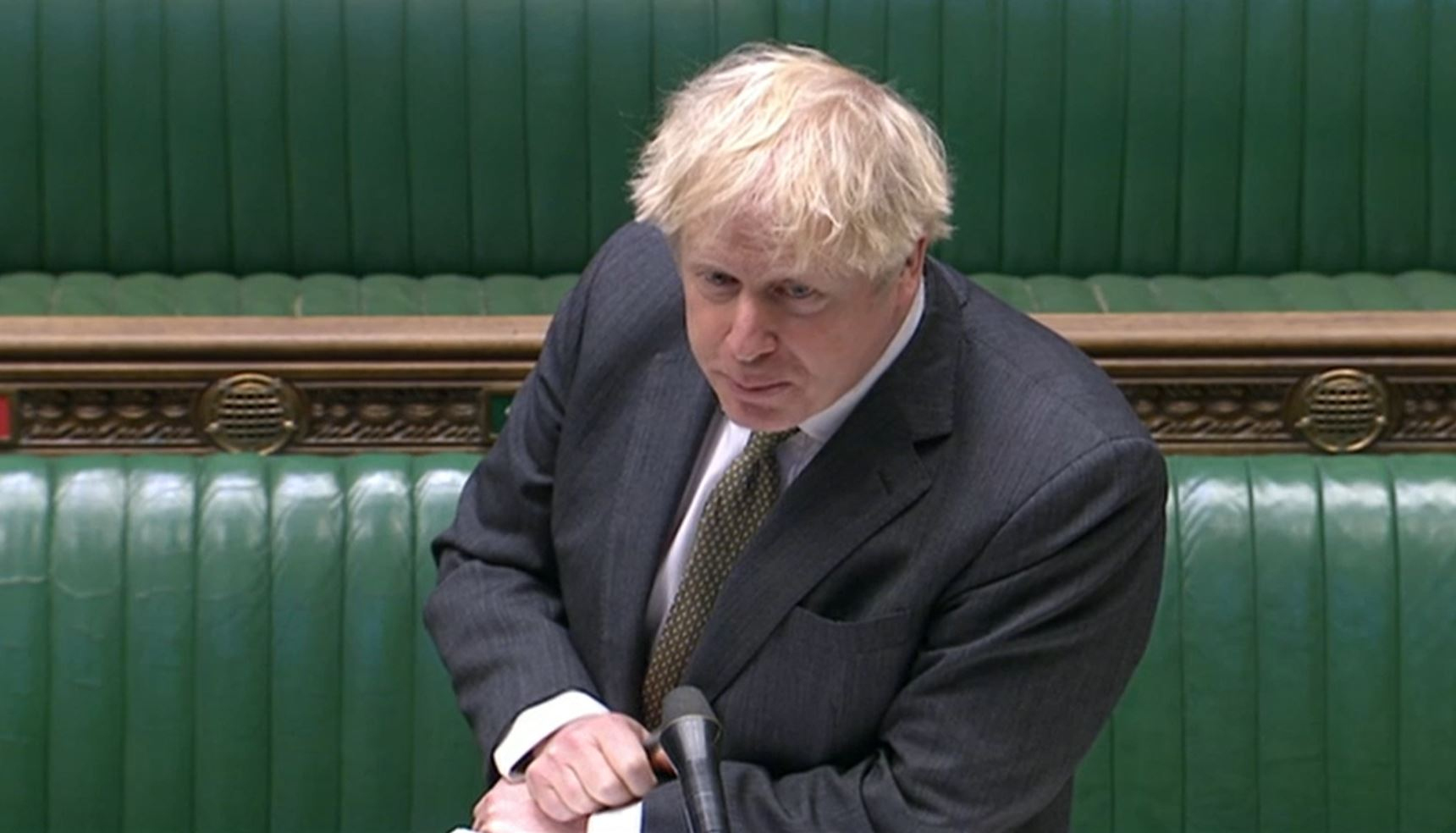
No prime minister could accept the demands the European Union is currently making as the price for a trade deal, Boris Johnson said ahead of crunch talks with Brussels’ top official.
The British Prime Minister will fly to Brussels for dinner with European Commission president Ursula von der Leyen with the negotiations in crisis and time running out.

Time is running out to reach a trade agreement before the current transitional arrangements expire at the end of the month but Mr Johnson insisted a deal was still possible.
At Prime Minister’s Questions Mr Johnson set out the main problems he has with the EU’s position, although he said “a good deal is still there to be done”.
The protracted negotiations on a UK-EU trade deal have faltered on the issues of fishing rights, the “level playing field” measures aimed at preventing the UK undercutting the EU on standards and state subsidies, and the way that any deal would be governed.
Mr Johnson said: “Our friends in the EU are currently insisting that if they pass a new law in the future with which we in this country do not comply or don’t follow suit, then they want the automatic right to punish us and to retaliate.
“Secondly, they are saying that the UK should be the only country in the world not to have sovereign control over its fishing waters.
“I don’t believe that those are terms that any prime minister of this country should accept.”
He again insisted the UK would “prosper mightily” with or without a deal – a claim which has been disputed by economic experts including the Office for Budget Responsibility and the governor of the Bank of England.
Failure to reach agreement would see tariffs imposed on UK exports to the EU, the country’s biggest trading partner, and could also increase bureaucracy.
The Office for Budget Responsibility has suggested that a no-deal outcome could wipe 2% off gross domestic product, a measure of the size of the economy, in 2021.
The Bank’s governor Andrew Bailey has warned that the long-term damage caused by a no-deal situation would be worse than the economic hit from coronavirus.
Labour leader Keir Starmer suggested his MPs would back a deal if Mr Johnson brought one back to the Commons.
“If there is a deal, and I hope there’s a deal, then my party will vote in the national interest – not on party political lines, as he is doing.”
He urged Mr Johnson to “end the charade”, claiming Mr Johnon's “incompetence has held Britain back”.
Ahead of the Brussels dinner there has been pessimistic briefing from both sides, with UK sources acknowledging “an agreement may not be possible” and the EU’s negotiator, Michel Barnier, warning the bloc’s foreign ministers that a no-deal scenario is more likely than an agreement.
Asked about Mr Barnier’s gloomy assessment, Cabinet Office minister Michael Gove said: “No, I don’t think it is right to say that yet.
“I think that tonight there is an opportunity for the Prime Minister and Ursula von der Leyen, and they have a good relationship, to thrash out a potential way through.”
He told BBC Radio 4’s Today programme that Ms von der Leyen “will want to ensure that all EU member states recognise that a deal is in everyone’s interest and that will require a degree of movement for some on the EU side”.
That comment could be seen as a reference to French warnings that president Emmanuel Macron could veto a deal, with Paris especially concerned about the issue of fishing rights – one of the main obstacles to an agreement.
Mr Gove suggested there could be a limited compromise over fishing rights, with the UK prepared to be “very generous” in the way changes are phased in.
But he told Today: “What is not up for compromise is the principle that the UK will be an independent coastal state and it will be a matter for negotiation between the UK and the EU, with the UK in control of our waters.”
German chancellor Angela Merkel stressed the importance of the “level playing field” to protect the EU’s single market – the rules governing trade in the bloc.
She told the parliament in Berlin: “We must have a level playing field not just for today, but we must have one for tomorrow or the day after, and to do this we must have agreements on how one can react if the other changes their legal situation.
“Otherwise there will be unfair competitive conditions that we cannot ask of our companies.”