Eta dumps rain on an already flooded Florida
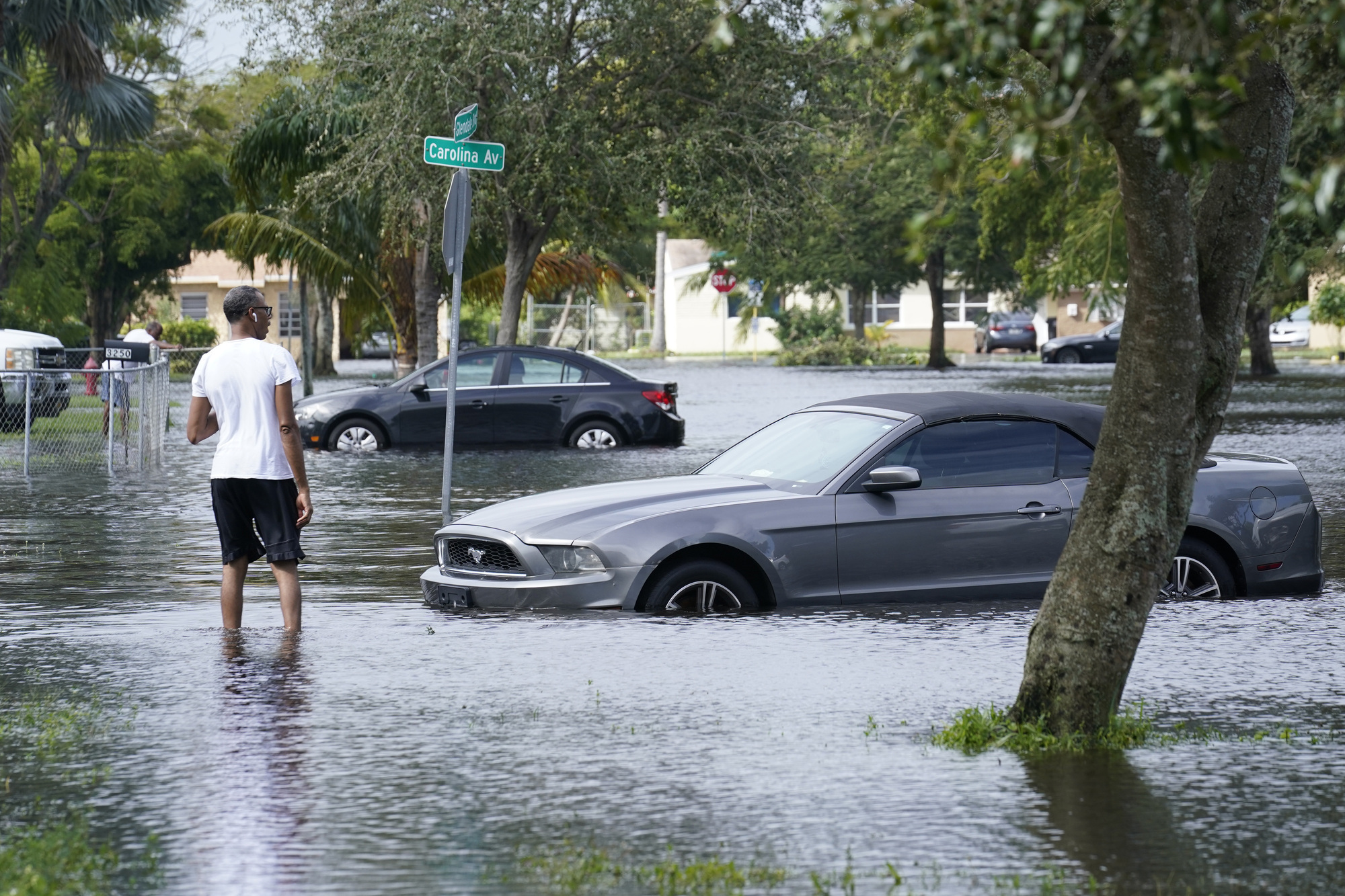
Torrential rain from Tropical Storm Eta caused dangerous flooding across Florida’s most densely populated urban areas after it made landfall in the Florida Keys on Monday.
Cars were stranded and entire neighbourhoods were swamped as flash floods rose in areas where the water had nowhere to drain.
The system’s wide reach and heavy rains posed a serious threat across South Florida, an area already drenched from more than 350mm of rain last month. Eta could dump an additional 150-300mm, forecasters said.
“It was far worse than we could’ve ever imagined, and we were prepared,” said Arbie Walker, a 27-year-old student who had to walk through water covering his floor in Fort Lauderdale.
“It’s been pretty much non-stop rain since yesterday. There’s five to six inches of rain in our apartment right now. It took us 20 minutes to navigate out of our neighbourhood due to the heavy flooding in our area,” Mr Walker added. Flood waters also submerged half of his sister’s car.
Eta’s centre hit land late on Sunday as it blew over Lower Matecumbe, in the middle of the chain of small islands that form the Florida Keys.
It was moving into the Gulf of Mexico near where the Everglades meet the sea, with maximum sustained winds of 65 mph. It was centred south of Naples, moving west-northwest at 13 mph.
Forecasters said it could re-intensify into a minimal hurricane as it slowly moves up the southwest Gulf Coast, centred just far enough offshore to maintain its strength while dumping vast amounts of water across the lower third of the Florida peninsula.
Fort Lauderdale Mayor Dean Trantalis called it a 100-year rain event, drenching already saturated streets.
“Once the ground becomes saturated, there’s really no place for the water to go,” Mr Trantalis said. “It’s not like a major hurricane. It’s more of a rain event, and we’re just doing our best to ensure that the people in our community are being protected.”
City officials dispatched some 24 tanker trucks with giant vacuums to soak up water from the past few weeks, while some older neighbourhoods simply do not have any drainage.
In some areas, the water isn’t pumping out as fast as it’s coming in
The city passed out 6,000 sandbags to worried residents over the weekend but water seeped into homes and stranded cars in car parks and along roadways.
“Please take this storm seriously,” urged Palm Beach County emergency management director Bill Johnson. “Please don’t drive through flooded roadways.”
Miami-Dade County Mayor Carlos Gimenez said he was in frequent contact with county water officials about the struggle to drain the flooded waters, which has stalled vehicles, washed over junctions and crept into some homes.
“In some areas, the water isn’t pumping out as fast as it’s coming in,” warned Miami-Dade Commissioner Jose “Pepe” Diaz.
In the Florida Keys, the mayor ordered mandatory evacuations for mobile home parks, campgrounds and campervan parks and those in low-lying areas. School districts closed, saying the roads were already too flooded and the winds could be too gusty for buses to transport students.
But the islands were spared any major damage, and officials expected shelters to close and schools to reopen by Tuesday.
Eta also was not finished in Cuba, just 90 miles south of Florida, where the storm continued to swell rivers and flood coastal zones on Monday.
Some 25,000 people were evacuated with no reports of deaths, but rainfall continued, with total accumulations of up to 635mm predicted.
Eta initially hit Nicaragua as a Category 4 hurricane and wreaked havoc from Mexico to Panama.
Official death tolls totalled at least 68 people, but hundreds more were missing and many thousands were in shelters after flash floods tore through communities of improvised homes on unstable mountainsides.