US executes second man this week
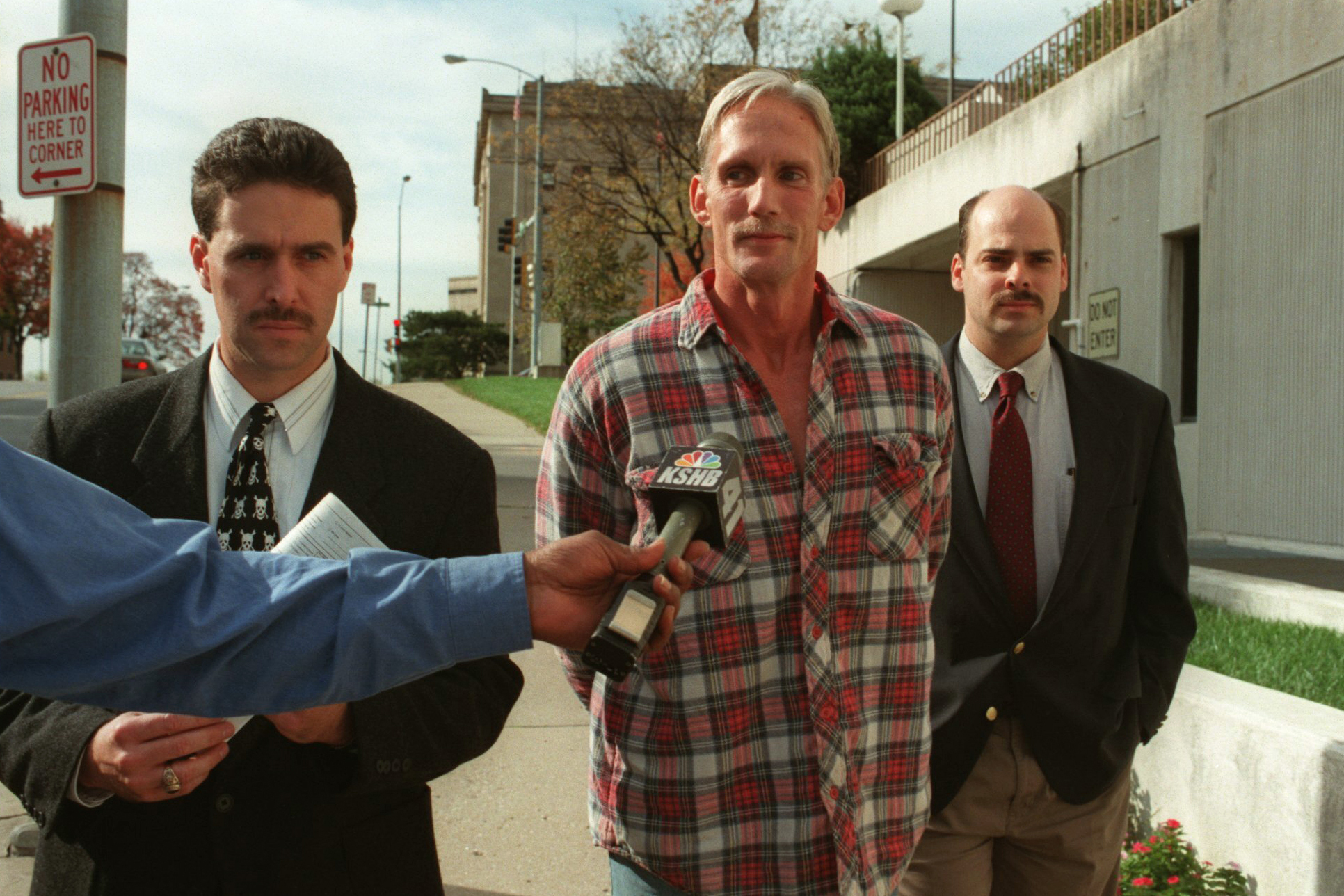
The United States has carried out its second federal execution this week, killing by lethal injection a Kansas man whose lawyers contended he had dementia and was unfit to be executed.
Wesley Ira Purkey was put to death at the Federal Correctional Complex in Terre Haute, Indiana, on Thursday.
He was convicted of kidnapping and killing 16-year-old Jennifer Long in Kansas City, Missouri, before dismembering, burning and dumping her body in a septic pond some 200 miles away in Kansas.
Purkey was strapped to a gurney inside the execution chamber.
A prison official removed a mask from his face and asked him if he wanted to make a final statement.
He leaned his head up slightly from the gurney and said: âI deeply regret the pain and suffering I caused to Jenniferâs family. I am deeply sorry.â
He needed to take his last breath - he took my daughterâs last breath
Victim's father William Long
Purkey also expressed remorse for his own adult daughterâs suffering his actions caused.
âI deeply regret the pain I caused to my daughter, who I love so very much,â he said.
His last words were: âThis sanitised murder really does not serve no purpose whatsoever. Thank you.â
As the lethal chemical was injected, Purkey took several deep breaths and blinked repeatedly, laying his head back down on the gurney.
His time of death was 8.19am local time.
Jenniferâs father, William Long, and her stepmother attended Purkeyâs execution.
Mr Long said the delays to the execution were excruciating and he was glad it was over.
He said he hoped Purkey ârots in hellâ.
Mr Long said. âIt has been a long time coming. He needed to take his last breath â he took my daughterâs last breath.
âAnd thereâs some resolve. There is no closure, and there never will be because I wonât get my daughter back.â
The Supreme Court cleared the way for the execution to take place just hours before, ruling in a five to four decision.
The four liberal justices dissented, like they did for the first case earlier this week.
Justice Sonia Sotomayor wrote that âproceeding with Purkeyâs execution now, despite the grave questions and factual findings regarding his mental competency, casts a shroud of constitutional doubt over the most irrevocable of injuriesâ.
She was joined by Ruth Bader Ginsburg, Stephen Breyer and Elena Kagan.
It was the US Governmentâs second execution after a 17-year hiatus.
Another man, Daniel Lewis Lee, was put to death Tuesday after his 11th-hour legal bids failed.
Both executions were delayed into the day after they were scheduled as legal wrangling continued late into the night and into the next morning.
The Justice Department has been questioned for holding the executions in the middle of the worsening coronavirus pandemic, prompting lawsuits over fears those who would travel to the prison could become infected.
The decision to resume executions after nearly two decades was criticised as a dangerously political move in an election year.
A Justice Department spokeswoman said a just punishment had been carried out.
âAfter many years of litigation following the death of his victims, in which he lived and was afforded every due process of law under our constitution, Purkey has finally faced justice,â spokeswoman Kerri Kupec said.
Purkeyâs lawyers argued his condition had deteriorated so severely that he did not understand why he was being executed.
The Supreme Court has also lifted a hold placed on other executions set for Friday and next month.
Dustin Honken, a drug kingpin from Iowa convicted of killing five people in a scheme to silence former dealers, is scheduled for execution Friday.