Theresa May to seek backstop changes from EU after MPs approve Brexit amendments
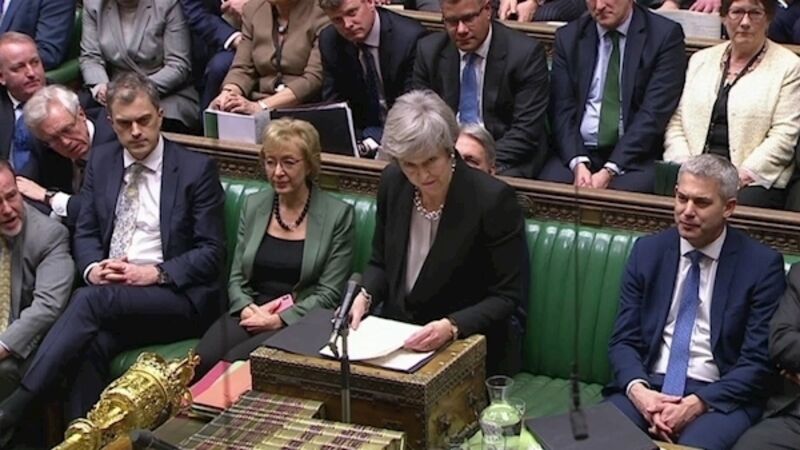
- MPs approve Graham Brady's amendment to replace the backstop "with alternative arrangements”.
- MPs approve Spelman's amendment to prevent a no-deal Brexit.
- MPs defeat Yvette Cooper's amendment to allow for a Brexit delay of nine months if Theresa May fails to secure a deal by February 26.
Tánaiste Simon Coveney said the controversial backstop arrangement remained “necessary” despite the votes in the Commons.
He tweeted: “Backstop was agreed by UK/EU as the insurance policy to avoid a hard border in all scenarios. We hope it will never be used, or be replaced quickly by a future relationship agreement. But it is necessary and tonight’s developments at Westminster do nothing to change this. #Brexit”
Backstop was agreed by UK/EU as the insurance policy to avoid a hard border in all scenarios. We hope it will never be used, or be replaced quickly by a future relationship agreement. But it is necessary and tonight’s developments at Westminster do nothing to change this. #Brexit
— Simon Coveney (@simoncoveney) January 29, 2019
The European Parliament’s chief Brexit negotiator, Guy Verhofstadt, said there was “no majority to re-open or dilute” the Withdrawal Agreement.
He tweeted: “Welcome the UK Parliament’s decision to reject a no-deal & the hope of cross-party talks on future relationship. We stand by Ireland & the Good Friday Agreement.
“There is no majority to re-open or dilute the Withdrawal Agreement in the @Europarl_EN including the backstop.”
Welcome the UK Parliament's decision to reject a no-deal & the hope of cross-party talks on future relationship. We stand by Ireland & the Good Friday Agreement. There is no majority to re-open or dilute the Withdrawal Agreement in the @Europarl_EN including the backstop.
— Guy Verhofstadt (@guyverhofstadt) January 29, 2019
European Council president Donald Tusk said the Withdrawal Agreement is “not open for re-negotiation”.
Mr Johnson has rejected Donald Tusk’s statement regarding the backstop, telling Sky News that “it takes two to tango”.
He added: “There is a negotiation going on. You would expect him to say that.
“But believe me the EU has every incentive to give us the deal we need.”
Britain's former foreign secretary Boris Johnson told Sky that Mrs May had received a mandate from Parliament with a “clear, unambiguous” message that the backstop had to be removed from the Withdrawal Agreement.
He said: “I hope that our friends in Brussels will listen and that they will make that change.
“It is no skin off their nose to do it, there is no reason at all why at this advanced stage in the negotiations they shouldn’t give the UK the changes that we need.”
DUP Westminster leader Nigel Dodds, raising a point of order, told the Commons: “This is a significant night because for the first time the House by majority has expressed what sort of deal will get through and will have a majority, and we will work with the Prime Minister to deliver the right deal for the United Kingdom.”
Nigel Dodds responds with force to @IanBlackfordMP saying no party on the island of Ireland wants a return to a hard border #IEstaff
— Daniel McConnell (@McConnellDaniel) January 29, 2019
The SNP’s Westminster leader Ian Blackford claimed that by passing the Brady amendment the British Government had “ripped up the Good Friday Agreement”.
To jeers from Tory MPs he said in his point of order that: “We were told the backstop was there to protect the peace process but tonight the Conservative Party has effectively ripped apart the Good Friday Agreement. This House should be ashamed of itself.”
He said Scotland had been “silenced, sidelined and shafted by the Tories”.
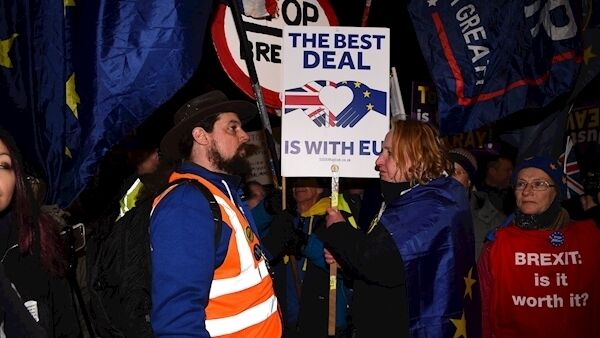
Jeremy Corbyn said because the Spelman amendment had passed he was now willing to meet Mrs May for talks on the Brexit next steps.
The Labour leader said: “Now that the House has voted emphatically to reject the no deal option the Prime Minister was supporting could I say we are now prepared to meet her to put forward the points of view from the Labour Party of the kind of deal we want from the European Union.
“To protect jobs, to protect livings standards, and to protect rights and conditions in this country.”
Tonight Parliament has voted to remove the immediate threat of crashing out without a deal on 29 March. After months of refusing to take the chaos of no deal off the table, the Prime Minister must now face the reality that no deal is not an option.
“I will meet the Prime Minister and others from across Parliament to find a sensible Brexit solution that works for the whole country.
“That solution should be based around Labour’s alternative plan of a customs union with a UK say, a strong single market relationship and a cast-iron guarantee on workers’ rights, consumer standards and environmental protections.”
British Prime Minister Theresa May has told MPs there is a “substantial and sustainable” majority in the Commons for leaving the European Union with a deal but admitted renegotiation “will not be easy”.
Mrs May said that she and other members of the Government would now be speaking with the European Union about “how we address the House’s views” on a Brexit deal.
Following the result, Mrs May said she now had a mandate to take back for further negotiations with the EU.
She said: “Tonight a majority of members have said they would support a deal with changes to the backstop combined with measures to address concerns over Parliament’s role in the negotiation of the future relationship and commitments on workers’ rights in law where need be.
“It’s now clear there is a route that can secure a substantial and sustainable majority in this House for leaving the EU with a deal.
“We will now take this mandate forward and seek to obtain legally binding changes to the Withdrawal Agreement that deal with concerns on the backstop while guaranteeing no return to a hard border between Northern Ireland and Ireland.”
MPs have approved Graham Brady's amendment by 317 votes to 301, majority 16.
The final vote is on Graham Brady's amendment to replace the backstop "with alternative arrangements to avoid a hard border”.
Two Labour MPs rebelled to vote against the Labour Brexit amendment, according to the division list.
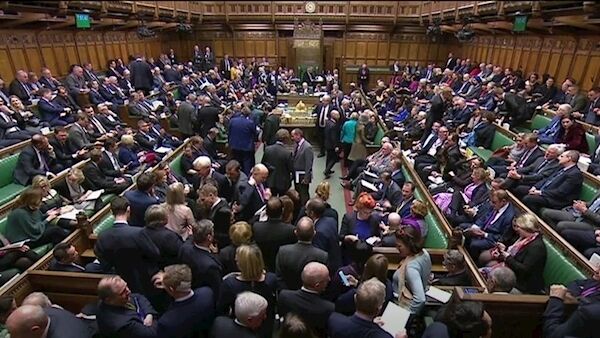
MPs have approved Spelman's amendment by 318 votes to 310, majority 8.
The amendment is to prevent a no-deal Brexit.
The next amendment is the Spelman no-deal amendment, tabled by Tory MP Caroline Spelman which states that the UK will not leave the EU without a deal.
It comes just ahead of voting on Graham Brady's amendment which says the backstop should be “replaced with alternative arrangements to avoid a hard border”, something the EU has already ruled out.
If passed it would allow Theresa May to go to Brussels with a clear sign from MPs of what they want, to get a deal through parliament.
MPs have defeated Rachel Reeve's amendment by 322 votes to 290, majority 32.
The fifth vote is now on Labour MP Rachel Reeve's amendment which would seek a two-year extension of article 50 if there is no deal in place by February 26.
There is no point claiming you are opposed to a ‘no deal’ Brexit if you are not prepared to will the legal means to stop it happening. Non-binding motions are not the same as legally binding laws. The Cooper and Grieve amendments addressed this. A bad day for Parliament.
— ChukaUmunna (@ChukaUmunna) January 29, 2019
MPs have defeated Yvette Cooper's amendment by 321 votes to 298, majority 23.
Next up for the vote is Yvette Cooper's amendment to extend article 50.
This would allow for a Brexit delay of nine months if Theresa May fails to secure a deal by February 26.
MPs have defeated the Grieve amendment by 321 votes to 301, majority 20.
Mr Grieve’s proposal had bid to prevent a no-deal Brexit and allow MPs to effectively wrest control of Commons business from the Government for six individual days in the run-up to the UK’s scheduled withdrawal date of March 29.
MPs have now moved onto the Grieve amendment.
It calls for six days of debate and votes on alternative Brexit options.
MPs have defeated SNP's amendment by 327 votes to 39, majority 288.
MPs are now voting on the SNP amendment calling for an extension of article 50, no deal being removed as an option and to prevent the Scots being taken out of the EU “against their will”.
MPs have defeated Labour's Brexit amendment by 327 votes to 296, majority 31.
The proposal aimed to allow MPs to vote on options to stop a no-deal exit, including a customs union and the possibility of a second referendum.
Brexit Secretary Stephen Barclay has appealed for the Commons "to come together" and back the Brady amendment.
He said: "17.4 million people did not vote for no deal, but they did vote to leave.
"Time is of the essence - citizens and business want certainty, the EU wants clarity, the Prime Minister needs a mandate - and the House must, therefore, come together.
"It's time to act in the national interest. That is why the House should back the (Brady) amendment."

The future of Brexit could be decided this evening as the House of Commons votes on the way forward.
MPs could decide to bin the backstop aimed at preventing a hard border, or to delay Brexit if no deal can be reached.
There are seven proposed amendments in total to Theresa May's statement on the resounding defeat to her Brexit bill. The seven were selected by House Speaker John Bercow from a longer list.
The highest profile amendment is that proposed by Graham Brady. It seeks to replace the backstop with “alternative arrangements” to avoid a hard border in Ireland. the 'Brady Amendment' supporters believe it gives Mrs May more firepower to go back to Brussels and ask for more concessions and get a Withdrawal Agreement through the British Parliament.
Here are some of the most prominent amendments tabled:
UK Prime MinisterTheresa May threw Government support on Monday behind an amendment that seeks to replace the controversial backstop with “alternative arrangements” to avoid a hard border in Ireland.
Tabled by Graham Brady, the chairman of the backbench 1922 Committee, if it passed the Commons its supporters believe it gives Mrs May more firepower to go back to Brussels and ask for more concessions and get a Withdrawal Agreement through Parliament.
Fellow Tories Andrew Murrison and John Baron scrapped very similar amendments to clear a path, but the hardline ERG is refusing to back it.
In a bid to prevent a no-deal Brexit, the cross-party backed proposal from Dominic Grieve would effectively wrest control of Commons business from the British Government for six individual days in the run-up to the UK’s scheduled withdrawal date of March 29 with the intention of getting MPs to reach a consensus on how to handle it.
In a similar vein, a move by Labour former minister Yvette Cooper, supported by Tories such as Nick Boles, calls for a vote on a Bill that would give Parliament control over the Brexit process if Theresa May fails to secure a deal by February 26.
MPs would get a vote on extending Article 50 to the end of the year and preventing a no-deal exit under the terms of the Bill. The Labour frontbench has been publicly flirting with throwing its weight behind the amendment.
A cross-party effort headed by Tory Caroline Spelman has widespread support and rejects the UK quitting the EU without a Withdrawal Agreement. This would probably be more palatable to the Government than either the Grieve or Cooper bids for MPs to take back control.
This calls for MPs to be able to vote on options to stop a no-deal exit, such as a customs union with the EU, as well as the possibility of a new Brexit referendum. Jeremy Corbyn has been careful not to commit Labour to officially back such a poll, though.
Amendments have been tacked on to the Labour push, with the Liberal Democrats calling for Remain to be on the ballot paper in any referendum, and Labour backbenchers urging Parliament to legislate for a public vote.
Commons Exiting the European Union Committee chairman Hilary Benn wants a series of votes on various Brexit options to see where the most support lies.
Only an emerging plan at this point, it would extend the transition period from the end of 2020 and into December 2021 and allow the UK and EU to “prepare properly” for WTO terms or “obviate this outcome by negotiating a mutually beneficial future relationship”.
It is reportedly backed by members of both the Remain and Leave camps of the Conservative party.
CONNECT WITH US TODAY



Be the first to know the latest news and updates