David Cameron insists UK must bomb Syria to counter 'direct threat' of IS
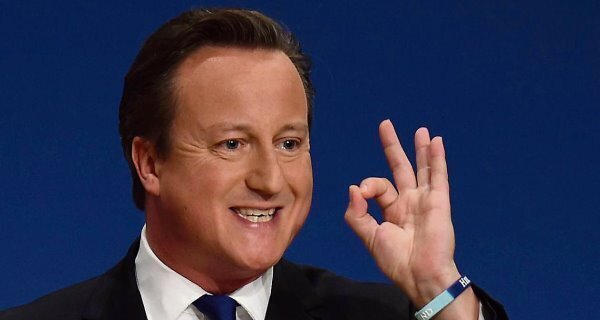
David Cameron has urged British MPs to protect the British public by backing air strikes against Islamic State (IS) strongholds in Syria.
In an impassioned Commons statement, the British Prime Minister said the terrorist group was plotting atrocities against the UK and it was “morally” unacceptable to leave the US, France and other allies to carry the burden of the fight.
He insisted there was strong legal justification for extending the current military action in Iraq, on grounds of self-defence and the recent UN Security Council resolution.
However, he stressed he would not call a vote in Parliament unless there was a “clear majority” in favour.
Labour leader Jeremy Corbyn warned of “unintended consequences”, while the SNP signalled its MPs would be likely to oppose the move.
Setting out what he described as a “comprehensive” strategy to deal with the threat from IS – also known as Isis, Isil and Daesh – Mr Cameron admitted it could not be defeated by air strikes alone.
But he argued that targeting bases in Syria was necessary to “degrade” the terrorists’ capability to prepare attacks in other parts of the world.
“The reason for acting is the very direct threat that Isil poses to our country and our way of life,” he said.
“They have already taken the lives of British hostages and inspired the worst terrorist attack against British people since 7/7 on the beaches of Tunisia.”
Mr Cameron said seven attacks over the past year had been linked to IS or inspired by its propaganda.
“We do face a fundamental threat to our security. We can’t wait for a political transition, we have to hit these terrorists in their heartlands right now and we must not shirk our responsibility for security or hand it to others,” he said.
“Throughout our history the United Kingdom has stood up to defend our values and our way of life. We can, and we must, do so again.”
Referring to the recent deadly attacks on Paris, the premier said: “If we won’t act now, when our friend and ally France has been struck in this way, then our friends and allies can be forgiven for asking: If not now, when?”
Mr Cameron – who flatly ruled out deploying British ground forces – said he was pursuing an “Isil-first” strategy while continuing to work for a long-term settlement for Syria.
“We know that peace is a process, not an event and I am clear that it can’t be achieved through a military assault on Isil alone, it also requires the removal of Assad and a political transition.
“But I am also clear about the sequencing that needs to take place: this is an Isil-first strategy.”
He indicated that any Commons motion on extending the bombing campaign to Syria would explicitly recognise that “military action is not the whole answer”, and added: “There will not be a vote in this House unless there is a clear majority for action, because we will not hand a publicity coup to Isil.”
During a sombre debate, several MPs – including the Tory chairman of the Defence Select Committee, Julian Lewis – questioned Mr Cameron’s claim that there were 70,000 troops on the ground in Syria aligned to moderate groups.
Mr Corbyn stopped short of saying he would order his MPs to oppose military action in a vote – which could take place as early as next week.
But he warned of “unintended consequences” if Britain got involved in military action in Syria in the same way it had in Iraq and Afghanistan.
Stressing there was “no doubt” IS had imposed a reign of terror in parts of Syria and Iraq and posed a threat to British people, Mr Corbyn said: “The question must now be whether extending the UK bombing from Iraq to Syria is likely to reduce or increase that threat, and whether it will counter or spread the terror campaign Isil is waging in the Middle East.”
The Scottish National Party’s leader in Westminster Angus Robertson said that his party’s MPs will not vote for air strikes in Syria unless they are convinced that there is effective ground support and a fully-costed plan for post-war reconstruction.
Liberal Democrat leader Tim Farron said that Mr Cameron would have to provide “much more evidence” that moderate forces on the ground “are sufficient and have the capability and the credibility” to deliver what was needed in the fight against Isil.
Mr Farron also demanded to know whether there were any plans for no-bomb zones and safe havens for innocent civilians caught in areas under IS control.
But the chairman of the Commons Foreign Affairs Committee – which earlier this month released a report urging caution over Syria – said he was now ready to back military action.
Crispin Blunt said: “It is now my personal view that, on balance, the country would be best served by this House supporting his judgment that the UK should play a full role in the coalition, to best support and shape the politics, thus enabling the earliest military and eventual ideological defeat of Isil.”
Mr Cameron set out his detailed case for extending air strikes to Syria in a 32-page response to the Foreign Affairs Committee report, published shortly before his appearance in the Commons.
He said there was now “a realistic prospect” of a political solution to the four-year conflict and greater international consensus than ever before on the threat posed by IS.
Restricting UK air strikes to Iraq had “never made military sense” and the RAF – with Brimstone missiles and the Tornado aircraft’s “dynamic targeting” capabilities – could make a “meaningful difference” to the campaign against IS.
He stressed that any strikes would not be directed at the regime of president Bashar Assad, but rejected the argument that Britain should throw its weight behind the Assad regime as “the lesser of two evils”.
That would “make matters worse” as the Syrian dictator’s brutality was one of IS’s greatest recruiting sergeants.

CONNECT WITH US TODAY



Be the first to know the latest news and updates