Spanish nurse is first human-to-human Ebola case outside Africa
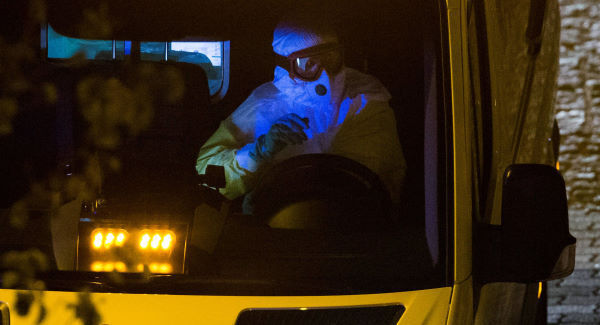
A nurse in Spain has contracted Ebola, becoming the first person known to have caught the disease outside the outbreak zone in West Africa during the current epidemic.
The nurse’s illness illustrates the danger healthcare workers face not only in poorly equipped West African clinics, but also in the more sophisticated medical centres of Europe and the United States.
Dr William Schaffner, an infectious disease expert at Vanderbilt University, said health workers are at the greatest risk in all Ebola outbreaks.
The development came as another American suffering from the disease arrived back in the US for treatment and President Barack Obama said the government was considering ordering more careful screening of airline passengers travelling from the outbreak region.
The unprecedented Ebola outbreak this year has killed more than 3,400 people in West Africa, and become an escalating concern to the rest of the world.
It has taken an especially devastating toll on health workers, infecting or killing more than 370 in the hardest-hit countries of Liberia, Guinea and Sierra Leone – places which were already short of doctors and nurses.
The Spanish nurse was part of the medical team that treated 69-year-old priest Manuel Garcia Viejo, who died in a Madrid hospital late last month, Spain’s health minister said.
The sick priest had been flown home from his post in Sierra Leone; the nurse is believed to have contracted the virus from him.
She went to a Madrid hospital with a fever 10 days after the priest died, and was placed in isolation. She was later transferred to Madrid’s Carlos III hospital, where the priest – and a second missionary priest sick with Ebola - were cared for until they died.
The World Health Organisation confirmed that there has not been a previous transmission outside West Africa in the current outbreak.
In the US, video journalist Ashoka Mukpo, who became infected while working in Liberia, arrived at the Nebraska Medical Centre in Omaha, where another Ebola patient had been treated.
It was not clear how he became infected but it may have happened when he helped clean a vehicle someone died in, said his father, Dr Mitchell Levy. Yesterday, his symptoms of fever and nausea still appeared mild, he added.
“It was really wonderful to see his face,” said Mr Levy, who talked to his son over a video chat system.
Mr Mukpo is the fifth American with Ebola brought back from West Africa for medical care. The others were aid workers – three have recovered and one remains in hospital.
There are no approved drugs for Ebola, so doctors have tried experimental treatments in a few cases.
The critically ill Liberian man in hospital in Dallas is also getting an experimental treatment, Texas Health Presbyterian Hospital said. Thomas Eric Duncan is the first person to be diagnosed with Ebola in the US – he was admitted to the hospital on September 28, about a week after arriving in Texas.
The hospital said Mr Duncan was receiving an experimental drug called brincidofovir, which was developed to treat other types of viruses. Laboratory tests suggested it may also work against Ebola.
Two other experimental drugs developed specifically for Ebola have been used, though it is unclear whether they had any effect. The small supply of ZMapp was exhausted after being used on a few patients – though government officials say more should be available in the next two months. A second drug, TKM-Ebola from Tekmira Pharmaceuticals, has been used in at least one patient and is said to be in limited supply.
Dr Schaffner noted there are many questions about the experimental medications, but their use is understandable – especially in a patient like Mr Duncan who may be deteriorating.
“They’re trying to do anything they can to benefit the patient,” he said.
Meanwhile, Texas Governo Rick Perry urged the US government to begin screening air passengers arriving from Ebola-affected nations, including taking their temperatures. He stopped short of joining some conservatives who have backed bans on travel from those countries.
Federal health officials say a travel ban could make the desperate situation worse in those countries, and White House spokesman Josh Earnest said it was not currently under consideration.
Passengers leaving the outbreak zone are checked for fevers at the airport. Mr Duncan was screened in Liberia, but he had no symptoms then, health officials have said. He also apparently had no symptoms when he arrived the next day, so a screening in the United States would not have detected his infection.
Health officials have said he did not become ill until four or five days later. The disease’s incubation period is 21 days.
Airline crews and border agents already watch for sick passengers, and in a high-level meeting at the White House yesterday, officials discussed potential options for screening passengers when they arrive in the US as well.
Mr Obama said America will be “working on protocols to do additional passenger screening both at the source and here in the United States”. He did not outline any details or offer a timeline.

CONNECT WITH US TODAY



Be the first to know the latest news and updates