Leaders in Ukraine hold peace talks
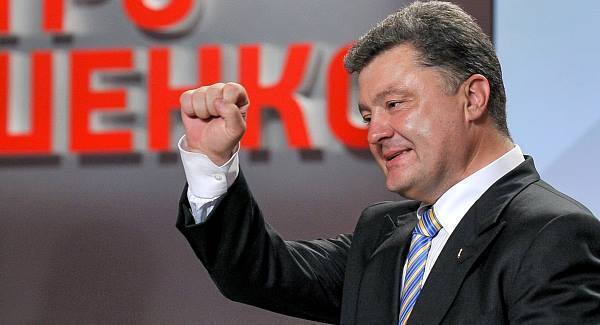
Ukraine’s president has spoken with his counterparts from Russia, Germany and France about how best to resolve the deadly conflict with pro-Russian separatists in the east.
A telephone call took place between President Petro Poroshenko, Russia’s Vladimir Putin, Germany’s chancellor Angela Merkel and France’s Francois Hollande.
An expiration deadline is nearing for Ukraine’s shaky, unilateral cease-fire that started 10 days ago.
French officials said the talks touched on establishing a full cease-fire by both sides, international monitoring of the border between Russia and Ukraine, freeing prisoners and holding substantial talks with Ukraine’s separatist rebels.
The cease-fire has been continuously broken and rebels have not laid down their weapons as Mr Poroshenko demanded.
A Kremlin statement said foreign ministers from the four countries would carry on the four-way talks – a distinct cold shoulder to efforts from the United States or the full European Union to be further involved in Ukraine’s protracted crisis.
European leaders have urged Russia to use its influence with the rebels to de-escalate the conflict. They have said they could impose another round of financial sanctions against Russia if the conditions for a continuing cease-fire are not met. The four leaders also talked yesterday.
Sporadic fighting still flared today despite the cease-fire. Shelling killed at least two people and ruined several apartments in the rebel-held city of Slovyansk in the eastern region of Donetsk.
Mr Poroshenko has demanded that rebels return posts along the Russia border to Ukrainian control and allow international monitors to verify the cease-fire. Rebels have kidnapped several teams of monitors.
He says his unilateral cease-fire is a first step to give rebels a chance to lay down their arms. Further steps would include an amnesty for separatists who have not committed serious crimes, early local elections and changes in the constitution to decentralise power to Ukraine’s regions.
In Slovyansk, shooting kept up through the night and into this morning, growing heavy at times. Residents said the army appeared to start shelling after rebels opened fire.
Some of the shelling appeared to be directed at rebel front-line positions but other shells landed in a residential neighborhood, destroying or damaging several buildings.
One woman, 62-year-old Vera Sayenko, died when a shell hit her ninth floor apartment, neighbours said.
“Everything we have collected in our life is destroyed. We have become poor,” said Valery, whose apartment was also destroyed. “Show all Ukrainians what happened here. What else do they want, to ruin the town and kill people?”
Ukrainian police and prosecutors were also investigating the death of a cameraman working for Russia’s Channel One. Anatoly Klyan, 68, was fatally wounded late yesterday when a bus carrying journalists and soldiers’ mothers was hit by gunfire as it approached a military base in eastern Ukraine after dark north of the city of Donetsk.
Russia’s Foreign Ministry blamed the attack on Ukrainian soldiers and demanded an objective investigation. He is the fifth journalist to die since the fighting began in April.
The conflict in eastern Ukraine began after a protest movement among those seeking closer ties with the EU prompted president Viktor Yanukovych to flee in February.
Calling it an illegal coup, Russia seized and annexed Ukraine’s Crimea region in March, saying it was protecting Russian speakers. The insurrection in the east began shortly afterwards.
Ukraine signed a trade and political deal with the EU last week, the one that Mr Yanukovych had rejected.
Russian foreign minister Sergey Lavrov said Mr Putin suggested that both Ukrainian monitors and observers from the Organisation for the Security and Cooperation in Europe deploy to checkpoints on the Russian side of the border to ensure ``they aren't used for illegal means''.
“We expect that direct and detailed consultations between Russian and Ukrainian border guards will start shortly to agree on details of the monitors’ presence,” he said, according to Russian news wires.
CONNECT WITH US TODAY



Be the first to know the latest news and updates