Russia sets out its demands for Ukraine
Russia has set out demands for a diplomatic resolution to the crisis in Ukraine, saying the former Soviet republic should be unified in a federation allowing wide autonomy to its various regions.
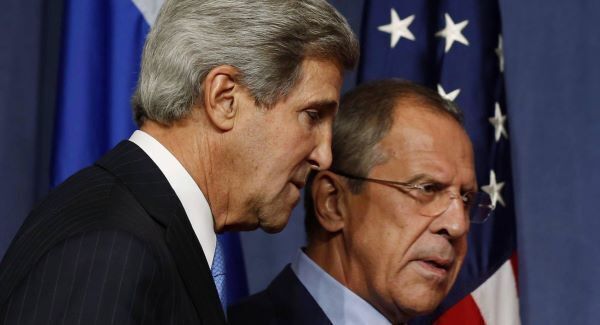
The demands were issued as US secretary of state John Kerry and Russian foreign minister Sergey Lavrov met in Paris in another bid to calm tensions.
After a brief call on French foreign minister Laurent Fabius, Mr Kerry sat down with Mr Lavrov at the residence of the Russian ambassador to France to go over Moscowās response to a US plan to de-escalate the situation as Russian troops continue to mass along the Ukrainian border.
The men said nothing of substance as they shook hands, although after Mr Kerry ended the photo op by thanking assembled journalists, Mr Lavrov cryptically added in English: āGood luck, and good night.ā
Appearing on Russian television ahead of his talks with Mr Kerry, Mr Lavrov rejected suspicions that the deployment of tens of thousands of Russian troops near Ukraine is a sign Moscow plans to invade the country following its annexation of the strategic Crimean peninsula.
āWe have absolutely no intention of, or interest in, crossing Ukraineās borders,ā Mr Lavrov said.
Russia says the troops near the border are there for military exercises and that they have no plans to invade, but US and European officials say the numbers and locations of the troops suggest something more than exercises.
And, despite the Russian assurances, US, European and Ukrainian officials are deeply concerned about the build-up, which they fear could be a prelude to an invasion or intimidation to compel Kiev to accept Moscowās demands.
In his interview, Mr Lavrov made clear that Moscow believes a federation is the only way to guarantee Ukraineās stability and neutrality.
āWe canāt see any other way to ensure the stable development of Ukraine but to sign a federal agreement,ā Mr Lavrov said, adding that he understood the United States was open to the idea.
US officials have been coy about their position on a federation and insist that any changes to Ukraineās governing structure must be acceptable to the Ukrainians. Ukrainian officials are wary of decentralizing power, fearing that pro-Russia regions would hamper its western aspirations and potentially split the country apart. However, they are exploring political reforms that could grant more authority to local governments.
The plan that Mr Kerry and Mr Lavrov are discussing covers Ukrainian political and constitutional reforms as well as the disarmament of irregular forces, international monitors to protect minority rights and direct dialogue between Russia and Ukraine, according to US officials, who say it has backing of Ukraineās government.
Mr Kerry and Mr Lavrov have met several times in person and spoken by phone almost daily since the crisis began but have not yet been able to agree on a way forward. The pair met last week in The Hague, where Mr Kerry presented Mr Lavrov with the proposal, which was a response to ideas Mr Lavrov gave him at a March 10 meeting in London.
Todayās meeting follows an hour-long phone call Friday between US president Barack Obama and Russian president Vladimir Putin in which Mr Obama urged Mr Putin to withdraw his troops from the border with Ukraine. The Russian leader, who initiated the call, asserted that Ukraineās government is allowing extremists to intimidate ethnic Russians and Russian-speaking civilians with impunity ā something Ukraine insists is not happening.
That call did little to reassure US officials that Russia is not planning to invade Ukraine after its annexation of Crimea that the west has condemned as illegal and a violation of Ukraineās sovereignty and territorial integrity. The United States and Europe have imposed sanctions on senior Russian officials in response, sparking reciprocal moves from Moscow.
In the interview with Russian television, Mr Lavrov called the sanctions a ādead-endā strategy that would not achieve results and accused the west of hypocrisy. He said it was inconsistent for the west to refuse to recognize Crimeaās annexation, which followed a referendum on joining Russia that was overwhelmingly approved, while at the same time accepting the new government in Kiev, which was formed after the pro-Moscow president fled the country.
āIf they are willing to accept the first event as legitimate, then surely they are obliged to acknowledge the second,ā Mr Lavrov told Russiaās Channel One television.
The two sides remain far apart, a situation underscored by the fact that the White House and the Kremlin offered starkly different summaries of the Obama-Putin call, which occurred while Mr Obama was travelling in Saudi Arabia.
White House officials described the call as āfrank and directā and said Mr Obama had urged Mr Putin to offer a written response to a diplomatic resolution to the Ukraine crisis that the US has presented. He urged Moscow to scale back its troop build-up on the border with Ukraine, which has prompted concerns in Kiev and Washington about a possible Russian invasion in eastern Ukraine.
The Kremlin, on the other hand, said Mr Putin had drawn Mr Obamaās attention to a ārampage of extremistsā in Ukraine and suggested āpossible steps by the international community to help stabilize the situationā in Ukraine.