Diplomats work on Ukraine crisis resolution
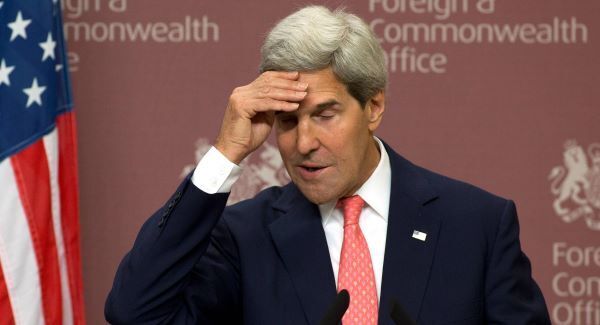
US and Western diplomats yesterday failed to bring Russian and Ukrainian foreign ministers together for face-to-face talks on the confrontation in Crimea.
But US Secretary of State John Kerry still voiced optimism that an exit strategy was possible, saying: “I’d rather be where we are today than where we were yesterday.”
The flurry of diplomatic activity came as NATO punished Russia by suspending military cooperation, and the EU extended €11bn in aid to Ukraine, matching the amount the country’s fugitive president accepted from Moscow to turn his back on an EU trade accord.
After an intense round of diplomacy with Russian foreign minister Sergey Lavrov and several European counterparts in Paris, Mr Kerry said the meetings were “very constructive, without promising something that is not defined yet, without raising hopes that are inappropriate to raise”.
He said: “I want to be realistic. This is hard, tough stuff, and a very serious moment. I personally feel that I have something concrete to take back and talk to President Obama about.”
Speaking separately after what he called “a very long day” of discussions on Ukraine, Mr Lavrov said the sides agreed to continue talks in coming days “about how we can help in efforts to normalise the situation and overcome the crisis”.
Still, there was no direct meeting between Mr Lavrov and his Ukrainian counterpart, Andriy Deshchytsia, though the Ukrainian foreign minister said Mr Kerry asked him to delay his flight home in the hope of getting the two to sit down together.
Mr Deshchytsia said he had hoped to brief Mr Lavrov on a Ukrainian plan to offer Crimea more autonomy while still claiming it within the country’s borders.
Any vote taken toward autonomy would require international observers to replace armed groups in order to work, he said.
“Our position is to use all the peaceful means, all the diplomatic ways to settle the issue without victims and tragedy – and without taking territory away,” Mr Deshchytsia said. “We don’t want war with Russia.”
But Mr Lavrov was not ready to meet.
Leaving the French foreign ministry, he was asked if he had met his Ukrainian counterpart. “Who is it?” Mr Lavrov answered. “I didn’t see anybody.”
Mr Kerry played down the failure, saying there had been “zero expectation” of that, though US officials said that is still the goal.
He also repeated the West’s demand that Russia pull its forces from the Crimean Peninsula, saying: “Russia’s violation of Ukraine’s sovereignty and territorial integrity has actually united the world in support of the Ukrainian people.”
On the ground in Ukraine, meanwhile, volatility reigned. A special UN envoy visiting Crimea came under threat by armed men who forced him to leave the region.
And hundreds of demonstrators – many chanting “Russia! Russia!” – stormed a government building in eastern Ukraine, spreading concern that turmoil could engulf other Russian-dominated parts of the country.
Most of the bargaining chips belonged to Russia, whose troops are fanned out across Crimea and control most of its strategic facilities.
While Russia expressed openness to international mediation, a major sticking point has been Moscow’s refusal to recognise Ukraine’s new leaders much less sit down at the table with them.
NATO tried to apply pressure on Moscow in its own talks with Russia in Brussels.
The alliance’s secretary-general, Anders Fogh Rasmussen, said ambassadors for the 28 member states decided after talks with their Russian counterpart to suspend plans for a joint mission as well as all civilian and military meetings.
He said that because of Russia’s military action in the Crimean Peninsula, “the entire range of NATO-Russia cooperation (is) under review”.
The EU yesterday also froze the assets of 18 people held responsible for misappropriating state funds in Ukraine, echoing similar action in Switzerland and Austria.
Russia has suggested that it will meet any sanctions imposed by Western governments with a tough response.
In Crimea, UN special envoy Robert Serry was threatened by 10 to 15 armed men as he was leaving naval headquarters in Crimea, said UN deputy secretary-general Jan Eliasson.
When the men ordered Mr Serry to go to the airport, he refused – but then found himself trapped because his car was blocked, Mr Eliasson said.
The Dutch envoy was later spotted by reporters in a coffee shop, as men in camouflage outfits stood outside. He got into a van with the men, and was taken to Simferopol airport.
Later, Mr Serry said from the airport’s business class lounge: “I’m safe. My visit was interrupted for reasons that I cannot understand.”
The Obama administration also said it was taking steps to support the defences of U.S. allies.
Defence secretary Chuck Hagel told the Senate Armed Services Committee the US was stepping up joint aviation training with Polish forces and increasing American participation in NATO’s air policing mission in the Baltic.

CONNECT WITH US TODAY



Be the first to know the latest news and updates