Minister threatens emergency powers in Ukraine
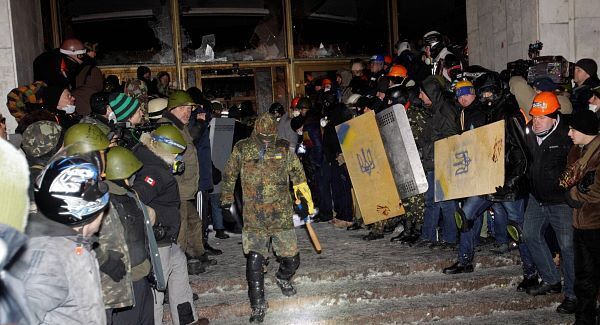
Ukraine’s justice minister has threatened a state of emergency unless protesters leave her ministry building.

Minister threatens emergency powers in Ukraine

Ukraine’s justice minister has threatened a state of emergency unless protesters leave her ministry building.

The seizure of her base has underlined how anti-government demonstrators are increasingly willing to take dramatic action as they push for the president’s resignation and other concessions. Protesters now occupy four sizable buildings in Kiev, including the city hall.

Justice Minister Elena Lukash said that she would ask the national security council to impose a state of emergency if the protesters do not quit the building. But she did not specify a deadline for leaving.

Imposing a state of emergency would increase anger among protesters who have clashed with police repeatedly over the past week. Three protesters have died.

Ms Lukash, in a televised statement, said that the “so-called protesters” seized the building as ministry employees were working on measures to grant amnesty to protesters and to make changes in the constitution to return the country to a system where the prime minister’s powers are stronger.

Beleaguered president Viktor Yanukovych on Saturday offered the prime minister’s post to Arseniy Yatsenyuk, one of the opposition’s most prominent leaders. Mr Yatsenyuk, while not flatly rejecting the offer, said protests would continue and that a special session of parliament called for Tuesday would be “judgement day.”

It is not clear if constitutional changes will be on the agenda for that session, but granting more power to the prime minister could both sweeten the offer and allow Mr Yanukovych to portray himself as seeking genuine compromise.

The prospect of a state of emergency comes after other official statements suggesting the government is considering forceful moves against the protesters in the wake of the violent clashes between demonstrators and police over the past week.

Interior Minister Vitali Zakharchenko, one of the ministers most despised by the protesters, warned that demonstrators occupying buildings would be considered extremists and that force would be used against them if necessary. He also claimed demonstrators had seized two policemen and tortured them before letting them go, which the opposition denied and called a ruse to justify a crackdown.

The protests began in late November when Mr Yanukovych shelved a long-awaited agreement to deepen ties with the European Union and sought more support from Russia. The demonstrations grew in size and intensity after police violently dispersed two gatherings. Demonstrators then set up a large tent camp on Kiev’s main square.

Anger boiled over into clashes on January 19, days after Mr Yanukovych pushed through harsh new anti-protest laws. Protests also spread into other parts of the country, including to some cities in the Russian-speaking east, the base of his support.

More in this section

Cookie Policy Privacy Policy Brand Safety FAQ Help Contact Us Terms and Conditions

© Examiner Echo Group Limited