Thailand sees more violence as protestors aim to take over Govt offices
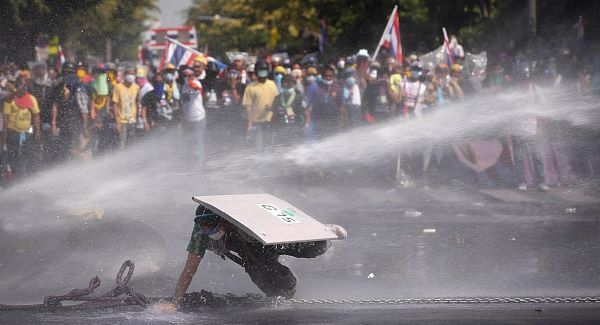
The United Nations closed its main office in Bangkok, dozens of schools closed and many civil servants stayed away from work as the Thai capital braced for more violence.
After a weekend of chaos in parts of the city, protesters vowed to push ahead with plans to topple Prime Minister Yingluck Shinawatra by occupying her office compound along with other key government buildings.
Police again used tear gas on thousands of protesters today after repeatedly driving them back with similar attacks throughout yesterday.
In an e-mailed statement to its staff, the UN security department said “there could be violence (Monday) on a large scale .. staff should avoid government offices” and other protest locations.
Many of the offices and schools closed today were near the Government House, in the historic quarter of the capital, where police over the weekend fought off mobs of rock-throwing protesters armed with petrol bombs.
At least three people were killed and 103 injured in skirmishes over the weekend.
The protests have renewed fears of prolonged instability in one of Asia’s biggest economies and comes just ahead of the peak holiday tourist season.
Protest leaders want to replace Ms Yingluck’s elected government, which they say is illegitimate, with an unelected “people’s council,” but they have been vague about what that means.
Protest leader Suthep Thaugsuban, a former deputy prime minister, has refused to say how the demand, which has been criticised as undemocratic, could be accepted by a government elected with an overwhelming majority.
However, his sustained campaign has led to suggestions that he may have the backing of the military, which has long had a powerful influence over Thai politics.
The army has often stepped in during times of crisis, carrying out 18 successful or attempted coups since the 1930s.
Mr Suthep met Ms Yingluck late yesterday in the presence of senior military officials even though he has an arrest warrant against him.
He later told cheering supporters that he told Ms Yingluck the only way to end the protests was for her to step down. He said his goal is to topple her by Wednesday.
The military has said it is neutral in the conflict but army commander General Prayuth Chan-ocha has urged the police not to use force.
Ms Yingluck’s government has gone to painstaking lengths to avoid using deadly force.
The French Embassy issued one of the strongest warnings of dozens of foreign governments, urging citizens to “stay inside” to avoid the conflict on Bangkok’s streets.
The French School is located in a part of Bangkok where gunshots rang out over the weekend during clashes between Ms Yingluck’s supporters and opponents.
It was one of at least 60 schools closed in Bangkok today.
Political instability has plagued Thailand since the military ousted Ms Yingluck’s brother, Thaksin Shinawatra, in a 2006 coup.
Two years later, anti-Thaksin protesters occupied Bangkok’s two airports for a week after taking over the prime minister’s office for three months.
And in 2010 pro-Thaksin protesters occupied central Bangkok for weeks in a stand-off that ended with parts of the city in flames and more than 90 dead.
Mr Suthep and his supporters say Ms Yingluck is a puppet of her brother.
Most of the protesters are middle-class Bangkok residents who have been part of the anti-Thaksin movement for several years and people brought in from the opposition Democrat Party strongholds in the southern provinces.

CONNECT WITH US TODAY



Be the first to know the latest news and updates