Cameron rules out second Syria vote
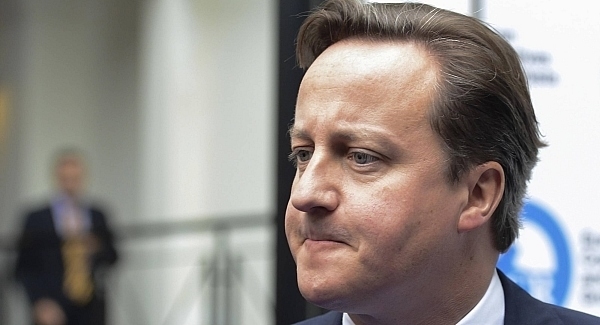
David Cameron has firmly rejected pressure to go back to the British Parliament in a fresh attempt to seek MPs’ approval for involvement in military action in Syria, following the Prime Minister’s dramatic defeat last Thursday.

Cameron rules out second Syria vote

David Cameron has firmly rejected pressure to go back to the British Parliament in a fresh attempt to seek MPs’ approval for involvement in military action in Syria, following the Prime Minister’s dramatic defeat last Thursday.

Downing Street said the PM had “absolutely no plans” to force a new vote, while Deputy Prime Minister Nick Clegg said he “could not foresee any circumstances” in which MPs would be asked to rethink their opposition. British Defence Secretary Philip Hammond told the House of Commons that circumstances would have to change “very significantly” for the issue to be revisited.

Meanwhile, Number 10 indicated that Britain is not expecting its military bases - such as RAF Akrotiri on Cyprus, less than 200 miles from Syria – to be used by allies in any air strikes in response to the alleged use of chemical weapons by the regime of President Bashar Assad.

Mr Cameron’s official spokesman declined to say whether intelligence assets such as information from the defence listening post on Cyprus would be put at the disposal of the US, but said that the UK had not received any requests from allies for the use of bases “and nor are we expecting any”.

The Prime Minister has come under pressure from senior Conservatives not to rule out a second vote on Syria in the light of US Secretary of State John Kerry’s announcement that Washington has obtained evidence from blood and hair samples of sarin gas use against civilians by the Assad regime. Congress is expected to vote next week on proposals from President Barack Obama for a punitive military response, possibly involving missile strikes on selected regime targets.

London Mayor Boris Johnson said the Government should call a fresh debate if there was “new and better evidence that inculpates Assad”, while former international development secretary Andrew Mitchell told BBC Radio 4’s World at One: “I think it’s very important in this rapidly moving situation that we don’t rule anything out. It may be, after lengthy and careful consideration, Congress affirms its support for the president’s plans and, in the light of that, our Parliament may want to consider this matter further.”

But Mr Cameron’s spokesman told reporters: “Parliament has spoken and that is why the Government has absolutely no plans to go back to Parliament.”

And Mr Clegg said: “We’re not going to keep asking the same question of Parliament again and again. We live in a democracy, the executive cannot act in a way which clearly is not welcome to Parliament or the British people, so we’re not proposing to do so.”

Nato Secretary General Anders Fogh Rasmussen said he was convinced Assad’s regime was responsible for the chemical weapons attack on a Damascus suburb on August 21, which Mr Kerry said had claimed the lives of 1,429 civilians.

“I have been presented with concrete information and without going into details, I can tell you that personally I am convinced, not only that a chemical attack has taken place... I am also convinced that the Syrian regime is responsible,” Mr Rasmussen told a press conference in Brussels.

“It would represent, I would say, a very dangerous signal to dictators all around the world if we stand idly by and do not react.”

But Russia – a long-standing ally of Assad – made clear it did not accept US claims to have evidence proving the regime’s culpability.

Foreign minister Sergei Lavrov said: “What our American, British and French partners showed us in the past and have showed just recently is absolutely unconvincing. And when you ask for more detailed proof they say all of this is classified so we cannot show this to you.”

Mr Cameron’s spokesman said that the Prime Minister will continue to press for a diplomatic solution to the two-year Syrian civil war when he meets world leaders including Mr Obama and Russian president Vladimir Putin at the G20 summit in St Petersburg later this week.

The PM put efforts to revive the Syrian peace process at the heart of his chairmanship of the G8 summit in Northern Ireland earlier this year, but a proposed conference to bring the warring parties together in Geneva for talks on a transitional government has yet to materialise.

“We will continue to work with international partners in all the institutions in order to try to find the political solution that is needed to bring an end to the conflict in Syria,” said the PM’s spokesman. “The G20 this week offers a potential opportunity for further discussions.”

x

More in this section

Cookie Policy Privacy Policy Brand Safety FAQ Help Contact Us Terms and Conditions

© Examiner Echo Group Limited