Wikileaks soldier to be sentenced
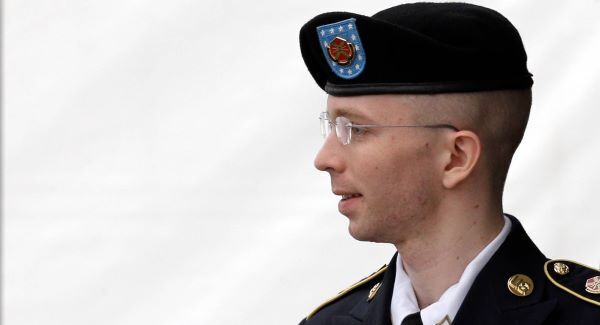
Whistleblower soldier Bradley Manning is facing a substantial prison term today, despite being acquitted by a US military court of the most serious charge against him – aiding the enemy.
But the convictions on espionage, theft and other charges in the biggest leak of classified information in American history could put Manning behind bars for up to 136 years.
The 25-year-old former intelligence analyst has been called both an important whistleblower and a traitor for giving more than 700,000 battlefield reports and diplomatic cables to anti-secrecy site WikiLeaks.
“We won the battle, now we need to go win the war,” his defence lawyer David Coombs, after yesterday’s verdict, said of the sentencing. “Today is a good day, but Bradley is by no means out of the fire.”
Manning was convicted on 20 of 22 charges, including a guilty plea the US government accepted in February. The charge of aiding the enemy had carried a potential life sentence.
A charge of aiding the enemy for someone who did not directly give an adversary information is extremely rare and advocates for freedom of the press had warned that convicting Manning would have broad implications for other leak cases and investigative journalism about national security issues.
Manning has said he leaked the material to expose the US military’s “bloodlust” and disregard for human life, and what he considered American diplomatic deceit.
He said he chose information he believed would not the harm the United States and wanted to start a debate on military and foreign policy. He did not give evidence at his trial at Fort Meade, Maryland.
His supporters included Pentagon Papers leaker Daniel Ellsberg, who in the early 1970s spilled a secret Defence Department history of US involvement in Vietnam that showed that the government repeatedly misled the public about the war.
Mr Ellsberg said Manning’s acquittal on aiding the enemy was more significant than his convictions on the other counts. He said a conviction would mean that most people would not want to risk life imprisonment, or even execution – a permissible penalty under the law – for exposing government secrets.
“American democracy just dodged a bullet, a possibly fatal bullet,” Mr Ellsberg said. “I’m talking about the free press that I think is the life’s blood of the democracy.”
Prosecutors had argued that Manning knew the material would be seen by al Qaida - a key point they needed to prove to get Manning convicted on the charge of aiding the enemy. Even Osama bin Laden had some of the digital files at his compound in Pakistan when he was killed.
Manning’s supporters believed a conviction for aiding the enemy would have a chilling effect on leakers who want to expose wrongdoing by giving information to websites and the media.
A Pentagon assessment determined in August 2010 that the leaks had not compromised intelligence sources or practices, although it said the disclosures could still cause significant damage to US security interests.
WikiLeaks founder Julian Assange criticised yesterday’s verdict and the Obama administration, calling it “dangerous national security extremism”.
“This has never been a fair trial,” Mr Assange told a press conference.
Manning pleaded guilty earlier this year to lesser offenses that could have brought him 20 years behind bars, yet the government continued to pursue the original, more serious charges.
Mr Coombs portrayed Manning as a “young, naive but good-intentioned” soldier who was in emotional turmoil, partly because he was a gay service member at a time when homosexuals were barred from serving openly in the US military.
He said Manning could have sold the information or given it directly to the enemy, but he gave them to WikiLeaks in an attempt to “spark reform” and provoke debate. A counter-intelligence witness valued the Iraq and Afghanistan war logs at about $5.7m (€4.3m), based on what foreign intelligence services had paid in the past for similar information.
Mr Coombs said Manning had no way of knowing whether al Qaida would access the secret-spilling website and a 2008 counter-intelligence report showed the government itself did not know much about the site.
The material WikiLeaks began publishing in 2010 documented complaints of abuses against Iraqi detainees, a US tally of civilian deaths in Iraq and America’s weak support for the government of Tunisia – a disclosure that Manning’s supporters said helped trigger the Middle Eastern pro-democracy uprisings known as the Arab Spring.
The Obama administration said the release threatened to expose valuable military and diplomatic sources and strained America’s relations with other governments,
The Manning trial unfolded as another low-level intelligence worker, Edward Snowden, revealed US secrets about surveillance programmes. Mr Snowden, a civilian employee, has told The Guardian newspaper his motives were similar to Manning’s, but he said his leaks were more selective.
Before Mr Snowden, Manning’s case was the most high-profile espionage prosecution for the Obama administration, which has been criticised for its crackdown on leakers.
The espionage cases brought since Barack Obama took office are more than in all other presidencies combined.