Hillsborough inquest to have jury
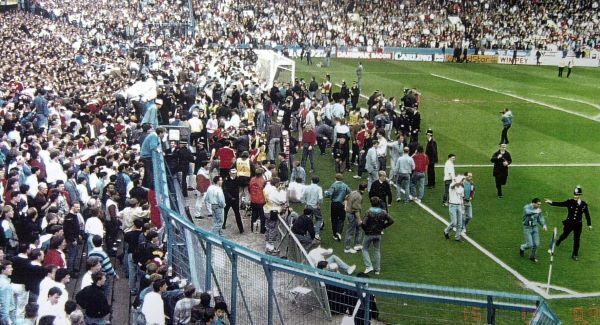
The inquests into the deaths of 96 victims of the Hillsborough disaster will have a jury, the coroner ruled today.
Lord Justice Goldring announced the decision at a pre-inquest hearing in London.
The judge has already ruled that the inquests, to be held early next year, will take place in the North West.
Some families favoured London as a venue, but the judge has said it should be in the North West, though no location has been identified yet.
Britainâs worst sporting disaster happened at Sheffieldâs Hillsborough stadium on April 15 1989 during Liverpoolâs FA Cup semi-final against Nottingham Forest as thousands of fans were crushed on the groundâs Leppings Lane terrace.
Lord Justice Goldring said he was exercising his discretion in favour of a jury, though it was also his view that it was mandatory to have one.
Christina Lambert QC, lead counsel to the inquests, had told him that a jury must be summoned, under the law, in a case where death occurred in police custody or where a police officer was executing his duty.
âWe invite you to interpret that in a relatively broad way, that it is not about the direct infliction of injury, but because the case involved people being confined, and crushing injuries were caused.â
The judge also ruled that Article 2 of the European Convention of Human Rights applies in the case. This imposes duties on the state, including the duty to protect lives.
And he agreed with Ms Lambert that there should be a wide scope to the inquests.
She had explained that this should include such matters as design of the stadium, preparation for the semi-final, planning by police and other organisations, movement and distribution of fans, overcrowding at the turnstiles and the police response, including the critical decision to open the gate.
She said they should also look at the issue of the survivability of the victims if other emergency care had been available.
Michael Mansfield QC, representing 73 families, said it was hoped that there would be recourse to reports of other disasters at football matches.
âThe Cup Final in 1923 had this problem,â he said.
âThere were other football grounds where there were tragedies. The last, in 1985, was the Bradford fire, which led to the Popplewell Report.
âThe problems at Hillsborough were anticipated in other grounds, at other times. The Popplewell Report talked of training in relation to crowd management.
âWe would hope, therefore, that one has recourse to these earlier reports about other grounds, and safety and management at grounds in other contexts.â
Last December, verdicts of accidental death from the original Hillsborough inquest in March 1991 were quashed.
The action was taken after the Hillsborough Independent Panel studied thousands of documents and reported that there had been a huge cover-up of what happened at Hillsborough and its aftermath.
Lord Justice Goldring, coroner to the fresh inquests, has said the new inquests will be held early next year.