Give me death penalty, says US woman who murdered boyfriend
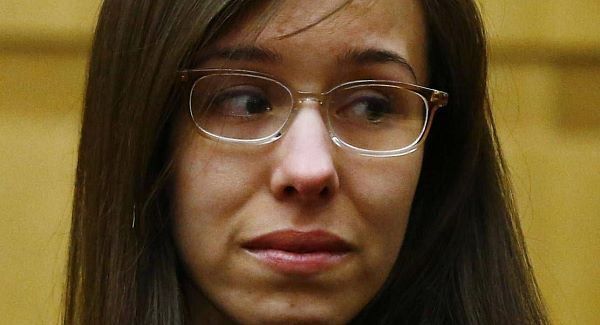
A woman whose murder trial for the gruesome killing of her one-time boyfriend captured world headlines has said she prefers the death penalty over life in prison.
Jodi Arias talked to Fox affiliate KSAZ at the court in Phoenix, Arizona, minutes after she was convicted.
With tears in her eyes, she said she felt overwhelmed and was surprised because she did not believe she committed first-degree murder.
She said she would "prefer to die sooner than later" and that "death is the ultimate freedom".
Arias has previously said that she considered suicide after killing her lover Travis Alexander in his Arizona home. The county said that Arias was placed under suicide watch.
Authorities said Arias planned the attack in a jealous rage.
She initially denied involvement, then blamed the killing on masked intruders. Two years after her arrest, she said it was self-defence.
The trial snowballed into a made-for-the-tabloids drama, garnering daily coverage from cable news networks and spawning a virtual cottage industry for talk shows, legal experts and Arias herself, who used her notoriety to sell artwork she made in jail.
Jurors deliberated for two full days this week before reaching a decision yesterday.
Prosecutors will now argue the killing was committed in an especially cruel, heinous and depraved manner, called the "aggravation" phase of the trial.
Both sides may call witnesses and show evidence during a mini-trial of sorts.
A mob of spectators gathered outside the court to learn the verdict, while TV crews, media vans and reporters lined nearby streets. Family and friends of Mr Alexander wore blue ribbons and wristbands with the words "Justice For Travis".
Mr Alexander suffered nearly 30 knife wounds, was shot in the forehead and had his throat slit before Arias dragged his body into his shower. He was found by friends about five days later.
Authorities said he fought for his life as Arias attacked him in a blitz, but soon grew too weak to defend himself.
Arias said she recalled Mr Alexander attacking her in a fury after a day of sex.
She said he came at her "like a linebacker", body-slamming her to the tile floor.
She managed to wriggle free and ran into his cupboard to retrieve a gun he kept on a shelf.
She said she fired in self-defence but had no memory of stabbing him.
She acknowledged trying to clean the scene of the killing, dumping the gun in the desert and working on an alibi to avoid suspicion, saying she was too scared and ashamed to tell the truth.
But none of Arias' claims that Mr Alexander had physically abused her in the months before his death, owned a gun and had sexual desires for young boys, were corroborated by witnesses or evidence during the trial.
She admitted lying repeatedly before and after her arrest but insisted she was telling the truth in court.
Arias spent 18 days on the witness stand describing an abusive childhood, cheating boyfriends, dead-end jobs, a shocking sexual relationship with Mr Alexander, and her contention that he had grown physically abusive.
Psychologist Richard Samuels gave evidence for the defence, saying Arias suffered from post-traumatic stress disorder and dissociative amnesia, which explained why she could not recall much from the day of the killing.
Another defence witness, psychotherapist Alyce LaViolette, said Arias was a battered woman.
Prosecutor Juan Martinez worked feverishly to attack the credibility of the defence experts, accusing them of having sympathy for Arias and offering biased opinions.
He later called his own expert, clinical psychologist Janeen DeMarte, who told jurors Arias did not suffer from PTSD or amnesia and that she found no evidence that the defendant was a battered woman.
Instead, Ms DeMarte said Arias suffered from borderline personality disorder, showing signs of immaturity and an "unstable sense of identity".
People who suffer from such a disorder "have a terrified feeling of being abandoned by others", Ms DeMarte told jurors.
Aside from her lies, Arias had another formidable obstacle to overcome.
Her grandparents had reported a .25-calibre handgun stolen from their Northern California home about a week before Mr Alexander's death - the same calibre used to shoot him - but Arias insisted she did not take it.
Authorities believe she brought it with her to kill him.