Gun curbs Bill clears first hurdle
Gun control supporters in the US Senate have won the first showdown over how to respond to the December school shootings in Connecticut, defeating an effort by conservatives to derail firearms restrictions before debate could even start.
The 68-31 vote yesterday gave an early burst of momentum to efforts by President Barack Obama and lawmakers to push fresh but modest gun curbs through Congress.
The National Rifle Association, the top gun advocacy group, along with many Republicans and some moderate Democrats, says the proposals go too far.
The Senate turns to the heart of the battle over curbing gun violence next Tuesday, when it considers a proposal to expand required federal background checks to gun shows and online firearms sales. Senate majority leader Harry Reid says he thinks the debate will last weeks.
The road to congressional approval of major restrictions remains difficult, particularly in the Republican-led House of Representatives, where there is strong opposition.
The vote came four months after a gunman killed 20 young children and six staffers at a Connecticut school, spurring Mr Obama and legislators to attempt to address firearms violence. Congress has not approved sweeping gun restrictions since enacting an assault weapons ban 19 years ago, a prohibition that lawmakers failed to renew a decade later.
Expanded background checks of gun buyers are at the core of the latest Democrat-led gun control drive. Other top proposals – including bans on assault weapons and high-capacity ammunition magazines – will be offered as amendments during Senate debate but seem destined for defeat.
Background checks currently apply only to transactions handled by the country’s 55,000 licensed gun dealers. Advocates of expanding the system say too many sales – the exact proportion is unknown – escape the checks, which are supposed to keep weapons from going to criminals, the seriously mentally ill, and others
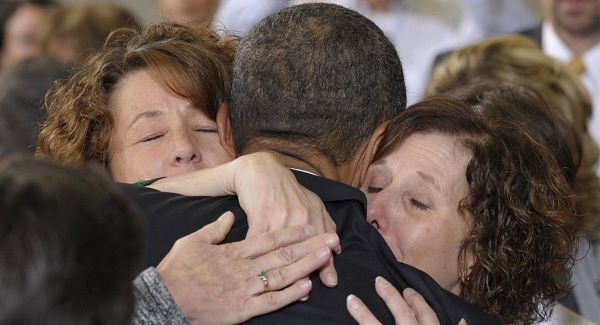
“The hard work starts now,” Mr Reid, a Democrat, said after the vote. As he spoke, relatives of the school shooting victims watching from the visitors’ gallery above the Senate floor wiped away tears and held hands, and some seemed to pray.
On Thursday, 50 Democrats, 16 Republicans and two independents opposed the conservative effort, while 29 Republicans and two Democrats supported it. Gun control supporters needed 60 votes to block the conservatives.
The vote opened the door to an emotion-laden debate on the legislation, which would subject more firearms buyers to federal background checks, strengthen laws against illicit gun trafficking and increase school safety aid. Advocates say the measures would make it harder for criminals and the mentally ill to get weapons.
Opponents argue that the restrictions would violate the US Constitution’s right to bear arms and would be ignored by criminals. Despite their defeat, conservatives were threatening to invoke a procedural rule forcing the Senate to wait 30 hours before it could begin considering amendments.
Before the vote, Senate minority leader Mitch McConnell, a Republican who was supporting the conservative effort to block debate, said the legislation would restrict the constitutionally protected rights of relatives and friends to sell firearms to each other.
“This bill is a clear overreach that will predominantly punish and harass our neighbours, friends, and family,” McConnell said.
The roll call came a day after senators Joe Manchin, a Democrat, and Patrick Toomey, a Republican, two of the most conservative members of their parties, unveiled a less-restrictive compromise on federal background checks, requiring them for gun shows and online transactions but exempting non-commercial, personal transactions.
The compromise between Mr Toomey and Mr Manchin, both owners of guns who have “A” ratings from the National Rifle Association, was likely to improve the prospects that the Senate might expand background checks by attracting broader support. But debate could last weeks, and it was not known what amendments to the overall bill, either constricting or expanding gun rights, senators might approve.
Underscoring the difficult path gun curbs face in the House of Representatives its leader, speaker John Boehner, repeated his plan to wait for the Senate to produce something and pointedly noted that the background check agreement had yet to pass Senate muster.
“It’s one thing for two members to come to some agreement. It doesn’t substitute the will for the other 98 members,” he said.
In a written statement, Mr Obama said, “This is not my bill,” adding that he wished the agreement was stronger. Still, he praised it as significant progress, saying: “We don’t have to agree on everything to know that we’ve got to do something to stem the tide of gun violence.”
Gun control groups gave the deal warm but not effusive praise, noting that unknown details and some pro-gun provisions gave them pause.
The NRA said it opposed the agreement. And in a letter to senators, NRA lobbyist Chris W Cox warned that the organisation would include lawmakers’ votes on the Manchin-Toomey deal and other amendments it opposes in the candidate ratings it sends to its members and supporters.
CONNECT WITH US TODAY



Be the first to know the latest news and updates