Obama hangs on to crucial Ohio
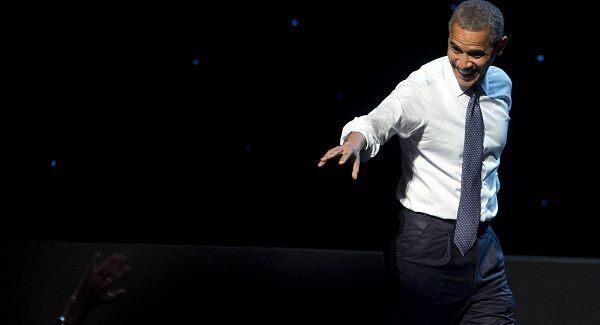
Barack Obama worked to hang on to his slim lead in the crucial battleground state of Ohio and bounce back from a disappointing debate performance that re-energised the campaign of Republican challenger Mitt Romney.

Obama hangs on to crucial Ohio

Barack Obama worked to hang on to his slim lead in the crucial battleground state of Ohio and bounce back from a disappointing debate performance that re-energised the campaign of Republican challenger Mitt Romney.

Mr Romney was also in Ohio, intensifying his efforts to seize a Midwestern state that could decide the close race for the White House.

A victory in Ohio is critical for both candidates but especially for Mr Romney. No Republican has ever won the presidency without carrying Ohio.

Mr Obama has held a polling edge in the state for weeks but there are signs that his advantage is narrowing. A new CNN poll showed him leading Mr Romney 51% to 47% among likely Ohio voters.

Republican strategists said the race was even closer – within 1% – as the candidate enjoyed a post-debate surge of support.

The president is chosen in state-by-state elections, not a national popular vote. Each state gets one electoral vote for each of its representatives in the House and Senate. There are 538 votes in the Electoral College, and a candidate must have at least 270 to win. Except for Maine and Nebraska, states award all their electoral votes to the candidate who wins the state.

The system makes states like Ohio – with its 18 electoral votes and a population that is neither reliably Republican nor Democratic – fierce battlegrounds. Ohio decided the 2004 race in favour of Republican George Bush over Democrat John Kerry.

Both candidates campaigned hard in the state on Tuesday, the last day of voter registration ahead of election day, four weeks away.

Mr Obama told young voters at a large rally at Ohio State University in Columbus not to wait or delay their vote, directing them to buses that were waiting to give them rides to early voting locations.

“Everything we fought for in 2008 is on the line in 2012,” he said.

Mr Romney focused on the Democratic bastion of Cuyahoga County to the north.

“It’s time for him to leave the White House,” he said of Mr Obama at an evening rally in Cuyahoga Falls.

“Ohio’s going to elect me the next president of the United States.”

Republicans credit Mr Romney’s strong debate appearance last week as the reason for an uptick in national polling. His advisers say they are seeing evidence of that in the swing states most likely to decide the election, Ohio among them.

Ohio is such a key state for Mr Romney that one top adviser has dubbed it “the ball game” as the Republican looks to string together enough state victories to amass the 270 Electoral College votes needed to take the White House. If Mr Romney were to lose Ohio, he would have to carry every other battleground state except tiny New Hampshire.

Mr Romney has far fewer state-by-state paths to the White House than Mr Obama, who still has several routes to victory should he lose Ohio.

Given the stakes and with just 28 days left in the campaign, Mr Romney’s schedule highlights his increased focus on the state: He’s spending four of the next five days in Ohio, ahead of the second presidential debate in New York next Tuesday. Running mate Paul Ryan squares off against vice president Joe Biden on Thursday for the sole debate featuring the number twos on the tickets.

Mr Romney also sought to expose his softer side, revealing his connection to a former Navy SEAL who was killed in the September 11 attack on the US Consulate in Benghazi, Libya. Republicans, including

Mr Romney, have cited the attack to criticise Mr Obama’s foreign policy. Mr Romney said he met the former SEAL at a Christmas party a few years ago.

Mr Obama was greeted in Columbus by enormous letters that spelled out “vote early”, a plea to the young voters who buoyed the president’s bid in 2008. He arrived from the West Coast where he had been raising millions of dollars for the campaign.

Obama campaign spokeswoman Jen Psaki dismissed the impact of polls showing a tighter race, saying Democrats always expected the race here and elsewhere to tighten ahead of election day on November 6.

Illustrating the competitive nature of Ohio, no presidential battleground has been more saturated with television advertising.

Ads in Ohio have focused on the energy industry – some rural southern areas of the state rely heavily on coal – and on China, where foreign companies are seen as competing with Ohio’s manufacturing base and jeopardising jobs.

Mr Obama has sought to paint Romney as a plutocrat who outsourced jobs during his tenure leading the private equity firm Bain Capital.

Mr Romney, in turn, has sharply criticised Mr Obama’s support for stricter regulations on coal and natural gas. It is seen as a way in with white working-class voters, on which his candidacy depends.

White working-class voters prefer Mr Romney to Mr Obama, but less so than they did George Bush, who carried Ohio in 2004. These voters are considered still persuadable, although Mr Romney may have hurt himself with his comment that the 47% of Americans who pay no federal income tax believe they are victims entitled to government help.

Mr Romney’s position on the motor industry bailout also dogs him in a state which is heavily reliant on the trade. Mr Obama’s decision to offer government support to car makers meant protection for thousands of jobs at parts and supply companies in Ohio.

Mr Romney wrote a 2008 piece headlined “Let Detroit Go Bankrupt”, which has become a rallying cry for Democrats. They have argued that Mr Obama’s support for the bailout has had a hand in Ohio’s drop in unemployment, which is now lower than the national average.

x

More in this section

Cookie Policy Privacy Policy Brand Safety FAQ Help Contact Us Terms and Conditions

© Examiner Echo Group Limited