Hamza faces immediate extradition
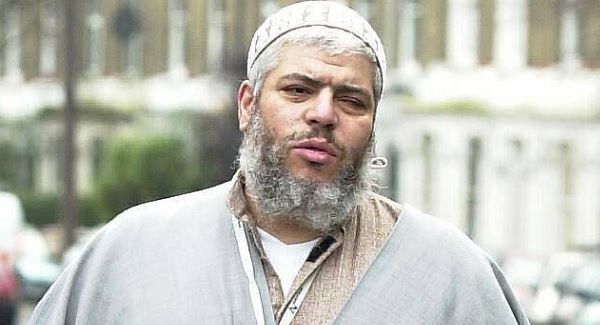
The UK's Home Office said today that radical Islamist cleric Abu Hamza and four other terror suspects would be extradited to the US “as quickly as possible” after High Court judges threw out their last-ditch pleas against removal from the UK.
Two judges in London rejected an application by the 54-year-old former imam at Finsbury Park mosque in north London to be given time to undergo a brain scan his lawyers said could show he is medically unfit to face trial.
Sir John Thomas, president of the Queen’s Bench Division, sitting with Mr Justice Ouseley, also rejected legal challenges by Babar Ahmad, Syed Ahsan, Khaled Al-Fawwaz and Adel Abdul Bary.
Dismissing all the cases, Sir John announced: “It follows that their extradition to the United States of America may proceed immediately.”
A Home Office spokesman said: “We welcome the High Court decision on Abu Hamza and others.
“We are now working to extradite these men as quickly as possible.”
All five cases returned to the High Court after judges at the European Court of Human Rights refused to intervene and stop the Home Secretary extraditing them.
Between 1999 and 2006, the men were indicted on various terrorism charges in America.
Hamza, who was jailed in the UK for seven years for soliciting to murder and inciting racial hatred in 2006, first faced an extradition request from the Americans in 2004.
Hamza has been charged with 11 counts of criminal conduct related to the taking of 16 hostages in Yemen in 1998, advocating violent jihad in Afghanistan in 2001, and conspiring to establish a jihad training camp in Bly, Oregon, between June 2000 and December 2001.
Ahmad, a computer expert from south London, and Ahsan are accused of offences including using a website to provide support to terrorists and conspiracy to kill, kidnap, maim or injure persons or damage property in a foreign country.
They wanted their removal stopped so that they could challenge a decision by the Director of Public Prosecutions not to allow British businessman Karl Watkin, a campaigner against the UK’s extradition arrangements with the United States, to bring prosecutions against them in the UK.
Bary and Al-Fawwaz were indicted – with Osama bin Laden and 20 others – for their alleged involvement in, or support for, the bombing of US embassies in Nairobi and Dar es Salaam in 1998.
Al-Fawwaz faces more than 269 counts of murder.
Sir John said there was an “overwhelming public interest in the proper functioning of the extradition arrangements and the honouring of extradition treaties”.
He added: “It is also in the interest of justice that those accused of very serious crimes, as each of these claimants is in these proceedings, are tried as quickly as possible as is consistent with the interests of justice.”
The judge said: “It is unacceptable that extradition proceedings should take more than a relatively short time, to be measured in months not years.
“It is not just to anyone that proceedings such as these should last between 14 and eight years.”
He said that each of the applicants has had “a very full opportunity to put their applications to the court so that we can consider whether there is anything to go forward”.
He added: “As was made clear by Mr (James) Eadie QC on behalf of the Home Secretary at the conclusion of the second day of the hearing, if we refuse permission or refuse the stays, as these applications are all in criminal causes or matters, there is no appeal from our decision and the Home Secretary will be free to make arrangements for the extradition of each of the claimants. That position was not contested.”
After the ruling, Ahmad said he would be extradited to the US to face terror charges “with his head held high”.
Emma Norton, legal officer for Liberty, said: “Mr Ahmad’s alleged offences happened in this country – it beggars belief that he won’t be tried here.
“This is yet another example of the dangers of our flawed extradition arrangements. Isn’t British justice – so admired around the world – capable of dealing with crimes committed in the UK by its own citizens?”
CONNECT WITH US TODAY



Be the first to know the latest news and updates