Monti meets parties as markets sour
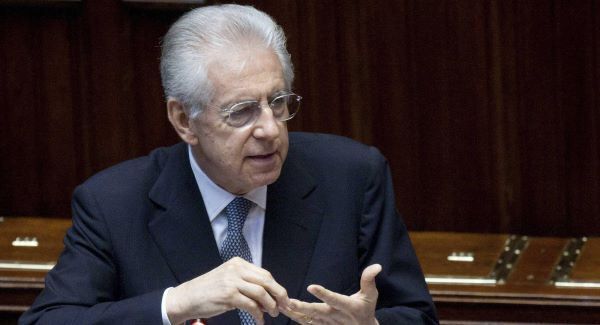
Italy’s prime minister-designate won wide backing from political leaders today as he worked to put together a cabinet that can steer the eurozone’s third-biggest economy through its debt crisis.
Mario Monti, a respected economist and former European commissioner, is under pressure to quickly reassure markets that Italy will avoid a default that could tear apart the 17 countries that use the euro currency and push the global economy back into recession.
Monti, 68, has already shown his mettle by making it clear he intends to serve until spring 2013 elections, rejecting calls by some to hold early elections next spring.
Today, after rounds of meetings, Monti garnered support from the centre-left Democratic Party, Silvio Berlusconi’s People of Freedom party and the Confindustria, a powerful business lobby.
“We strongly support the birth of this government, because for us it is the last chance to regain credibility,” Confindustria leader Emma Marcegaglia said.
Monti needs to win a confidence vote, likely this week, which would signal the start of his government.
Union leader Raffaele Bonanni said Monti was close to completing his Cabinet, but there was no immediate indication of when that list would be released.
“Monti told us that he has reached an agreement with the main political forces that will give him a consistent parliamentary majority that will support him and he will very quickly be in a position to present the list of ministers,” Bonanni, leader of the powerful CISL union, said.
Despite reports of progress, European markets closed lower today as investors worried that politicians might pull their support in the future if austerity measures proved unpalatable.
Amid the uncertainty, the yield on Italy’s 10-year bonds jumped again to 6.94%. Last week’s spike above 7% – a level considered unsustainable in the long term - raised fears Italy would eventually need a bailout like Greece, Ireland and Portugal.
But a financial debacle in Italy raises a whole new set of problems, for the country is considered too big for Europe to bail out.
Monti was asked to form a government on Sunday, after Berlusconi resigned amid weeks of market turmoil over Italy’s stagnant growth and high public debt, which at 1.9 trillion euros is nearly 120% of GDP.
Many of those debts are coming due soon, with Italy having to roll over more than 300 billion euros of its debts next year alone.
Only the Northern League, Berlusconi’s allies, have refused to support his government. They wanted early elections this spring, something Monti has rejected.
The EU, meanwhile, says said new measures will be necessary for Italy to balance its budget as promised by 2013. The eurozone avoided contracting in the third quarter, thanks mainly to Germany and France, but is widely expected to fall into recession imminently as a result of its raging debt crisis.
Monti says Italians will have to make some sacrifices to get through the crisis but “not tears and blood”.

CONNECT WITH US TODAY



Be the first to know the latest news and updates