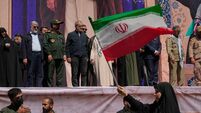
Mugabe bans political demonstrations
Political rallies were banned in Zimbabwe from today as the country’s crisis deepened.
Police announced the ban on state radio giving no explanation but opponents of president Robert Mugabe said it was part of his campaign to cling on to power by any means.
They have already accused him of engaging in a wave of violence against opponents since the presidential election 13 days ago which he is widely believed to have lost.
Official results have still to be declared.
Opposition spokesman Nelson Chamisa said the Movement for Democratic Change party had planned a rally for Sunday.
“You can’t be a political organisation and not hold a rally, that is what makes us who we are, how we communicate with our supporters,” he said, adding that they had not decided whether to go ahead with the rally.
“We cannot accept a declaration of a police state. People have just voted for change, for democracy and what do they get? This is unacceptable. This is ridiculous.”
Opposition leader Morgan Tsvangirai claims he won the vote outright and has been trying to persuade neighbouring leaders to pressure Mugabe to step down. Southern Africa’s leaders are to meet in Zambia tomorrow to discuss the crisis.
Information minister Sikhanyiso Ndlovu insisted Mugabe was not preventing the results from being released.
The ruling party and Mugabe “are also eagerly waiting for the (election commission) to complete its ballot votes verification freely without any interference and without pressure not to release the results,” he said.
South African president Thabo Mbeki has been the chief regional mediator in Zimbabwe’s economic and political crisis, and other African leaders have deferred to his strategy of “quiet diplomacy.” But that strategy has been criticised by some in the region and the West.
Zambian President Levy Mwanawasa, the only southern African leader to publicly criticise Mugabe’s policies, called tomorrow’s emergency summit to discuss the crisis.
Zimbabwe’s deputy information minister Bright Matonga had earlier confirmed Mugabe would attend the summit. Reports today said Mugabe had changed his mind, and Matonga said no firm decision had been made on whether Mugabe would accept the invitation.
Mugabe has traditionally enjoyed the support of other African leaders, using past meetings of the Southern African Development Community – at which he had been expected to be criticised – as platforms to denounce his opposition and Western leaders he accuses of plotting to topple him.
About 100 young Zimbabweans carrying placards reading “SADC be serious this time” and “Mbeki, you have betrayed Zimbabwe” held a protest today in Pretoria, South Africa.
The Revolutionary Youth Movement of Zimbabwe called for regional leaders to pressure “Mugabe into finally accepting defeat,” the organisation said in a statement.
Angola was also sending a representative to the summit, and Angolan Foreign Minister Joao Miranda warned against jumping to conclusions about delays in the release of Zimbabwe’s full election results.
“There’s a certain clamour about this (but) we have to respect authority in our states,” he said.
Namibia’s government said it has sent its foreign affairs minister to Zimbabwe to evaluate the situation and is in consultations with Zambia’s president over the delay in releasing results.
As Zimbabwe awaits the results, international human rights groups reported widespread attacks on opposition activists or those perceived as allied with MDC by ruling party supporters.
Amnesty International said its contacts reported violence in the capital and in the provinces of Mashonaland East, Midlands, Matabeland North and Manicaland. The group said the attacks suggested a program of “co-ordinated retribution against known and suspected opposition supporters.”
Human Rights Watch said it had received “credible information of dozens” of such attacks over the past week. Police have been “seemingly unable or unwilling to arrest the perpetrators,” the group said.
CONNECT WITH US TODAY



Be the first to know the latest news and updates