'World silent over Cuba abuses': Bush
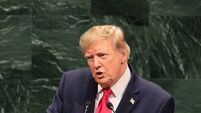
US president George Bush chastised the majority of the international community today for “a sad and curious pattern” of doing little to speak out against human rights and political abuses in Cuba.
“Unfortunately, the list of countries supporting the Cuban people is far too short and the democracies absent from that list are far too notable,” Mr Bush said at the White House.
The “small band of brave nations” speaking out for freedom in Cuba included, Bush said, his own administration as well as former Communist bloc, but now democratic, nations such as the Czech Republic, Estonia, Hungary, Latvia, Lithuania, Poland, Slovakia and Slovenia.
“The US has not been silent, nor will we be silent,” he said. “When a new day finally dawns for Cubans, they will remember the few brave nations that stood with them, and the many that did not.”
Mr Bush spoke after meeting Miguel Sigler Amaya and his wife Josefa Lopez Pena at the White House.
Five years ago this month, in what Mr Bush called “a tragic moment in the history of Cuba”, Mr Amaya was among scores arrested for offences against the regime.
He was released in 2006 and ordered to leave the country with his wife. But 55 of the 75 pro-democracy activists arrested in that 2003 crackdown remain in prison for their participation in peaceful activities, including Mr Amaya’s brothers, Ariel and Guida Sigler Amaya.
“For Miguel and Josefa, the horrors of life in Cuba are behind them, but millions of others are still trapped in the tropical gulag,” Mr Bush said. “Yet most of the world says nothing.”
The president said the global community had largely remained silent in recent months, even as dozens of young Cubans who were wearing “change” bracelets were arrested as Cuban authorities raided a Catholic church to tear-gas and drag away parishioners, and – last weekend – as activists distributing copies of the United Nations Declaration on Human Rights were pushed and beaten.
“That same week, Cuba signed the International Covenant on Civil and Political Rights,” Mr Bush said. “The international community applauded Cuba for signing a piece of paper – but on the abuses that same week, much of the world was silent.”
The Cuban government, which often takes several days to respond to criticisms from Washington – if it responds as all – had no immediate comment on the Bush speech.
Mr Bush has renewed his focus on Cuba since Fidel Castro officially stepped down last month after decades ruling the island. His brother, Raul, took over as president in ailing Fidel’s place. He had been provisional president since his brother, who led the nation for nearly a half a century, underwent emergency surgery in July 2006.
But Mr Bush said any speculation that the leadership shift would affect US policy towards Cuba “was exactly backward”.
“So far, all Cuba has done is replace one dictator with another,” the president said. “This is the same system, the same faces, and the same policies that led Cuba to its miseries in the first place.”
The only way for relations to improve between Cuba and the US, he said, was for the government to pave the way for free and fair elections, release all political prisoners and respect human rights “in word and deed”.