Death toll mounts in wake of hurricane
Desperate villagers demanded fuel today to help their search search for relatives lost at sea near Puerto Cabezas, Nicaragua.
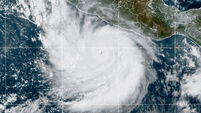
Mounting tensions and confusion have made it nearly impossible to know how many lives were claimed by the Category-5 Hurricane Felix.
Villagers complained that authorities gave little warning of Felix’s rapid approach, trapping hundreds of fishermen and their families at sea and on islands that were swallowed by churning storm surge.
Women and children clambered on the few remaining boats, some of which quickly sank because they were overloaded.
They also accuse authorities of failing to provide quick aid and of hindering their own efforts to find the living and the dead.
An official refused to give scarce petrol to 48-year-old Zacarias Loren, who said his 19-year-old son was among 18 people diving for lobster off a distant cay when the storm hit.
“These lives are important, too,” Loren said. “They might be floating alive, but they are out there alone.”
Authorities have reported death counts from 40 to near 100, and an exact number may never be known.
Villagers, many descendants of Indians, European settlers and African slaves, sometimes pulled bodies from the ocean on their own and buried them without notifying officials.
Authorities also have had to backtrack after reporting what turned out to be rumours relayed from remote areas with sparse communications.
In Honduras, officials initially reported 150 Nicaraguans had been rescued from the sea. They later adjusted the figure to 52.
Emergency chief Marcos Burgos today said he was sure of only 28. He also said an Indian leader’s report that 25 bodies had washed ashore in Honduras could not be confirmed – knocking back the overall death toll, but not that of the missing.
“We know that three or four cadavers were found by Honduran fishermen who notified families of the victims in Nicaragua, and they were supposedly taken to be buried in their hometown, but we can’t confirm that,” he said. “These indigenous people have no borders. For them, Honduras is the same as Nicaragua.
“Afterward, they realised they made a mistake taking the bodies across a border without permission, and now they won’t talk. They won’t say anything to police.”
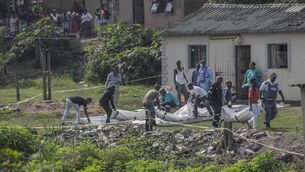
In Puerto Cabezas, about 500 people crowded a pier overlooking a beach where 13 bloated bodies had been laid out on black tarps Thursday after being pulled from the sea. Some tried to rush down a small wooden stairway to reach the bodies but were held back by police.
Lucia Parista Mora, 43, whose nephew was lobster fishing when the hurricane hit, feared many more dead will be found.
“We want them to bring them back here,” said Parista Mora. “Even if it is just bones, we want to see them.”
Felix developed very quickly over the warm waters of the southern Caribbean, and Nicaragua posted a hurricane warning less than 24 hours before it hit the coast, scrambling to notify villagers who have a long-standing mistrust of the Nicaraguan government.
Few realised the storm would grow to a Category 5 hurricane so quickly, and some who were warned did not believe it would be so dangerous. In Nicaragua, officials said it destroyed 7,995 houses in Puerto Cabezas, Waspan, Rosito, Iuna, Bonanza, Jinotega.
Abelino Cox, the spokesman for the Regional Emergency Committee, said rescue brigades found the ethnic Zumo and Mayagna Indian community of Awastingni, located in the jungle 55 miles north-west of Puerto Cabezas, devastated and that 14 were missing. He put the death toll at 98.
Maj Abel Zepeda, deputy chief of Civil Defence in Nicaragua’s northern autonomous region, said Thursday the death toll had increased to 96, including 44 Indian fishermen from the Miskito cays, tiny islands off the Nicaraguan coast.
Their bodies were found floating in the ocean, said national Congressman Brooklin Rivera, a member of the regional emergency committee.
Television images showed the Miskito cays devastated. All that remained were the trunks of trees that once supported more than 100 primitive dwellings on the barrier islands.
Aid was arriving slowly and those who survived the storm lacked food and fresh water.
An AP photographer reached one isolated village in Nicaragua where the only thing to drink was the water in fallen coconuts.
The storm dumped rain across Central America, pushing a river over its banks yesterday in Tegucigalpa and killing a pregnant market vendor.
A small boy was missing after being dragged away by the river’s current, emergency officials said.
The remnants of Hurricane Henriette, meanwhile, dumped rain yesterday on Arizona and New Mexico.
That storm hit Mexico on Tuesday and Wednesday, near Cabo San Lucas and again near the port city of Guaymas, then weakened over the Sonoran desert.
Officials said the death toll from Henriette was 10.

CONNECT WITH US TODAY



Be the first to know the latest news and updates