Bangladesh security forces enforce curfew
Security forces patrolled the quiet streets of six major Bangladesh cities today, enforcing an indefinite curfew imposed by the military-backed government to quell unrest by students demanding an end to emergency rule.
The curfew, imposed yesterday evening on the largest cities in the country after days of street violence, cleared cities of protesters, forced residents to stay home and temporarily shut down mobile phones.
“This is a temporary measure. The curfew will be lifted as soon as the situation improves,” the country’s interim head of government, Fakhruddin Ahmed, said in a brief televised speech.
Mobile phone service was restored early today, but stores and offices remained closed, streets were empty of cars and security forces were stopping anyone out walking or taking tricycle rickshaws. There were no signs of protests.
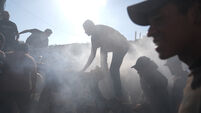
The curfew order came on the third day of unrest after students, whose protests had been largely confined to university campuses, spilled into the streets of Dhaka, burning cars and buses and battling with security forces. One person was killed and hundreds were injured, local media reported.
North-west of the capital, the first death was reported yesterday when students attacked a police checkpoint, the United News of Bangladesh agency said.
There were competing accounts of how the unidentified victim died - students alleged police fatally beat him, but police said the man was killed by a stone thrown by a protester.
Demonstrations have spread across Bangladesh since Monday with students demanding an end to emergency rule. The emergency was imposed in January when President Iajuddin Ahmed cancelled scheduled elections, outlawed demonstrations, curtailed press freedoms and limited other civil liberties.
The interim government now running Bangladesh is doing so with the backing of the military, which ruled the country throughout the 1980s. Officials say elections will be held in late 2008.
The protests began when University of Dhaka students called for the removal of an army post from the campus. The soldiers withdrew a day later after violent protests left 150 injured, but the students’ demands escalated and the protests continued. Hundreds have since been injured.
Yesterday, students said they wanted the return of democracy immediately.
In an indication of spreading support for the students, slum dwellers and street vendors joined the protests as students battled police, who used batons and tear gas in an effort to disperse the mobs.
Law and Information Adviser Mainul Hosein said the move to impose a curfew was intended to “protect public life and property”.
Students were also ordered off the campuses of all universities in Dhaka and the other cities where the curfew was imposed.
Students also clashed with police in Rajshahi and Sylhet in northern Bangladesh and Chittagong in the south-east. All three cities, along with Khulna, Barisal and Dhaka, were put under curfew.