Protests continue at G8 summit site in Germany

Protests against this week’s Group of Eight meeting continued for a third day in Rostock, Germany, as anti-globalization activists mounted a legal challenge against a ban on demonstrations outside the summit town of Heiligendamm.

Protests continue at G8 summit site in Germany

Protests against this week’s Group of Eight meeting continued for a third day in Rostock, Germany, as anti-globalization activists mounted a legal challenge against a ban on demonstrations outside the summit town of Heiligendamm.

About 800 protesters demonstrated outside Rostock’s immigration office demanding “global freedom of movement and equal rights for all,” including refugees and asylum seekers. Another 20,000 demonstrators were expected to hold an anti-G8 rally in central Rostock later today.

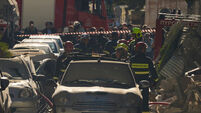
On Saturday, about 3,000 black-hooded anti-G8 protesters pelted police with rocks and bottles in Rostock. Authorities said more than 400 officers were injured, 30 of whom were admitted to hospital with broken bones and cuts. Organisers said 520 demonstrators were hurt, 20 of them seriously.

More than 2,000 radical protesters were still in Rostock on today, police said.

“So far the situation in Rostock is tense but not violent,” police spokesman Lyder Behrens said, adding that all protests would be followed by a heavy police presence. Authorities also continued spot checks on roads leading to the northern German town of Heiligendamm.

Germany’s Constitutional Court announced today that an alliance of activist groups had challenged a lower court’s ban on protests outside Heiligendamm.

That ban came into force last week, when public access to Heiligendamm was shut off. Authorities had announced earlier that, starting on Wednesday, the demonstration ban will be expanded to four miles beyond a seven-mile fence built around Heiligendamm. It was not clear when the Karlsruhe-based court was to rule on the case.

The government said today that 85 people had been refused entry to Germany before the summit and that 15-20 percent of those detained temporarily during Saturday’s riots in Rostock had been foreign nationals.

Germany is determined to avoid a repeat of violence that has marred previous G8 summits, notably in Genoa, Italy, in 2001 and has reinforced border controls.

However, anti-globalization activists have complained that security measures surrounding the June 6-8 summit are excessive.

The situation around Heiligendamm was calm today. At the summit, Merkel will host the leaders of Britain, France, Japan, Italy, Russia, Canada and the US for discussions on issues including global warming, aid to Africa and the world economy.

More in this section

Cookie Policy Privacy Policy Brand Safety FAQ Help Contact Us Terms and Conditions

© Examiner Echo Group Limited