Bush arrives to angry sentiment in Indonesia

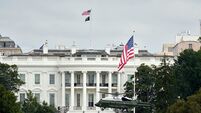
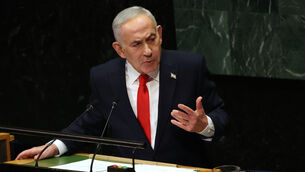
US President George Bush’s unpopularity in the world’s most populous Muslim nation made intense security jitters and angry protests the hallmarks of a six-hour trip to court Indonesian favour.

Bush arrives to angry sentiment in Indonesia

US President George Bush’s unpopularity in the world’s most populous Muslim nation made intense security jitters and angry protests the hallmarks of a six-hour trip to court Indonesian favour.

Bush was arriving today for the second Indonesian stop of his presidency. Neither time has he spent the night, or even more than a few hours, the result of safety concerns in a place where emotions about his policies in the Middle East and the Iraq war run high.

From a meeting and joint appearance before reporters with President Susilo Bambang Yudhoyono through a discussion with moderate civic leaders and a state dinner, Bush was not expected to interact with the general populace or do anything outside the confines of Bogor Palace, a graceful presidential retreat in a mountain town on the outskirts of the capital Jakarta.

Before Bush’s arrival, thousands of police and rifle-toting soldiers patrolled Bogor’s streets.

Demonstrations by Islamic hard-liners, students, housewives and taxi drivers alike have been staged every day this month, including a march by nearly 13,000 through Jakarta yesterday where Bush was denounced as a “war criminal” and “terrorist”.

Thousands more marched today, carrying posters showing victims of violence in Iraq. Similar demonstrations were held in at least 10 other cities.

Bogor Police Chief Col. Sukrawardi Dahlan said authorities were investigating an unconfirmed report that a man wearing a suicide vest would infiltrate the protests. Authorities had also said that the threat of an al-Qaida-style attack had escalated as the visit drew near. The White House said it was confident in the security precautions being taken.

For Bush, the risks of the trip were worth it to bolster Yudhoyono’s anti-terror cooperation, celebrate the country’s democratic advances, and try to dent anti-American sentiment.

Indonesia has about 190 million mostly moderate Muslims, the most of any country. With significant Christian, Hindu and Buddhist minorities, it has a long tradition of secularism.

But Indonesia has increasingly grappled with extremists, suffering terrorist attacks in October 2002 and October 2005 in Bali, and in Jakarta in August 2003 and September 2004.

Yudhoyono has shared intelligence about the Southeast Asian terror group Jemaah Islamiyah and overseen the arrest of hundreds of Islamic militants.

Indonesia, a country of 300 ethnic groups arrayed over thousands of islands, also is taking steps toward greater freedoms. In 1999, a democratic government replaced a pro-US military dictatorship that had seized power in the 1960s.

Bush’s visit comes near the end of an eight-day journey that included stops in Singapore and Vietnam.

When Bush last visited in 2003, talks with then-President Megawati Sukarnoputri were focused primarily on terrorism. The September 11, 2001, terrorist attacks in the United States had changed the equation, and criticism over the Indonesian military’s human rights record and the East Timor crisis in 1999 gave way to close ties.

Now, the president is ready to expand the discussion to ways the United States can help improve education and health and bring capital investment to this vast Southeast Asian archipelago that remains deeply poor.

With many Muslims around the world regarding his foreign policies as an affront to their faith, Bush also was eager to be seen soliciting Yudhoyono’s advice about the Israeli-Palestinian dispute, the North Korean and Iranian nuclear stand-offs and other world affairs.

Bush was expected to highlight America’s quick dispatch of aid after the December 2004 tsunami that left 131,000 dead, 37,000 missing and 570,000 homeless in Indonesia alone – and after a devastating earthquake in Pakistan in October 2005. He often speaks of both efforts as proof that the United States can be a compassionate friend to Muslim nations.

Yudhoyono, meanwhile, conducts an elaborate balancing act by welcoming Bush in such grand style.

He needs US help combating a bird flu outbreak that has killed 56 people – a third of the world’s total – and in improving economic growth.

But in seeking to win continued support, Indonesia’s first directly elected leader has to find a way to avoid further angering Muslim parties and his political rivals who already accuse him of being subservient to the West.

He indicated before Bush’s arrival that he would demand a timeline for the establishment of an independent Palestinian state.

And even though the Bush administration now conducts military exercises with Indonesia and has lifted a ban on selling military hardware here, Yudhoyno’s government has said it would continue to buy weapons from Russia, not the United States.

x

More in this section

Cookie Policy Privacy Policy Brand Safety FAQ Help Contact Us Terms and Conditions

© Examiner Echo Group Limited