Bush in news conference amid nuclear crisis
US President George Bush today faces questions about North Korea’s claimed nuclear test and the political fallout from a congressional intern scandal.
Four weeks before the November 7 elections, Mr Bush was to hold a news conference in the Rose Garden of the White House. He was expected to open with an update on the war in Iraq and remarks about North Korea’s nuclear ambitions.
The news conference comes as the United Nations is weighing sanctions against North Korea for its reported test. The US, Britain and France are seeking a resolution under Chapter VII of the UN Charter, which makes sanctions mandatory and opens the possibility of military enforcement.
North Korea’s reported test has quickly turned into a political issue, with Democrats accusing Bush of pursuing a failed national security policy and Republicans saying the Clinton administration weakened the US position by negotiating with North Korea during the 1990s.
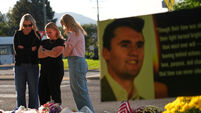
Another major subject facing Bush was the investigation into former Republican Mark Foley’s relationship with teenage congressional interns or pages and the House of Representatives’ handling of warnings about the Florida Republican’s conduct.
Opinion polls show the scandal has already harmed Mr Bush’s party, which controls both the House of Representatives and the Senate, and has boosted the opposition Democrats’ chances of taking control of the 435-seat House.
European Union External Relations Commissioner Benita Ferrero-Waldner suggested today that South Korea’s foreign minister, who is in line to become the next UN chief, should go to North Korea to try to mediate over its nuclear weapons programme.
“The international community will have to take action, that is clear, toward the North Korean regime,” Ferrero-Waldner told the European Parliament.
“Somebody will have to talk to the regime to bring it out of a very paranoid and aggressive posture.”
She said South Korea’s Foreign Minister Ban Ki-moon “might be one of the right personalities to do so".
Ferrero-Waldner said the 25 EU nations were currently studying whether to back calls for new sanctions against Pyongyang, which shocked the world on Monday by claiming to have conducted an underground nuclear test, prompting global condemnation.
Ban, who participated in six-party talks with the North in 2005, has vowed to help resolve the North Korean nuclear crisis after he becomes secretary-general. He must be approved by the 192-nation General Assembly, which has never rejected a Security Council nomination.
He is expected to become UN chief on January 1, after Kofi Annan’s second five-year term ends.

CONNECT WITH US TODAY



Be the first to know the latest news and updates