European leaders meet over Lebanon peacekeeping plan
EU foreign ministers will hold an emergency meeting today to discuss plans for an expanded United Nations peacekeeping mission in Lebanon.
UN secretary general Kofi Annan will attend the meeting in Brussels, before heading to the Middle East to promote the fragile Israel-Hezbollah ceasefire.
Yesterday, France agreed to increase its contribution to 2,000 troops and a top EU official said forces could start being deployed within days.
But key questions remained over how far Europe was willing to go to back up rhetoric on the need for peace with robust action.
France, Lebanon’s former colonial ruler, has cast itself as a driving force in efforts to build a lasting peace after weeks of fighting between Israel and Hezbollah – but disappointed the international community by initially promising only to double its 200-strong peacekeeping contingent.
President Jacques Chirac, however, announced that France would send another 1,600 troops – a measure welcomed by US and Israeli officials.
“We obtained the necessary clarifications on the chain of command, which must be simple, coherent and reactive,” Chirac said. “I am convinced today that French soldiers can be deployed effectively.”
France would evaluate the size of its contingent over the next six months as events progressed, the president added.
In New York, a UN official said a meeting was expected to be held on Monday for countries that had expressed interest in contributing. The official said the UN hoped to nail down concrete numbers so the deployment could begin quickly.
Israeli foreign minister Tzipi Livni urged the international community to act as quickly as possible.
“The extremists who want to inflame the region are watching us, and this will test the strength and determination of the international community,” Mr Livni said following a meeting with Italian foreign minister Massimo D’Alema.
The peacekeeping force, known as the United Nations Interim Force in Lebanon, or Unifil, is expected to expand from its current strength of 2,000 troops to 15,000 as part of a new UN Security Council resolution. Italy said this week it would also be willing to command the strengthened UN force.
Finnish foreign minister Erkki Tuomioja, whose country holds the rotating European Union presidency, indicated that the first reinforcements could be imminent – within a week if possible.
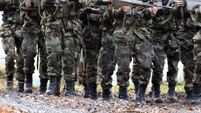
Many European countries have been uneasy about committing troops without strong guidelines on when their soldiers would have the right to shoot and also defend themselves. They fear that their peacekeepers could be dragged into a conflict with Hezbollah militants or with Israel if the current ceasefire collapses.
Dominique Moisi, an analyst with France’s institute for international relations, said France, in announcing a larger force, had felt the “international and national outrage at the contradiction between the French promises and what the French delivered”.
“At some point, the French realised they had gone too far by doing too little,” he said. “It is a face-saving gesture.”
Unifil, in place since the 1970s, has been widely considered ineffectual and has been dogged by a vague mandate.
The recent UN resolution authorises an expanded UN force to “to take all necessary action ... to ensure that its area of operations is not utilised for hostile activities of any kind (and) to resist attempts by forceful means to prevent it from discharging its duties ...”

CONNECT WITH US TODAY



Be the first to know the latest news and updates