Israeli forces fight with Hezbollah guerrillas

Hezbollah rocket strikes killed seven people in northern Israel today, while the guerrillas killed three Israeli soldiers and claimed they knocked out two tanks in fierce fighting in southern Lebanon.

Israeli forces fight with Hezbollah guerrillas

Hezbollah rocket strikes killed seven people in northern Israel today, while the guerrillas killed three Israeli soldiers and claimed they knocked out two tanks in fierce fighting in southern Lebanon.

Israel said troops killed four Hezbollah fighters in ground battles, as Israeli war planes renewed attacks on Beirut and killed three in a missile attack on a border village.


Meanwhile, in a report on the devastating Israeli attack on Sunday on the village of Qana, New York-based Human Rights Watch said its re-examination of showed 28 people had died, half the number initially reported by Lebanese organisations. Thirteen were still missing.

Officials in the Lebanese Red Cross and Civil Defence Corps reached the same conclusion – that only 28 people died. George Kitane, head of Lebanese Red Cross paramedics, said 19 children were among the dead.

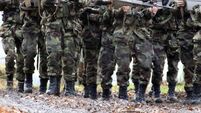
Three weeks into the conflict, six Israeli brigades – or roughly 10,000 troops - were in south Lebanon locked in fighting with hundreds of Hezbollah guerrillas, and the battle looked likely to be bitter and long.

Although diplomatic efforts to stop the fighting have thus far faltered, diplomats said the United States and France were working on two UN resolutions to overcome the impasse.

The first resolution would call for an immediate cease-fire and lay out political principles for a long-term settlement of the dispute, while the second would deal with deploying an international force to secure the border between Lebanon and Israel and other long-term issues.

Jordan’s King Abdullah II, a key US ally, said the prolonged battle had weakened moderates in the Mideast and warned that even if Hezbollah is destroyed, if Israel offers no solution to the Palestinian question and problems with Lebanon and Syria “another Hezbollah would emerge in a year or two in another country, maybe in Jordan, Syria, Egypt, or Iraq.”

“The Arab people see Hezbollah as a hero because it’s fighting Israel’s aggression,” he said.

Hezbollah fired 132 rockets into northern Israel, killing three people in Acre and three in Maalot. It was not immediately clear where the seventh fatality occurred. The death toll marked the most fatalities in a single day since eight people were killed July 16 when a rocket struck a train maintenance depot in Haifa.

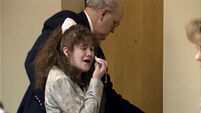
“It is a black day for our community,” said Maalot Mayor Shlomo Buhbut.

Hezbollah said it had foiled three attempts by Israeli troops to press deeper into Lebanon, and that its guerrillas destroyed two enemy tanks.

“A Zionist armoured force tried to advance toward the village of Chihine. The Mujahedeen (holy warriors) confronted it and destroyed two Merkava tanks. Confrontation is still raging,” the group said in a statement broadcast on the group’s Al Manar television.

Israel said three soldiers were killed and another seriously wounded when an anti-tank rocket hit their tank, seriously damaging the vehicle, but it was not clear whether this was the same incident.

Lebanese Prime Minister Fuad Saniora said more than 900 of his people had been killed and 3,000 injured in the fighting, though did not say whether the new figure – up from 520 confirmed dead – included those missing.

More than 1 million people – a quarter of Lebanon’s population – had been displaced, he said, adding the fighting “is taking an enormous toll on human life and infrastructure, and has totally ravaged our country and shattered our economy.”

The Israeli army said its soldiers had taken up positions in or near 11 towns and villages across south Lebanon, as they try to carve out a five-mile-wide Hezbollah-free zone ahead of what it hopes will be a speedy deployment of a multinational force.

Most of the villages are close to the Israel-Lebanon border; the one deepest inside Lebanon, Majdel Zoun, is about four miles from the frontier.

However, many tanks pushed even further north, controlling open areas from higher ground, security officials said.

Israel claimed four Hezbollah fighters were killed and two wounded in fighting in south Lebanon, but Hezbollah did not immediately confirm the report.

In Israeli airstrikes, Lebanese security officials said a missile crashed into the two-story house in Taibeh, killing a man, his wife and daughter.

An Associated Press reporter also saw two Israeli missiles slam into the side of a house in the south Lebanese village of Qleia, igniting a fire that sent a column of heavy black smoke up from the site.

Israeli artillery shells soared into nearby hills, sometimes as many as 15 a minute.

In the southern Lebanese town of Nabatiyeh, fighter jets struck an ambulance working for a local Muslim group, Lebanese security officials said, speaking on condition of anonymity because they were not authorised to talk with the press. They also hit the village of Zarariyeh, about six miles away, destroying roads and some deserted houses there.

In the first air raids on the Lebanese capital in almost a week, witnesses said at least four missiles hit the southern Beirut suburb of Dahieh, a Shiite Muslim sector that has been repeatedly shelled by Israel since fighting began three weeks ago.

Israeli jets dropped leaflets over southern Beirut late in the day warning residents to evacuate three Shiite neighbourhoods, a possible prelude to even more attacks.

Israeli warplanes also fired more than a dozen missiles at roads and suspected guerrilla hideouts in the south-eastern town of Rashaya in morning attacks, Lebanese security officials said. They said the attacks were part of Israel’s strategy to destroy Lebanese infrastructure so that people would not travel from one village to the other.

Other strikes hit targets near Lebanon’s northern border with Syria overnight, Lebanese radio said. This was the second attack in the area in 24 hours, and a bridge linking the zone to the northern port of Tripoli was destroyed there yesterday.

Israeli Prime Minister Ehud Olmert said his country would stop its offensive only after a robust international peacekeeping force was in place in southern Lebanon, to protect Israel from border raids and rocket attack.

An Israeli military inquiry on the bombing of Qana admitted a mistake but charged that Hezbollah guerrillas used civilians as shields for their rocket attacks.

“Had the information indicated that civilians were present ... the attack would not have been carried out,” a statement from the inquiry said.

Amnesty International decried the investigation as a “whitewash,” calling for an independent probe.

“It is not enough that the Israeli army investigates themselves,” the agency said in a statement.

More in this section

Cookie Policy Privacy Policy Brand Safety FAQ Help Contact Us Terms and Conditions

© Examiner Echo Group Limited