Quake relief picks up pace in Indonesia

International rescue workers today rushed to get medical care, water and shelter to some 650,000 people displaced by Indonesia’s earthquake, aided by the reopening of the airport closest to the disaster zone.

Quake relief picks up pace in Indonesia

International rescue workers today rushed to get medical care, water and shelter to some 650,000 people displaced by Indonesia’s earthquake, aided by the reopening of the airport closest to the disaster zone.

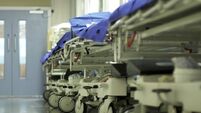
The main hospital in hardest-hit Bantul district was overwhelmed, with patients cramming corridors or sleeping on pieces of cardboard in the car park, and doctors complained of a lack of supplies.

Thousands of women and children lined roads clogged with relief vehicles and curious onlookers, asking motorists for money so they could buy food, some standing next to a banner that said: 'Don’t just look. Help.'

But Jan Egeland, the UN’s top humanitarian official, said the crisis appeared to be easing with the arrival of aid workers from more than 20 countries.

“We are now reaching more and more victims,” he said. “I am getting reports that we are making enormous progress.”

Saturday’s 6.3-magnitude quake in Yogyakarta province pounded more than 135,000 houses into piles of bricks, tiles and wood in less than a minute, killing more than 5,800 people in a region of largely rice farming communities.

An estimated 647,000 others were displaced, roughly a third of them still without shelter.

“Others are scattered in temporary shelters or staying with relatives or friends,” said Bambang Priyohadi, a senior provincial government official.

Getting food and fresh water to survivors remained a pressing concern, with an estimated €3.9m needed over the next few months, the UN World Food Programme said.

But Egeland said, overall, the aid effort appeared to be going well with major improvements in co-ordination among aid organisations and nations since the 2004 tsunami that killed 131,000 people in Indonesia’s Aceh province alone.

The main hospital in Bantul was overwhelmed with more than 400 patients and just over 100 beds, and doctors complained of a lack of supplies.

“We are short of splints, gauze, even beds,” said Dr Hidayat, the hospital’s earthquake emergency co-ordinator, adding that 90% of the victims had bone fractures. “The minute we get fresh splits, they are gone.”

Conditions improved at several other hospitals, where car parks and hallways that had been filled with hundreds of victims in the days after the quake were clear, with most patients now being treated in beds.

Workers removed a tent outside Yogyakarta’s largest hospital, Sardjito, that had been used to shelter the injured.

The Asian Development Bank announced €47m in grants and low-interest loans to Indonesia for rebuilding costs in the earthquake zone. Foreign governments also have pledged millions.

Two US military cargo planes carrying a mobile field hospital were among the first to land at the airport in Yogyakarta after cracks in the runway were repaired, and some 135 US Marines were to set up a portable field hospital.

“The conditions are tragic, but the guys and gals were absolutely ecstatic to leave at a moment’s notice,” said 1st Lt. Eric Tausch, from a US Marine division based in Okinawa, Japan.

Relief teams from China, Thailand, Malaysia and Singapore were also providing assistance.

The number of dead has climbed to 5,846, said Social Affairs Ministry official Jaswadi, who like many Indonesians goes by only one name, and more than 200,000 people were left homeless.

Abdul Aziz Ahmad, head of a Malaysia search and rescue team, said hope had faded of finding more survivors or bodies.

“The collapsed homes were all so small that anyone who was trapped would have been extracted by their family members,” Abdul said. His team conducted a full day’s search in Bantul on Monday and found only one body.

More in this section

Cookie Policy Privacy Policy Brand Safety FAQ Help Contact Us Terms and Conditions

© Examiner Echo Group Limited