Serbs mourn their dead around Srebrenica
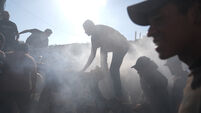
Thousands of Bosnian Serbs today mourned their dead from the 1990s Srebrenica clashes, a day after their Bosnian Muslim wartime enemies marked the 10th anniversary of Europe’s worst massacre of civilians since the Second World War.
Serbs claim more than 3,000 of their own died in clashes with Srebrenica Muslims during the 1992-95 Bosnian war, though the Serb death toll was never independently documented.
The church services today, attended by thousands of Bosnian Serbs in hamlets in eastern Bosnia, apparently were designed to counter massive ceremonies held yesterday to commemorate the July 11, 1995, massacre by Bosnian Serb troops of nearly 8,000 Muslim men and boys in Srebrenica.
Bosnian Serbs say they overran Srebrenica in 1995 in a revenge attack for earlier Srebrenica Muslim offensives on surrounding Serbian villages that left hundreds of Bosnian Serbs dead.
The head of Serbia’s influential Orthodox Church, Patriarch Pavle, sent a message of condolence to both Serbs and Muslims in Srebrenica, and said the commemorations should not be held separately, as they could trigger new divisions and another “chain of bloodletting”.
Yesterday, some 30,000 Srebrenica survivors, guests and dignitaries paid respects at the site of the 1995 Bosnian Serb offensive, where thousands of Bosnian Muslims were executed and dumped into shallow graves near Srebrenica that continue to be discovered a decade later.
The sound of Muslim prayer echoed through loudspeakers across a sprawling green valley, as family members wandered among the 610 coffins of the most recently identified victims. They were buried beside 1,330 existing graves at a memorial cemetery.
No foreign officials attended the Serb commemorations today, despite invitations, said Milos Milovanovic, the head of a Bosnian Serb war veterans’ organisation.
The most prominent guests included the leaders of the extreme nationalist Serbian Radical Party, whose paramilitaries fought the Muslims in Bosnia.
Serbia only recently confronted the horrors of Srebrenica, after a videotape showing Serb paramilitaries executing six Bosnian Muslim men and boys from Srebrenica was broadcast locally.
Serbian pro-democratic President Boris Tadic attended the Bosnian Muslim services yesterday – a significant gesture given Serbia’s wartime backing of the Bosnian Serbs. He was not present at the Serb commemorations today, sending his envoy instead.
Some 250,000 people in total were killed in the 1992-95 war between Bosnian Muslims, Catholic Croats and Orthodox Serbs. About 16,500 bodies have been exhumed from more than 300 mass graves.
Dutch peacekeepers had been charged with protecting Srebrenica, which was designated a UN safe zone during the war. But the outgunned Dutch mission simply watched on July 11, 1995, as Muslim boys and men vanished into the Srebrenica forests.
“It is the shame of the international community that this evil took place under our noses,” British Foreign Secretary Jack Straw said. “I bitterly regret this, and I’m deeply sorry for it.”
Serbian nationalist sentiment still runs strong among Bosnian Serbs, which could hinder plans by authorities to arrest wartime Bosnian Serb leader Radovan Karadzic and army commander Ratko Mladic – both wanted by the UN war crimes court in The Hague, Netherlands, on charges including allegedly organising the Srebrenica slaughter.
“The evil who committed those crimes still lurks here on those hills,” said US ambassador-at-large for war crimes, Pierre-Richard Prosper. “It must be destroyed.”
The Srebrenica survivors – along with the European Union, US and other foreign officials and groups – have demanded the two fugitives be arrested and extradited to the UN tribunal.
“They killed my entire life, and the only thing I want now is to see the guilty ones pay for it,” said Fatima Budic, 60, as she wept next to the coffin of her son Velija, who was only 14 during the slaughter. Her husband, Ohran, and another son, who was 16, have never been found.
The wartime Muslim commander of Srebrenica, Naser Oric, is already awaiting a war crimes trial at The Hague tribunal.
CONNECT WITH US TODAY



Be the first to know the latest news and updates