Madrid bombings suspect denies ties to al-Qaida cell
A prime suspect in last year’s train bombings in Madrid took the stand today at the trial of 24 suspected al-Qaida members and denied he had anything but a business relationship with their accused leader, who allegedly helped plot the September 11 attacks in the US
Moroccan businessman Jamal Zougam, 32, is suspected of being one of the militants who placed 10 backpack bombs that exploded aboard commuter trains on March 11 of last year, killing 191 people and wounding more than 1,500. He denied any involvement in the attacks.
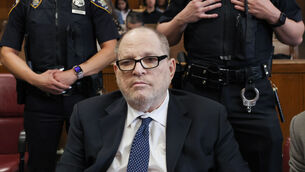
Zougam was arrested two days after the attacks and his picture has appeared countless times in newspapers, but his court appearance gave Spaniards their first chance to hear his voice and see him in person. Among those in the courtroom today were relatives of people killed in the massacre.
Zougam was called to testify about his ties to Imad Yarkas, the alleged leader of a Spanish al Qaida cell who has been charged with helping to plot the September 11 suicide airliner attacks. He and 23 other suspects have been on trial in Madrid since April 22.
Yarkas and two others are specifically accused of using Spain as a staging ground to help organise September 11, while 21 others face charges of terrorism and other offences, but not September 11 planning.
Zougam is not among the 24. But investigators say Yarkas served as a spiritual mentor to a number of suspects in the Madrid bombing, including Zougam.
Zougam, who ran a mobile phone shop in Madrid and before that a grocery store, said he had only business ties to Yarkas, who has described himself in testimony as a merchant serving as a middleman between wholesalers of a wide variety of goods.
“I knew him as a businessman,” Zougam said. “I don’t know him much personally.” He added that he even didn’t know Yarkas’ surname until Yarkas was arrested in November 2001 and Zougam read about it in the newspapers.
Yarkas, a Syrian-born Spaniard, is also accused of recruiting men for terrorism training in Afghanistan and elsewhere, but Zougam said neither Yarkas nor any other alleged cell member had asked him to wage “jihad,” or holy war.
“My only war was to help my family” back in Morocco, he said. “My war was to help with books, food and clothes to help them get by.”
He said he had Yarkas’s phone number only in case he needed to buy merchandise from him.
A spokeswoman for victims of the March 11 attack was on hand for the testimony.
“For the first time we’ve been able to see him, and that’s very important for us,” said Pilar Manjon, who lost her 20-year-old son in the attacks.
“But even so, you still ask yourself: ’Why, in the name of whom and with what right did they kill our loved ones?”’
Yarkas and two other suspects are accused of setting up a July 2001 meeting in Spain’s northern Tarragona region at which suspected September 11 suicide pilot Mohamed Atta and plot co-ordinator Ramzi Binalshibh allegedly decided last-minute details of the attacks.
Two employees of a rental car company and a Madrid hotel receptionist testified today that they had served Atta as a customer in July 2001, presumably as he prepared to travel to Tarragona. The three said they had identified Atta after seeing his photo on TV after the attacks in New York and Washington.
Zougam avoided making eye contact with the prosecutor questioning him. He testified for just 15 minutes.
He started his testimony denying any role in the March 11 massacre. “I was arrested on March 13 without knowing why. I’ve been shown on TVs around the world.”
At one point, he complained of mistreatment in jail. ”I’ve been told that I’m a dangerous person,” Zougam said.
Judge Javier Gomez Bermudez told him to be quiet and address his gripes to prison officials.
Also today, the three-judge panel overeeing the trial ordered the release of five suspects, although terrorism charges were maintained against them. They were ordered to hand over their passports and check in daily with court officials. None are among the three accused of September 11 planning.
This raised to eight the number of suspects released on bail or under other arrangements since the trial began April 22. It is expected to last until mid July.