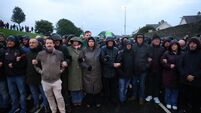
World Press Freedom Day marked around the globe
Press freedom advocates came together around the world today at a grim time when reporters face rising threats of killings, kidnappings, jailings and other abuse just for doing their jobs.
Sit-ins, human-chain demonstrations and a UN conference were underway or scheduled in countries from the Philippines to Senegal for the 15th annual World Press Freedom Day.
In Kenya, the day was marked by the country’s first lady, who stormed the offices of the African nation’s largest newspaper with her body guards and allegedly slapped a television cameraman who tried to film the intrusion, witnesses said.
Lucy Kibaki, wife of Kenyan President Mwai Kibaki, was protesting stories carried in daily papers that she tried to stop a Friday night party next-door to her home for the outgoing country director of the World Bank.
She accused the Daily Nation’s staff of misrepresenting the events, berating the staff for around five hours.
Media groups in Africa hoped to use the day to focus attention on restrictive laws, such as Kenya’s criminal libel law, which African leaders use to quash dissent.
Most African nations also have so-called “insult laws” which forbid the media from any reporting that could be considered derogatory to the country’s leadership.
“This is one of those coincidences that helps to highlight the difficulties we face all the time,” said Wangethi Mwangi, the newspaper’s editorial director. “This sort of intrusion into our freedoms sends shivers down your spine.”
The worldwide observance falls at a treacherous time for journalists: various media advocacy groups say 2004 was the most deadly year for journalists in recent memory. Some were hunted down and killed.
Reporters Without Borders in Paris has called it “a year of mourning”.
The Committee to Protect Journalists in New York on Monday listed the five deadliest spots for journalists over the past five years – the Philippines, Iraq, Colombia, Bangladesh and Russia.
Advocacy groups have decried false arrest, imprisonment, beatings, intimidation and the use of press or emergency laws among the tools used to prevent journalists from getting out the news.
Reporters Without Borders, which helped set up the annual observance, said Iraq remained the worst place to be a journalist, but new threats have emerged in places like Africa and Bangladesh.
Robert Menard, the group’s president, said it was releasing a report today on the 56 journalists or their assistants killed in Iraq since the war began more than two years ago – only seven fewer than during the conflict in Vietnam from 1955 to 1975.
“It goes to show how we’re in a period of violence that is beyond common measure when more people are taking aim at journalists, and wars are more and more dangerous for the press,” he said.
Nineteen reporters and 12 of their assistants were killed in Iraq last year, Reporters Without Borders said. So far this year, 22 journalists have been killed – nine of them in Iraq.
The group has reported that 53 journalists were killed on the job in 2004, the most in a decade.
Another 107 were imprisoned as of January 1.
In the Philippines since 2000, 18 journalists were killed for their work, the CPJ said. All had reported on government and police corruption, drug dealing, and the activities of crime syndicates.