125 dead after bloodiest Iraq attack yet

In Iraq’s bloodiest attack since the fall of Saddam Hussein, a suicide car bomber blew himself up next to dozens of police and national guard recruits today, killing at least 125 people and wounding 130.

125 dead after bloodiest Iraq attack yet

In Iraq’s bloodiest attack since the fall of Saddam Hussein, a suicide car bomber blew himself up next to dozens of police and national guard recruits today, killing at least 125 people and wounding 130.

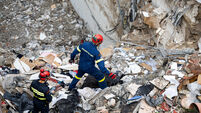
Torn limbs, feet and other body parts littered the street outside the clinic, where the recruits had been queuing for medicals, in Hillah, 60 miles south of Baghdad.

Health officials said the death toll could rise.

“The martyrs may be more because there a number of body parts” to be counted, Mahmoud Abdul Reda said at a hospital. Morgue workers unloaded plastic body bags from pick-up trucks as weeping relatives looked on.

Provincial police headquarters said “several people” were arrested in connection with the blast but did not elaborate.

The attack in a city with a majority Shiite population came as the clergy-backed United Iraqi Alliance sought the support of other parties to form Iraq’s first-ever democratically elected government.

Insurgents have stepped up their attacks against predominantly Shiite targets in recent weeks.

People gathered at the site of the attack reportedly chanted slogans against the “wahhabis”, referring to adherents of the puritan form of Islam preached by Osama bin Laden.

Following a funeral procession in Hillah, many of the dead will be taken to Najaf for burial.

Hillah is located just below the so called “triangle of death”, the mixed Sunni-Shiite region south of the capital that has earned the nickname owing to the frequency of insurgent bombing.

The blast outside a clinic was so powerful it nearly vaporised the suicide bomber’s car, leaving only its engine partially intact. The injured were piled into pick-up trucks and ambulances and taken to nearby hospitals.

Outside the concrete and brick building, people gingerly walked around small lakes of blood that pooled on the street.

Scorch marks infused with blood covered the clinic’s walls and dozens of people helped pile body parts, including arms, feet and limbs, into blankets.

Piles of shoes and tattered clothes were thrown into a corner.

Angry crowds gathered outside the hospital chanting “God is great”, and demanded to know the fate of their relatives.

“I was lined up near the medical centre, waiting for my turn for the medical exam in order to apply for work in the police,” Abdullah Salih, aged 22, said.

“Suddenly I heard a very big explosion. I was thrown several metres away and I had burns in my legs and hands, then I was taken to the hospital.”

The director of Hillah General Hospital, Dia Mohammed, said most the victims were recruits waiting to take physicals as part of the application process to join the Iraqi police and national guard.

The second deadliest attack took place in August 2003, when a car bomb exploded outside a mosque in Najaf, killing more than 85 people, including Shiite leader Ayatollah Mohammed Baqir al-Hakim.

A second car bomb exploded at a police checkpoint in Musayyib, about 20 miles away, killing at least one policeman and wounding several others.

The suicide bombing came a day after Iraqi officials announced that Syria had captured and handed over Saddam Hussein’s half brother, a most-wanted leader in the Sunni-based insurgency.

It was the latest in a series of arrests of important insurgent figures that the Iraqi government hopes will deal a crushing blow to violent opposition forces.

The arrest of Sabawi Ibrahim al-Hassan also ended months of Syrian denials that it was harbouring fugitives from the ousted Saddam regime. Iraq authorities said Damascus acted in a gesture of goodwill.

Sabawi Ibrahim al-Hassan, who shared a mother with Saddam, was nabbed along with 29 other fugitive members of the former dictator’s Baath Party in Hasakah in north-eastern Syria, 30 miles from the Iraqi border, officials said .

Syria is under intense pressure to drop its support for radical groups in the Middle East, to stop harbouring Iraqi fugitives and to remove its troops from Lebanon.

A week ago authorities grabbed a key associate and the driver of Jordanian-born terror leader Abu Musab al-Zarqawi, leader of al-Qaida in Iraq and believed to be the inspiration of the ongoing bombings, beheadings and attacks on Iraqi and American forces.

Iraqi officials said they expect to take al-Zarqawi soon.

x

More in this section

Cookie Policy Privacy Policy Brand Safety FAQ Help Contact Us Terms and Conditions

© Examiner Echo Group Limited