17 killed, 16 hurt in Baghdad car bomb
A car bomb exploded in front of a hospital south of Baghdad today, killing 17 and wounding 16, police said, a day after 23 were killed in two attacks aimed at the Shiite community.
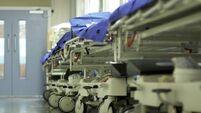
A police captain said today’s blast happened in front of the Musayyib General Hospital, about 35 miles south of the capital.
Elsewhere, a prominent Iraqi judge under Saddam Hussein, Taha al-Amiri, was assassinated today by two gunmen in the southern port city of Basra, said Lt. Col. Karim al-Zaidi.
Al-Amiri, a former chief judge at Basra’s highest criminal court, is one of several former Baath Party figures assassinated in the Basra area in the past 18 months.
Police in Mosul said they discovered the bodies of six men dressed in Iraqi National Guard uniforms dumped on a main highway near the city.
The men had been shot in the chest and head, said police Lt. Ali Hussein. They were found in the area of Intisar, east of Mosul.
Attacks against Iraq’s security forces have steadily risen following the January 30 national elections. Insurgents have vowed to intensify their attacks against the Iraqi forces at a time when the United States is trying to pass those forces more of the responsibility of securing the country.
But the body count of police seems to be most particularly high in Mosul, the country’s third-largest city, which has now become another flashpoint in the running battle between insurgents and US and coalition troops.
Last week, a suicide bomber walked into a crowd of Iraqi policeman in Mosul, killing himself and 12 policemen. In December more than 150 bodies of mainly Iraqi security forces were found in Mosul in the space of one month.
On Friday, a vegetable truck rigged with explosives blew up outside a Shiite mosque north-east of Baghdad, and gunmen sprayed automatic fire into a bakery in a Shiite district of the capital in sectarian violence that killed at least 23 people.
The attacks occurred as election officials announced provisional final results from the January 30 elections for provincial councils in 12 of the 18 provinces, showing Shiite religious groups winning over secular tickets in local races in much of the country.